
At Mobile World Congress 2026, HONOR made it clear: it no longer sees itself as just a smartphone company.
During the opening ConnectAI panel at Mobile World Congress 2026, the company outlined an ambitious AI ecosystem strategy built around its newly upgraded HONOR AI Connect Platform — a framework designed to power a fully open, cross-brand AI device ecosystem.
By the end of 2026, HONOR expects the platform to integrate over 20,000 AI services, marking a dramatic acceleration in its transition from hardware manufacturer to global AI device ecosystem company.
And if the vision lands as described, this could represent one of the most significant ecosystem plays outside the traditional tech giants.
From Smartphone Brand to AI Ecosystem Architect
The central message from HONOR’s leadership was clear: connectivity alone is no longer enough.
At the heart of the strategy is the upgraded HONOR AI Connect Platform, which opens up HONOR’s core AI capabilities to third-party ecosystem partners. Rather than simply linking devices together, the company is aiming for something deeper — shared intelligence across brands and hardware categories.
According to Fang Fei, President of Products at HONOR, the industry is entering a new evolutionary phase.
Speaking alongside Philippe Lucas, EVP of Partnerships, Content and Devices at Orange, Fang framed the shift around a theme of “breaking walls” — dismantling the walled garden approach that has historically defined consumer tech ecosystems.
“We believe walled gardens should be a thing of the past. Our vision is to combine a human-centric approach with technology to maximize the potential of every person.”
That human-centric framing is important. HONOR isn’t just talking about device interconnectivity — it’s talking about creating a persistent, intelligent layer that travels with the user across devices.
The “Cambrian Explosion” of AI Devices
To illustrate the moment the industry is entering, Fang used a powerful analogy: the Cambrian Explosion — the prehistoric period marked by a sudden diversification of life forms.
Her suggestion? We’re about to see a similar explosion in AI-powered hardware.
Instead of one dominant device category (smartphones), we’ll see:
- AI companions
- Embodied robotics
- Specialized smart home nodes
- Education-focused devices
- AI-powered toys and pet products
- Context-aware audio systems
In other words, AI will not just live inside devices — it will define entirely new ones.
And that diversification is already beginning to take shape.
Enter the Personal AI Avatar
The cornerstone of HONOR’s ecosystem vision is something it describes as a Personal Avatar — effectively a distributed AI agent that lives across a user’s entire device network.
Rather than thinking of each device as isolated, HONOR proposes an AI interface layer that:
- Understands intent on your phone
- Carries contextual knowledge to your car
- Adapts inside your smart home
- Extends into robotics or service devices
The key difference here is continuity. The AI doesn’t “reset” when you switch hardware.
This is made possible by distributed technologies that break traditional hardware boundaries. Historically, human-computer interaction has been confined to a single screen. Now, HONOR argues, AI becomes the interface — not the display.
That shift leads to two major trends:
1. Hardware Decoupling
Devices evolve into specialised peripherals designed for specific real-world scenarios rather than all-in-one computing slabs.
2. Expanded AI Entry Points
Interaction moves beyond taps and swipes toward voice, gesture, automation, and contextual awareness tailored to the environment and intent.
The result? Devices that act less like tools — and more like collaborators.
The HONOR Robot Phone: Embodied AI in Action
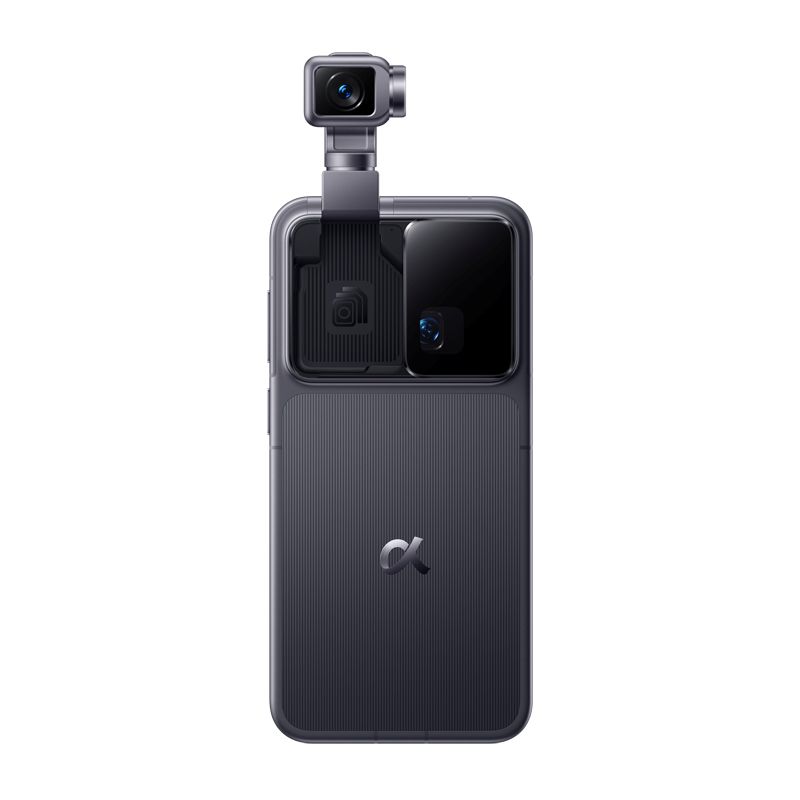
One of the most striking examples of this philosophy is the HONOR Robot Phone.
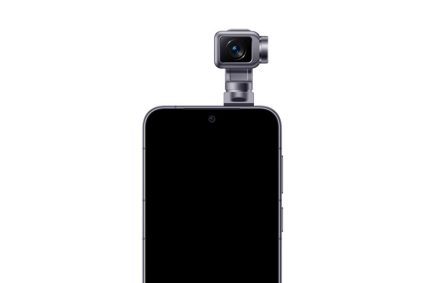
Blurring the line between smartphone and robotics, the device functions as a personal cinematographer. It can autonomously track and record users, allowing them to participate in experiences instead of constantly filming them.
It’s a clear embodiment of what HONOR calls Augmented Human Intelligence (AHI) — shifting devices from passive recording tools to proactive partners.
If smartphones democratized content creation, devices like this aim to automate it.
And while still early-stage, it signals how HONOR envisions AI evolving from assistant to physical presence.
Beyond Phones: The Magic V6 and AI-Native Hardware
Of course, smartphones remain a critical anchor point.
At its 1st March launch event, HONOR introduced the HONOR Magic V6, its latest ultra-thin foldable smartphone. The device is positioned as AI-native — designed from the ground up to integrate deeply with the AI Connect ecosystem.
Alongside the Magic V6, HONOR also showcased new PCs, tablets, and additional smart hardware, reinforcing the idea that AI will function as the connective tissue across form factors.
The foldable category, in particular, serves as a strategic bridge: powerful enough to anchor the AI layer, portable enough to remain central in users’ daily lives.
Open Ecosystem vs. Walled Gardens
The competitive angle here is hard to ignore.
For years, major tech players have relied on tightly controlled ecosystems. HONOR’s pitch is fundamentally different: open the AI layer to partners and accelerate innovation through collaboration.
The company confirmed it is actively expanding into new hardware categories in partnership with companies like Orange, spanning:
- Smart home
- Education tech
- Audio products
- Pet devices
- Toys
The goal isn’t just expansion. It’s scale.
By targeting integration of more than 20,000 AI services, HONOR is betting that breadth will outpace vertical control.
Why This Matters
Three forces are converging:
-
AI maturity — Models are becoming capable enough to act autonomously.
-
Hardware diversification — New form factors are viable.
-
User fatigue with ecosystem lock-in — Openness is increasingly attractive.
If HONOR executes well, it could position itself as a neutral AI layer spanning multiple device brands — similar to how Android scaled across hardware manufacturers, but applied to AI intelligence rather than operating systems.
The risk, of course, lies in fragmentation and execution complexity. Building a unified experience across diverse devices is significantly harder than controlling a single vertically integrated stack.
But the opportunity is equally large.
The Bigger Picture: AI as the Interface
Perhaps the most profound shift HONOR is betting on is this:
The interface is no longer the screen. The interface is the AI agent.
When intelligence becomes persistent and portable, hardware becomes modular. That’s the philosophical pivot underlying the entire announcement. Whether HONOR can deliver on that promise remains to be seen — but at MWC 2026, the company made one thing clear:
It intends to compete not just in the smartphone market, but in the next evolutionary phase of intelligent devices. And if the “Cambrian Explosion” analogy holds, we may be on the verge of a radically diversified AI hardware landscape.