
HONOR has officially announced a strategic technical collaboration with ARRI, the world-renowned designer and manufacturer of professional camera systems trusted across the global film industry. The partnership signals a bold ambition: to translate the gold standard of cinematic imaging into the rapidly evolving world of mobile photography and videography.
For decades, ARRI cameras have defined the visual language of modern cinema. Now, that legacy is set to influence how stories are captured on smartphones — potentially reshaping expectations of what mobile imaging can achieve.
Extending Cinematic Standards Into the Mobile Era
Smartphones have already disrupted photography. In recent years, they’ve also made significant inroads into filmmaking, with directors increasingly incorporating mobile devices into professional productions. What’s changing now is the depth of integration between cinema-grade imaging science and consumer hardware.
This collaboration unites HONOR’s advanced mobile imaging architecture with ARRI’s century-long expertise in image science — the underlying framework that determines how colour, contrast, highlight roll-off, and tonal consistency behave from capture through to final display.
James Li, CEO of HONOR, positions the partnership as a creative milestone:
“HONOR is pioneering a new era of mobile imaging, where technology exists to inspire creativity and storytelling. ARRI has defined the visual language of cinema for generations. Through this collaboration, we are bringing those cinematic standards and professional workflows into mobile imaging, enabling creators to craft stories with greater authenticity and emotional depth.”
Rather than focusing purely on megapixels or AI gimmicks, the emphasis here is on aesthetic integrity — delivering images that feel cinematic, not just technically sharp.
ARRI’s Century of Cinematic Authority
Founded in 1917, ARRI has played a central role in shaping the tools and standards of the film industry. From early motion picture cameras to today’s flagship digital systems like the ALEXA line, ARRI’s hardware and colour science have become synonymous with cinematic excellence.
The company’s technical achievements have been recognised with 20 Scientific and Technical Awards from the Academy of Motion Picture Arts and Sciences — a testament to the influence of its imaging technology on global filmmaking.
David Bermbach, Managing Director at ARRI, notes that smartphones are no longer peripheral tools:
“Today, consumer smartphones have already become a serious tool in professional filmmaking, being used on blockbusters across the globe. That’s why we believe it is time to bring these worlds even closer together. For the first time ever, core elements of ARRI Image Science are being integrated directly into a consumer device.”
That final statement is key. This isn’t about emulating a “cinema look” through presets. It’s about embedding foundational colour science directly into mobile hardware.
What Is ARRI Image Science — and Why It Matters?
In professional cinematography, image science is not a stylistic overlay. It’s the engineering foundation of how an image is formed.
It governs:
- Colour accuracy and skin tone rendering
- Highlight roll-off behaviour
- Shadow depth and tonal separation
- Dynamic range handling
- Consistency across lighting environments
- Compatibility with professional post-production workflows
ARRI’s systems are widely respected for their natural colour reproduction and gentle highlight transitions — avoiding the harsh clipping that can break immersion in digital footage. The “ARRI look” is often described as organic, filmic, and emotionally resonant.
Translating that into a smartphone environment is no small feat.
The Engineering Challenge: Cinema vs Smartphone Hardware
Cinema cameras and smartphones operate in fundamentally different worlds.
Professional cinema systems feature:
- Large-format sensors
- Dedicated image processing pipelines
- Interchangeable lenses
- High data bandwidth
- Robust cooling and power systems
Smartphones, by contrast, must function within strict constraints:
- Significantly smaller sensors
- Highly integrated system-on-chip (SoC) architectures
- Compact optical stacks
- Real-time processing requirements
- Limited thermal headroom
Dr. Benedikt von Lindeiner, Vice President at ARRI and lead technical liaison for the collaboration, explains the core challenge:
“Smartphones operate under fundamentally different constraints: smaller sensors, highly integrated SoCs, different optical stacks, and different bandwidth limits. The challenge is not to replicate cinema hardware, but to translate the underlying principles into compact, real-time mobile architectures.”
In other words, this isn’t about miniaturising an ALEXA. It’s about rethinking cinema image science for computational photography.
Translating Principles, Not Hardware
Rather than attempting to copy cinema camera components, HONOR and ARRI are focusing on the philosophical and mathematical foundations of cinematic imaging.
That includes:
1. Natural Colour Science
Accurate skin tones are notoriously difficult in smartphone photography, especially under mixed lighting. ARRI’s expertise in colour matrices and tonal mapping could significantly improve colour fidelity in mobile capture.
2. Gentle Highlight Roll-Off
Harsh clipping in bright areas is one of the most common signs of “non-cinematic” footage. ARRI’s approach to highlight handling aims to preserve detail and softness in bright regions — a hallmark of professional film imagery.
3. Perceived Depth and Dimensionality
Cinematic images often feel more three-dimensional due to tonal separation and dynamic range distribution. Replicating that perception on smaller sensors requires intelligent processing, not just hardware improvements.
4. Workflow Integration
Professional filmmakers require footage that integrates smoothly into colour grading pipelines. Ensuring that mobile footage behaves predictably in post-production environments could dramatically expand creative use cases.
As Dr. von Lindeiner notes:
“Our goal is to bring a true cinematic aesthetic to smartphone imaging — natural colour, gentle highlight roll-off, and a sense of depth that feels authentic to how stories are meant to be seen. Creators should be able to move seamlessly from mobile capture into professional post-production workflows.”
Why This Matters for Content Creators
The timing of this collaboration is significant.
We are witnessing a generational shift in storytelling:
- Social platforms have become primary distribution channels
- Independent creators increasingly operate without large crews
- Mobile-first content creation continues to grow
- Audiences expect high production values regardless of format
If ARRI’s colour science and imaging philosophy can be meaningfully integrated into a smartphone, it could:
- Lower the barrier to cinematic-quality storytelling
- Empower indie filmmakers and documentary creators
- Enable hybrid production workflows
- Reduce reliance on bulky equipment for certain shoots
- Improve visual consistency between mobile and professional cameras
For creators working in fast-paced environments — journalism, travel filmmaking, social-first brand storytelling — portability often matters as much as image quality. Bridging those priorities is where this partnership could prove transformative.
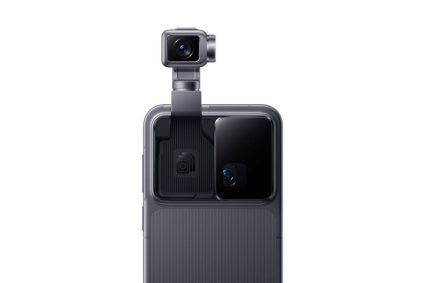
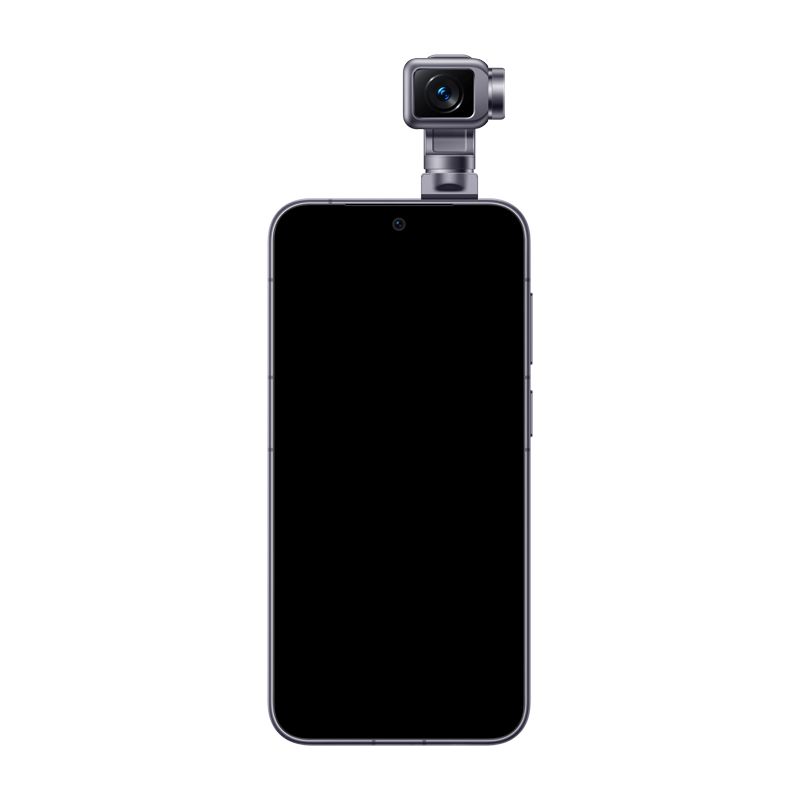
Debut in the HONOR ROBOT PHONE
The first tangible results of the collaboration are expected to debut in the upcoming HONOR ROBOT PHONE later this year.
While full technical specifications have yet to be revealed, expectations are high. The device is likely to showcase:
- Deep integration of ARRI colour science
- Enhanced HDR behaviour
- Improved tonal mapping
- Cinema-oriented shooting profiles
- Potential compatibility with professional grading tools
If executed well, it could signal a shift in how smartphone cameras are evaluated — moving the conversation away from raw sensor specs and toward image character and storytelling potential.
A Turning Point for Mobile Imaging?
This partnership represents more than a branding exercise. It’s a philosophical alignment between two industries that have historically evolved on parallel tracks.
Cinema cameras prioritise storytelling integrity above all else. Smartphones prioritise accessibility and computational power. Bringing those two mindsets together may redefine expectations for both markets.
The real question isn’t whether smartphones can replace cinema cameras — they won’t. The question is whether they can inherit enough of cinema’s visual DNA to become credible creative tools in their own right.
If HONOR and ARRI succeed, mobile creators may soon have access to imaging pipelines once reserved for Hollywood productions — all from a device that fits in a pocket.
And that could fundamentally change how stories are told.