Dell and NVIDIA Bring Secure Autonomous AI Agents to the Desktop

Dell Technologies is expanding its AI partnership with NVIDIA, announcing support for NVIDIA NemoClaw and NVIDIA OpenShell—two key building blocks aimed at accelerating the development of secure, autonomous AI agents.
This move signals a clear shift: the future of AI isn’t just about models—it’s about agents that can act, adapt, and operate independently.
A Simpler Way to Build Always-On AI Agents
For developers working locally, Dell and NVIDIA are introducing NVIDIA NemoClaw, an open-source stack designed to make running always-on AI assistants dramatically easier—and safer.
With a single command, developers can spin up autonomous agents powered by:
-
NVIDIA OpenShell – an open-source runtime that securely executes agents in isolated environments
-
NVIDIA Nemotron models – optimised for advanced reasoning and task execution
Together, these tools are part of the broader NVIDIA Agent Toolkit, lowering the barrier to building AI systems that don’t just respond—but take action.
The Rise of Autonomous Agents—and the Security Problem
The momentum behind autonomous agents exploded after the release of OpenClaw in early 2026. The project quickly gained over 100,000 GitHub stars in its first week, highlighting massive developer interest in AI systems that can:
-
Write and debug code
-
Spawn specialized sub-agents
-
Use professional tools independently
-
Execute complex, multi-step workflows over time
But this power comes with a serious tradeoff.
To be useful, these agents need deep access to tools, systems, and data. That creates a fundamental tension:
How do you enable autonomy without sacrificing security?
OpenShell: A Security-First Runtime for AI Agents
NVIDIA OpenShell is designed to solve exactly that problem.
It introduces an infrastructure layer that allows developers to run agents securely—with zero code changes—inside isolated sandboxes. Key features include:
-
Zero-permission defaults – agents start with no access and must be explicitly granted capabilities
-
Private inference by default – sensitive data stays local
-
Policy-based enforcement – every action is governed at the infrastructure level
In short, OpenShell makes it possible to deploy powerful autonomous agents without losing control.
Dell Pro Max: Hardware Built for Agentic AI
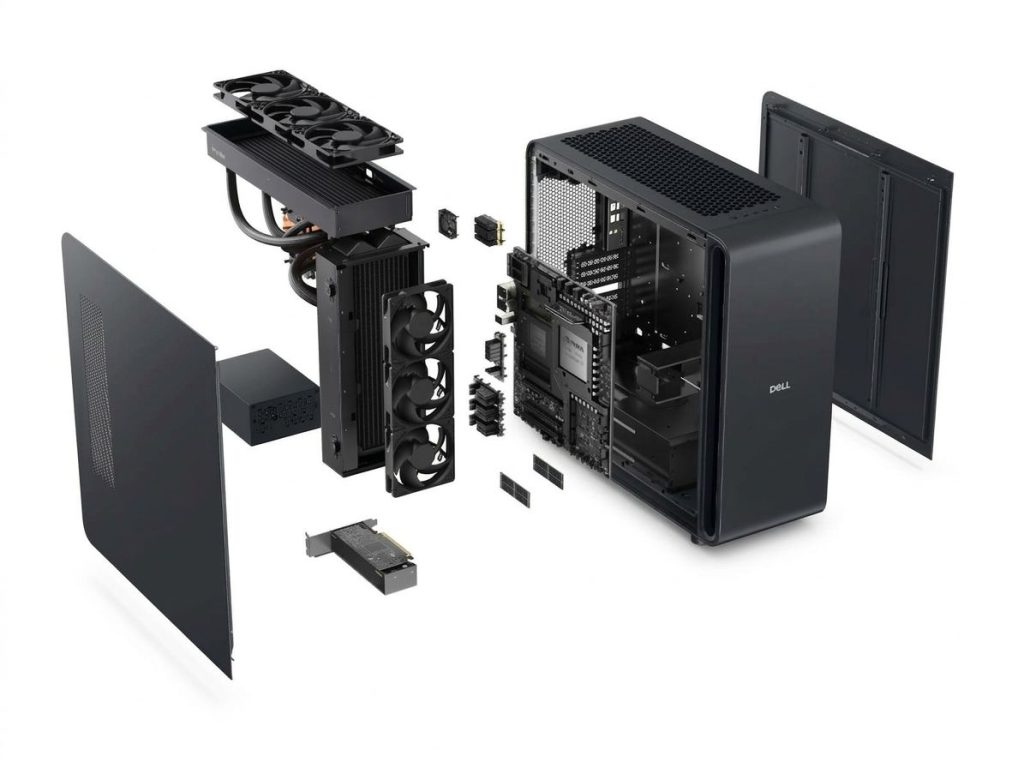
To complement the software stack, Dell is rolling out its Pro Max systems powered by NVIDIA’s latest Grace Blackwell architecture—purpose-built for running autonomous agents locally.
These machines are designed to deliver:
-
Massive compute performance
-
Large unified memory pools
-
Always-on reliability for continuous agent workflows
And importantly, they enable enterprises to run advanced AI without relying on the cloud.
Dell Pro Max with GB10: Efficient Power for Always-On Agents
The Dell Pro Max with GB10 targets organisations looking for a compact yet powerful system.
Highlights include:
-
Up to 1 petaFLOP of FP4 AI performance
-
128GB of unified memory for running larger models locally
-
Support for scaling up to 4x configurations
-
Full access to the NVIDIA AI software ecosystem
Its power-efficient design makes it ideal for always-on agents, while Dell and NVIDIA are also co-developing an air-gapped version for highly sensitive environments—such as government or classified workloads.
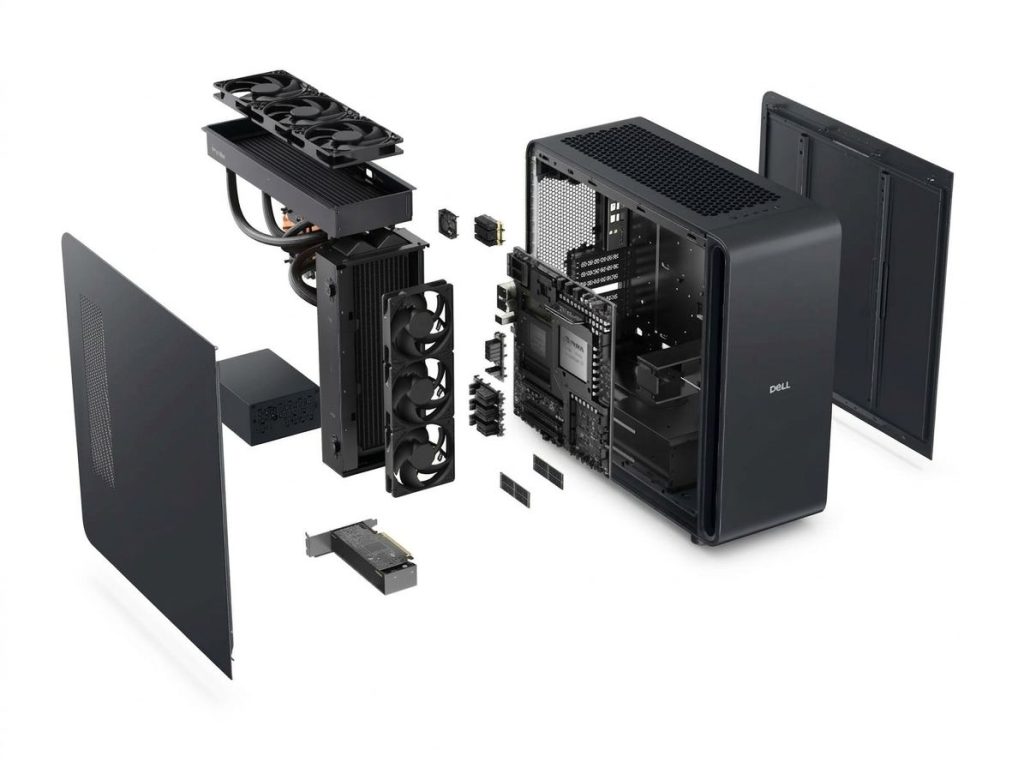
Dell Pro Max with GB300: A Desk-Side Supercomputer
At the high end, the Dell Pro Max with GB300 pushes desktop computing into data centre territory.
As the first OEM system to feature the NVIDIA GB300 Grace Blackwell Ultra Desktop Superchip, it delivers:
-
Up to 20 petaFLOPS of FP4 performance
-
A massive 748GB of unified memory
-
Support for trillion-parameter-scale AI models
This level of performance allows autonomous agents to run entirely on-device, offering:
-
Faster response times
-
Stronger data privacy
-
Reliable operation without internet connectivity
Dell’s proprietary MaxCool technology ensures thermal efficiency, removing heat up to five times more effectively than traditional designs.
Why This Matters
This announcement isn’t just another hardware launch—it’s a glimpse into the next phase of AI.
We’re moving from:
-
Prompt-based AI → Autonomous systems
-
Cloud-dependent workflows → Local-first intelligence
-
Static models → Self-evolving agents
By combining secure runtime environments like OpenShell with powerful local compute, Dell and NVIDIA are tackling one of the biggest blockers to enterprise adoption: trust.
Industry Perspective
Dell COO Jeff Clarke emphasised the importance of local, secure deployment:
Autonomous agents are the next wave of AI, but enterprises won’t adopt them without strong security and local execution. This changes how developers build and deploy AI.
From NVIDIA’s side, VP Chris Marriot highlighted the broader shift:
The next chapter of AI is autonomous systems that can reason, learn, and act—OpenShell provides the secure foundation for that future.
Meanwhile, companies like Snowflake are already seeing real-world benefits. Their AI research teams are using GB300-powered systems to:
-
Post-train 32B-scale models
-
Extend sequence lengths beyond 128K
-
Rapidly prototype and deploy new AI techniques
The result: faster iteration cycles and quicker paths to production.
Availability
Dell Pro Max systems with GB10 and GB300, along with NVIDIA OpenShell support, are available now.