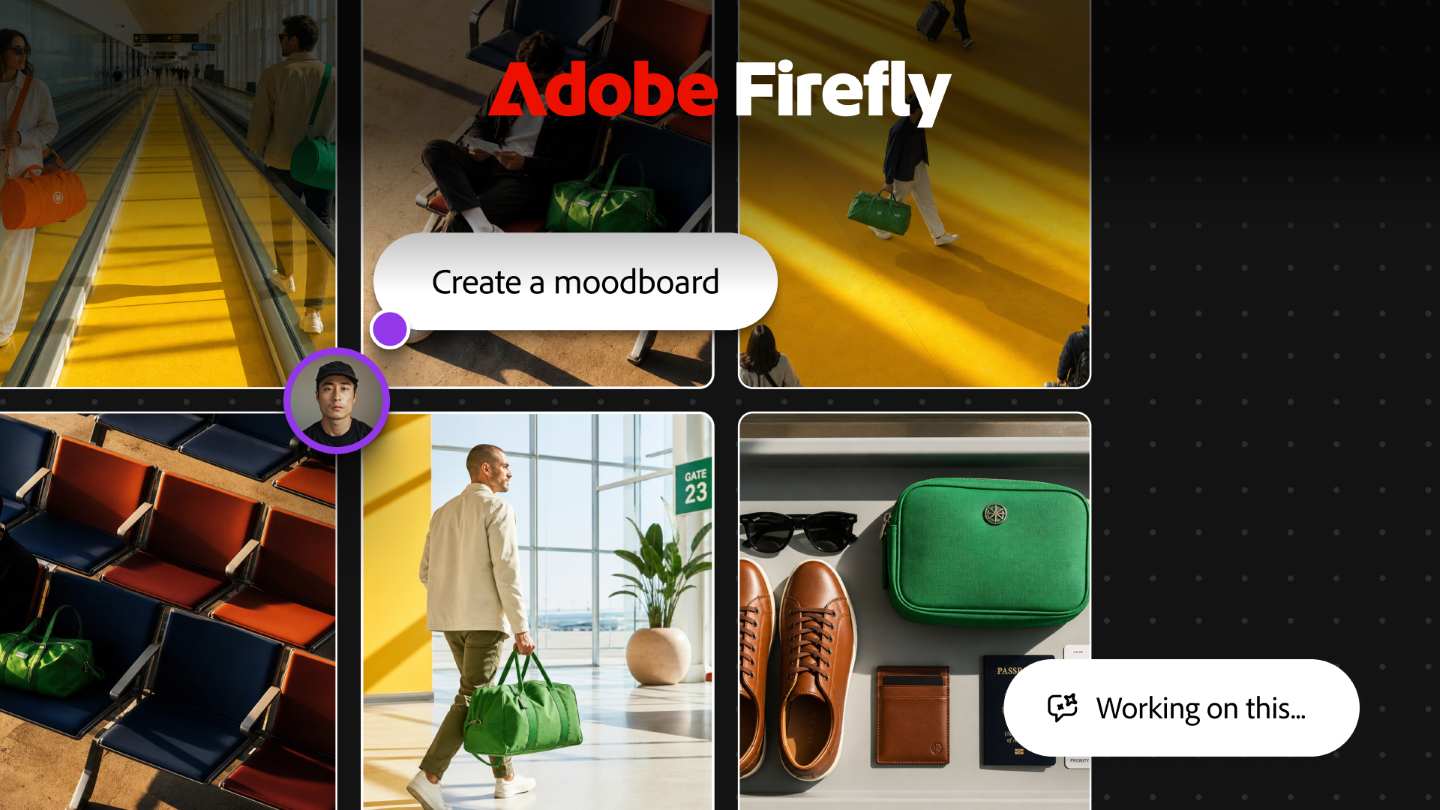
At Adobe MAX, the creative industry’s benchmark gathering, Adobe has unveiled a transformative slate of announcements designed to reshape modern production. Moving beyond standalone prompts and single-click generative filters, the software giant is introducing an ecosystem of autonomous agents, deep architectural integrations, and cross-platform access.
The core thesis of this year’s release is unambiguous: handing off tedious, multi-step execution to AI while preserving granular human intent, artistic style, and final creative authority.
“We’re powering a new era of creativity where creative professionals and creators at every experience level have the tools, models and agents they need to bring their biggest ideas to life and stand out with work that reflects their unique taste, style and vision,” says Anil Chakravarthy, President and incoming Chief Executive Officer at Adobe. “With demand for content growing across every format and channel, we’re delivering new innovations across our product portfolio that expand how creative work happens and put the power of Adobe’s tools within reach for even more creatives.”
Expanding How Creatives Work: The Agentic Leap
The marquee development of MAX 2026 is the rollout of Adobe Creative Agent, an agentic layer embedded directly across Firefly, Creative Cloud flagship apps, and mobile workflows. Rather than treating AI as an external chatbot, Adobe is positioning agents as active production assistants capable of reasoning across sequences, asset bins, and project files.
-
Adobe Creative Agent in Firefly: Powering an expanded Firefly AI Assistant (beta), the agent executes complex, multi-stage prompts. Users gain Plan Mode (the ability to inspect, tweak, or approve an agent’s intended execution graph before it touches a pixel), unified brand guidelines and character definitions across sessions, and an automated or manual Model Selector.
-
Always-On Background Agents (Preview): Creators can configure autonomous agents to triage incoming footage, run baseline quality assurance checks, and reformat content for social channels in the background while they focus on primary design.
-
Creative Cloud Assistants & Premiere Mobile: Integrated directly into Photoshop (beta), Illustrator, InDesign, Premiere Pro, After Effects, and Frame.io, the agent can track masked subjects across cut boundaries, batch-grade sequences, and ripple effects across an entire timeline. A private beta on Premiere mobile brings conversational first cuts to handheld shooting workflows.
-
Local MCP Integrations (Preview): In a major nod to the broader developer and AI ecosystem, Adobe introduced local Model Context Protocol (MCP) support. Third-party agents running in external environments can now manipulate native
.psd,.ai, and.prprojfiles locally via exposed APIs—retaining live layers, vectors, and non-destructive bins so artists can take manual control at any juncture.
“We’re excited to offer every creator an agent that supports the creative process from the moment you first explore an idea, to the moment you bring it into the world, working across tools, models and workflows where your taste, style and vision lead,” explains Forest Key, Vice President, Adobe Firefly and Agentic AI. “That’s our approach across Adobe, and we built Firefly to be the AI creative studio where it comes together: the best models, the tools creators already trust and an agent that acts as a creative partner.”
Creative Possibilities: Flagship Tooling and the Expanded Firefly Studio
Parallel to agentic infrastructure, Adobe is deploying major feature updates across its standalone creative suites and generative engines.
Firefly as a Unified Creative Studio
-
Firefly Video: An end-to-end web environment designed to storyboard, assemble, and render narrative video assets directly from prompts and production bins.
-
Firefly Design (Beta): A dedicated multi-discipline canvas combining 2D vector work, image manipulation, 3D elements, typography, and animation into a singular collaborative space.
-
Firefly Graph (Beta) & Builder (Private Beta): Graph introduces visual node-based creative automation, enabling studios to wire together bespoke generative pipelines. Builder extends this into rapid interactive prototyping, turning natural language prompts into live functional UI components and apps without writing code.
-
Granular Precision Tools: Features like Edit Object, Relight, and Retouch allow targeted surface modifications while strictly freezing the surrounding composition.
Precision Upgrades in Creative Cloud
Desktop powerhouses receive foundational updates focused on speed and non-destructive control:
| Application | Core Innovations Announced |
| Premiere Pro | Colour Mode grading system; timeline-native Generative Media Tool (video, Foley, soundscapes); Generative Remove (beta); audio cleanup (Separate Crosstalk, Separate Sound Source). |
| Photoshop | Relight for dynamic directional illumination; Generative Restyle with parametric sliders; improved Remove Tool for related occlusions; side-by-side Quick Compare. |
| Lightroom | Glow (cinematic diffusion with five presets); Blemish Removal; Open Eyes (beta) reference-matching blink recovery; unified iPad/Desktop camera tethering. |
| InDesign & Illustrator | InDesign gains real-time Co-editing (beta), auto-adjusting Flex Layout, and automated pre-flight rewriting. Illustrator introduces refined on-canvas Blend controls and modernised asset libraries. |
| Premiere Mobile | A major licensing deal with Universal Music Group (UMG) and Warner Music Group (WMG) introduces hundreds of thousands of commercial pop tracks directly into the mobile editor for personal use on iOS (Android following shortly). |
“The ideas, taste, style and vision that creative professionals bring to their work are what make their work stand out,” notes Deepa Subramaniam, Vice President, Product Marketing, Creative Cloud. “Our latest Creative Cloud innovations transform our trusted creative tools into agentic, intelligent workflows that give pros the precision, control and flexibility to explore their ideas, streamline their work and stay focused on the creative decisions that make their work uniquely theirs.”
Expanding Footprint: Platform Ubiquity and Strategic Alliances
Adobe is aggressively decentralising its toolchain, pushing access points outward into third-party surfaces, major operating systems, and media giants.
-
Broadened AI Ecosystem: Adobe tooling and Firefly capabilities are rolling out natively into leading multimodal surfaces, including Anthropic’s Claude, OpenAI’s ChatGPT, and Google Gemini.
-
Microsoft Collaboration: Deep engineering work has delivered native runtime optimisations across Arm-based Windows architectures, along with direct integration of Adobe Express into the native Windows Photos app.
-
The Walt Disney Company Alliance: Expanding a multi-decade partnership, Disney and Adobe have entered a multi-year strategic alliance. Creative teams across Disney’s production studios will leverage bespoke, custom-trained Firefly Foundry models to accelerate visual development, storyboarding, and world-building within secure enterprise boundaries.
Enterprise Scale: Orchestrating the Content Supply Chain
For global enterprises grappling with infinite asset variants, Adobe is launching CX Enterprise Coworker within Adobe GenStudio.
Rather than relying on isolated prompts, the system serves as an enterprise-wide orchestration layer. It bridges strategic campaign planning in Adobe Workfront—complete with a new collaborative Ideation Space that analyses historical conversion data and audience research—with automated execution across Creative Cloud and Experience Manager.
-
Brand Intelligence Anchors: Autonomous agents are bounded by brand kits, typography rules, regulatory parameters, and approved visual libraries.
-
3D Digital Twin Expansions: Product teams can generate high-fidelity commercial variants by placing photorealistic 3D digital replicas into dynamically lit, animated virtual environments.
-
Enterprise Capsules (Beta): Standardised production recipes built in Firefly Graph can be packaged into locked “Capsules,” allowing regional marketing teams to spin up on-brand localised collateral without risking design drift.
“Adobe GenStudio has played a central role in helping global brands meet the insatiable demand for content, delivering over 7.8 trillion assets so far this year,” states Varun Parmar, SVP and General Manager, Adobe GenStudio and Firefly Enterprise. “Marketing and creative teams now have a mandate to personalise content experiences down to the individual level, and we are reimagining the content supply chain with agentic AI to drive the ‘Studio of the Future’ and bring impactful creative with deep data insights.”
Community Impact and Creator Sentiment
Alongside software, Adobe announced a continued $10 million community footprint through the Adobe Film & TV Fund, distributing $1 million in direct grants to 10 independent filmmakers under an advisory board featuring Lena Waithe, Reggie Hudlin, and Kerstin Emhoff. Concurrently, the Creator Playbook masterclass series launched alongside ongoing global creative meetups across 74 countries via CreativeMornings.
Backing up these strategic shifts is Adobe’s Creators’ Toolkit Report (surveying over 2,000 U.S. creators in October 2026), which provides clear market validation for agentic over purely automated workflows:
-
Commercial Acceleration: 78% of creators utilising creative AI report accelerated business or audience growth, jumping to 89% among full-time professionals.
-
The Control Imperative: Despite high adoption, 68% admit to settling for generative results that don’t match their exact intent, and 77% insist that human artists must make the final aesthetic decisions.
-
Tackling Structural Complexity: Rather than just saving time (cited by 59%), 36% of respondents noted that agentic tooling enabled them to complete complex, ambitious projects that previously sat beyond their technical reach.
By pairing agentic autonomy with local file protocol support, precise editing controls, and enterprise guardrails, Adobe’s MAX 2026 announcements chart a clear path forward: agents handle the legwork, but the human remains firmly in the director’s chair.