
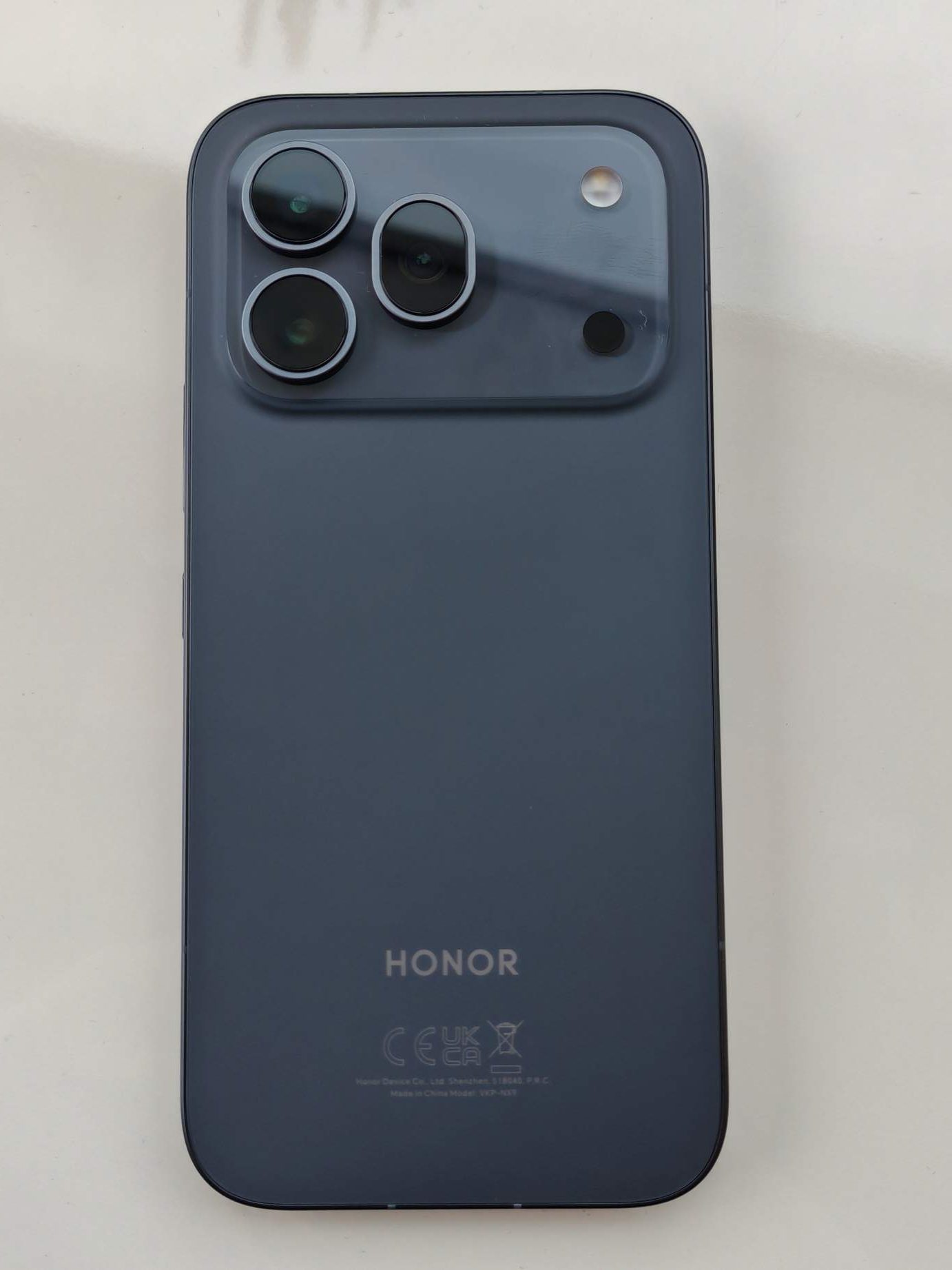
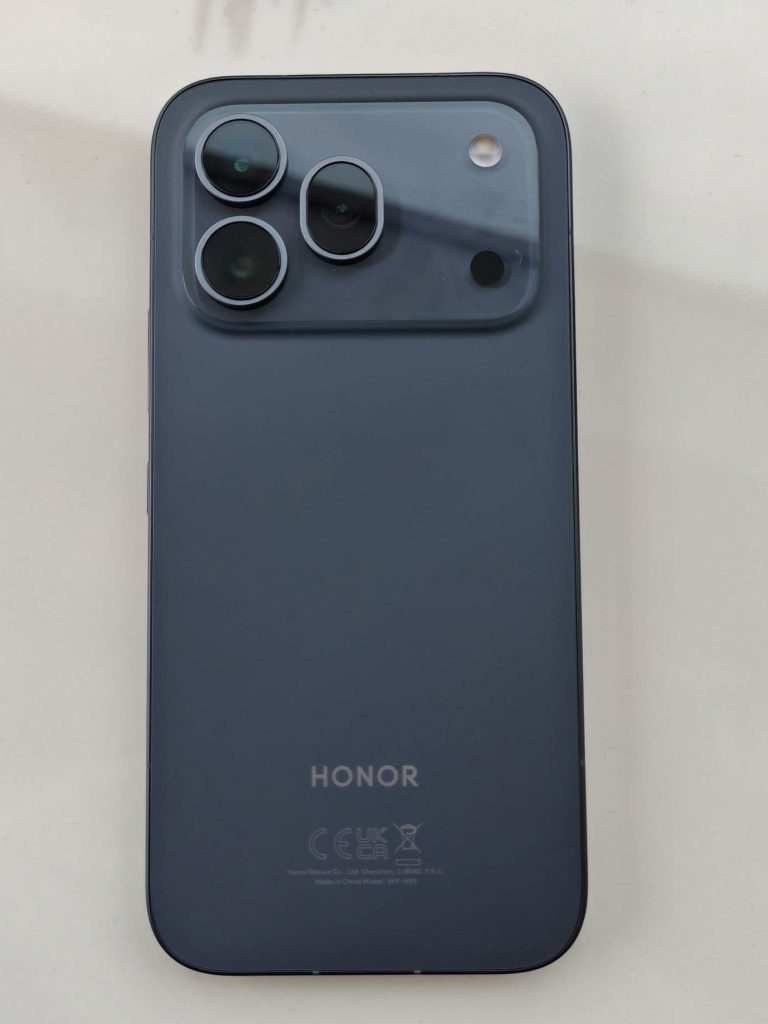
The HONOR 600 Series, comprising the standard and Pro variants, positions itself as a performance-driven platform built around three critical pillars: battery longevity, silicon capability, and advanced AI software integration. Stripping away the broader marketing narrative, what remains is a tightly engineered system where power delivery, compute efficiency, and intelligent software orchestration work in concert.
Battery System: High-Density Engineering Meets Intelligent Power Orchestration
At the hardware level, both devices in the series are built around a 6,400mAh high-capacity battery, representing one of the largest implementations within its category. However, capacity alone does not define performance—the real innovation lies in how that capacity is physically integrated and intelligently managed.
High-Density Stacking and Structural Efficiency
The battery achieves its size without increasing device thickness, enabled by advanced stacking technology. This refers to a multi-layer internal cell architecture that maximises volumetric energy density. Rather than relying on a larger footprint, the design compresses layers vertically, preserving a slim chassis while significantly increasing stored energy.
This approach requires careful thermal and structural planning:
- Heat dissipation pathways must remain efficient despite tighter internal spacing
- Structural integrity must be preserved despite reduced internal tolerances
- Power delivery layers must maintain consistent voltage under load
The result is a battery system that avoids the typical trade-offs between capacity and ergonomics.

AI Battery Scheduling Engine
Where the system truly differentiates itself is in software-level power management. The AI Battery Scheduling Engine dynamically allocates energy resources across subsystems in real time.
This engine continuously evaluates:
- CPU and GPU workload intensity
- Network activity (5G, Wi-Fi, background sync)
- Display refresh rate and brightness demands
- Touch input responsiveness
- AI processing loads
Chipset Architecture: Performance Scaling Across Tiers
The HONOR 600 Series employs two distinct chipset configurations, each targeting different performance tiers while maintaining architectural consistency in efficiency and AI capability.
Standard HONOR 600: Snapdragon 7 Gen 4

The base model integrates the Snapdragon 7 Gen 4 platform, delivering:
- 27% CPU performance increase
- 30% GPU performance increase
This chipset is designed for balanced performance, with emphasis on:
- Efficient multi-core processing
- Sustained GPU output for gaming and UI rendering
- Integrated AI acceleration for on-device tasks
The CPU architecture likely follows a heterogeneous core layout (performance + efficiency cores), allowing dynamic scaling depending on workload. This aligns closely with the AI Battery Scheduling Engine, enabling fine-grained power-performance balancing.
The GPU improvements suggest enhanced:
- Frame stability under sustained loads
- Support for higher refresh rate rendering (120Hz display integration)
- Improved compute throughput for AI-assisted graphics processing
HONOR 600 Pro Model: Snapdragon 8 Elite (3nm Process)
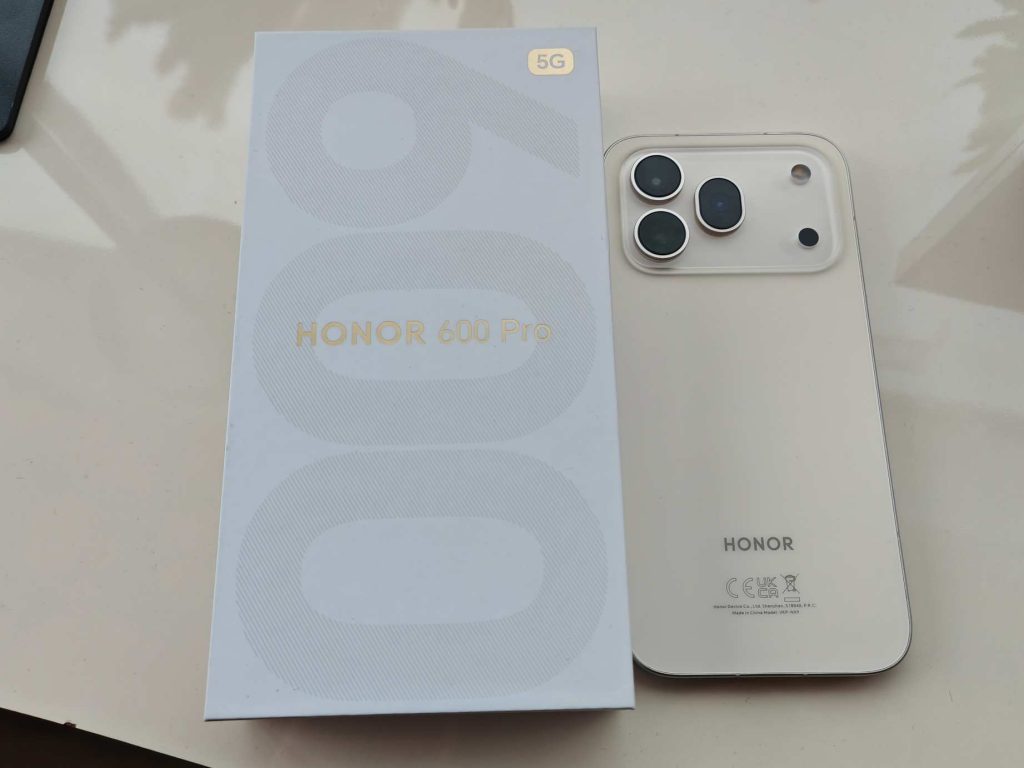
The Pro variant elevates performance significantly with a 3nm process-based flagship chipset, delivering:
- 40% CPU performance increase
- 44% GPU performance increase
The shift to a 3nm fabrication node is critical. It enables:
- Higher transistor density
- Lower power leakage
- Improved performance-per-watt efficiency
This directly impacts:
- AI workload acceleration
- Thermal stability under sustained loads
- Battery efficiency during intensive tasks
The CPU cluster in this configuration is optimised for high-frequency burst performance and sustained multi-threading, making it suitable for:
- Real-time AI video generation
- Advanced image processing pipelines
- High-end gaming scenarios
The GPU improvements further enhance:
- Real-time rendering capabilities
- AI-assisted visual processing
- High-resolution output with minimal latency
AI Processing Integration
Both chipsets incorporate dedicated AI processing units (NPUs), which are critical for the software features discussed later. These NPUs enable:
- On-device inference
- Reduced reliance on cloud processing
- Lower latency for AI-driven tasks
The difference between the two models lies in throughput:
- The standard model handles AI efficiently for everyday creative tasks
- The Pro model scales for more complex, multi-layered AI operations
AI Software Stack: Unified Multimodal Intelligence
The defining characteristic of the HONOR 600 Series is its tightly integrated AI software ecosystem, centred around a unified multimodal video generation model.
AI Image to Video 2.0
This system represents a convergence of multiple AI disciplines:
- Image synthesis
- Video generation
- Temporal interpolation
- Natural language processing
At a technical level, the system allows:
- Input of up to three images
- Interpretation of text-based prompts
- Generation of 3–8 second video sequences.
Multimodal Input Processing
The system’s ability to combine images and language indicates a transformer-based architecture capable of:
- Cross-modal embedding alignment
- Contextual understanding across visual and textual inputs
- Sequential frame generation based on semantic intent
Users can define:
- Starting frame
- Ending frame
From a technical standpoint, this requires:
- Temporal consistency modelling
- Motion prediction between defined states
- Frame interpolation guided by learned patterns
AI Photos Agent
The AI Photos Agent introduces natural language-driven image editing. Instead of manual adjustments, users issue commands such as:
- Object removal
- Scene enhancement
- Style transformation
This implies:
- Semantic segmentation capabilities
- Object recognition and isolation
- Generative fill and reconstruction
The system must:
- Parse the instruction
- Identify relevant regions in the image
- Apply transformations while preserving visual coherence
Moving Photo Editing System
The moving photo feature extends static images into dynamic compositions through:
- Motion extraction
- Depth simulation
- Layer separation
Key tools include:
- Moving Photo Eraser – removes elements across temporal frames
- Breakout Collage – creates layered 3D-style compositions
These features rely on:
- Depth estimation models
- Multi-frame consistency tracking
- AI-driven compositing
AI Cloud Enhancement
While much of the processing occurs on-device, cloud-assisted AI enhances more complex tasks. This hybrid model enables:
- Higher-quality rendering for intensive workloads
- Extended AI model capacity beyond local hardware limits
- Continuous improvement via server-side updates
The system dynamically decides:
- What to process locally (low-latency tasks)
- What to offload to the cloud (high complexity tasks)
AI Imaging Architecture (AiMAGE Integration)
Although primarily camera-focused, the AI imaging system plays a role in computational efficiency. The architecture includes:
- AI Remosaic processing
- Multi-frame synthesis
- Real-time optimisation pipelines
These processes are tightly coupled with the chipset’s AI engine, ensuring:
- Minimal processing delay
- Efficient power consumption during image capture
- Seamless integration with editing tools
System-Level Integration: Where It All Converges
What makes the HONOR 600 Series technically compelling is not any single component, but the integration between them.
Battery + Chipset Synergy
The large battery alone would be insufficient without:
- Efficient 3nm architecture (Pro model)
- AI-driven power scheduling
Together, they enable:
- Sustained high-performance AI workloads
- Reduced thermal throttling
- Extended usage without aggressive power drain
Chipset + AI Software Cohesion
The unified AI model depends heavily on:
- NPU acceleration
- GPU-assisted rendering
- CPU coordination for task management
The Pro model, in particular, benefits from:
- Faster AI inference
- Smoother real-time generation
- Improved responsiveness in multimodal tasks
AI + Battery Intelligence
AI is not just a feature—it actively governs system behaviour:
- Predicting usage patterns
- Adjusting power allocation
- Optimising performance dynamically
This creates a feedback loop where:
- AI workloads influence power distribution
- Power availability influences AI execution strategy
From a purely technical perspective, the HONOR 600 Series demonstrates a cohesive approach to modern smartphone engineering. The 6,400mAh battery is not simply large—it is intelligently managed and structurally optimised. The chipset configurations provide scalable performance across tiers, with the Pro model leveraging cutting-edge fabrication for efficiency gains. Meanwhile, the AI software ecosystem transforms the device into a computational platform capable of real-time multimodal content generation.
The key takeaway is integration. Battery, silicon, and AI are not isolated components—they operate as an interdependent system. That synergy is what ultimately defines the performance envelope of the HONOR 600 Series.
More on the HONOR 600 series coming soon, like a review and UK pricing.