
The standard playbook for modern digital publishing is fundamentally broken. When organic growth stalls, the default reflex for most marketing teams is simply to publish more. Crank out dozens of programmatic posts a week, saturate every long-tail keyword in sight, and pray that algorithmic crawlers reward the sheer volume.
The result is a graveyard of neglected digital assets: existing articles that steadily decay in search rankings, haemorrhage impressions, and remain completely invisible to modern conversational engines like ChatGPT, Perplexity, and Google AI Overviews.
Sameeh, an engineer by training, spent years running face-first into this distribution problem. Like many builders, his technical execution was flawless, but his products launched into near-total silence. A full restaurant POS system was engineered, met with indifference, and eventually open-sourced. A job-application follow-up product withered and was shut down due to nonexistent retention.
When a single Reddit post finally caught fire, delivering an influx of paying customers, the celebration was brief. The traffic faded almost immediately, leaving him right back at square one and proving that a one-off viral spike is not a distribution model.
Predictable growth only arrived when Sameeh stopped chasing shortcuts and mastered distribution mechanics: traditional SEO indexing first, followed by Generative Engine Optimisation (GEO)—the discipline of structuring content so that AI assistants actively retrieve and cite it when answering user questions.
Leafpad is that operational framework turned into an automated agent, also now available on ProductHunt.
Shifting From Content Generation to Content Triage
The market is currently saturated with tools that claim “AI will write your blog.” Leafpad takes the exact opposite stance.
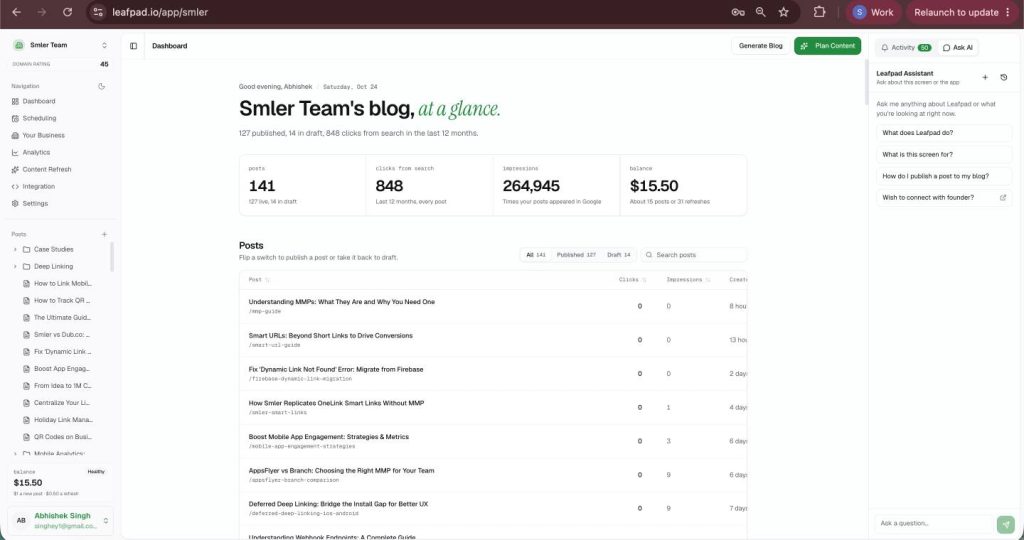
Most established teams do not suffer from a lack of published material. They already have deep content archives sitting on their domains. The true blind spot is operational visibility: teams cannot easily identify which existing pages are bleeding rank or which ones are completely excluded from AI answer models.
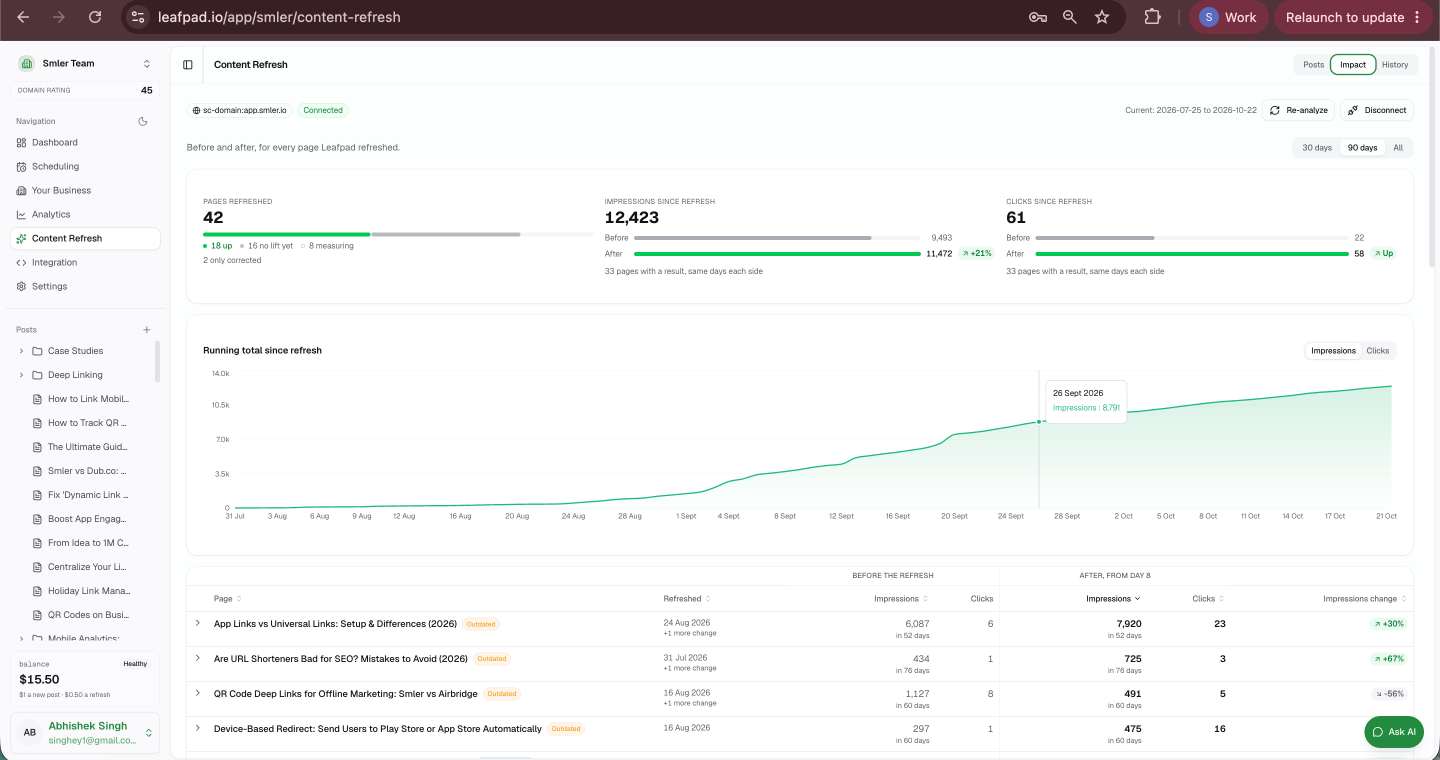
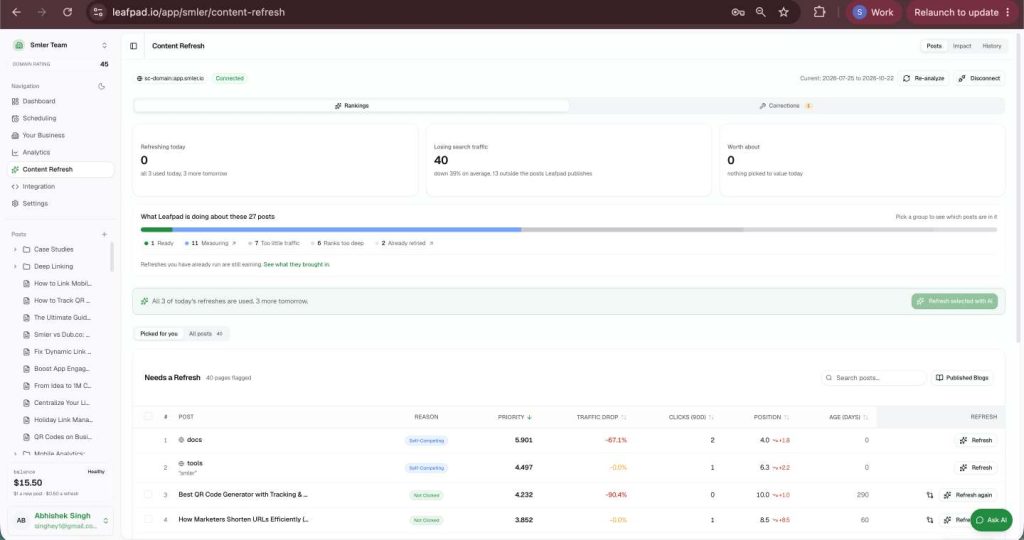
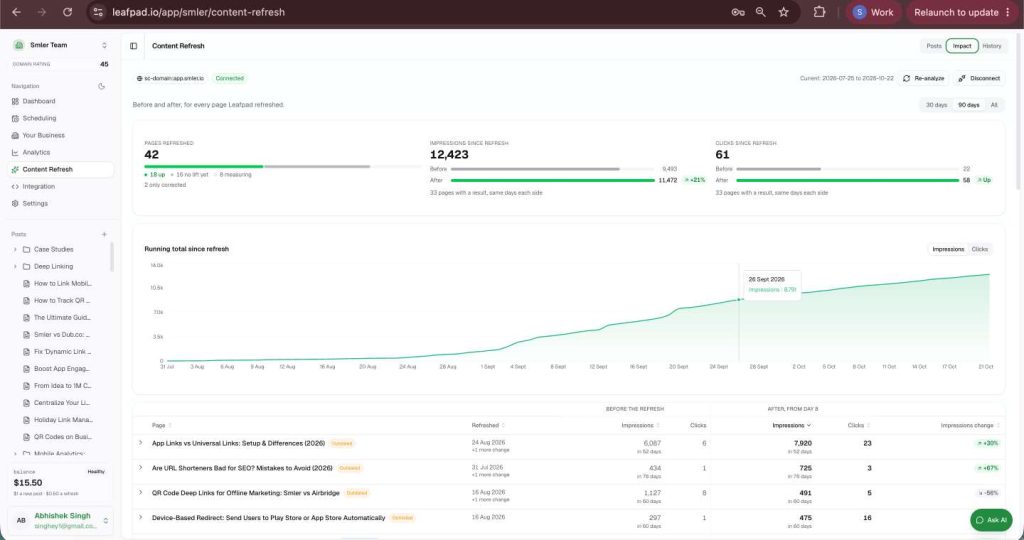
Leafpad functions as an automated content refresh engine:
-
Decay Detection: The agent monitors a domain’s published footprint to flag pages experiencing organic traffic erosion or algorithmic slip.
-
GEO Visibility Auditing: It identifies which published resources are missing from conversational assistant answers, pinpointing where competitors are being cited instead.
-
Targeted Rewrites: Rather than drafting arbitrary net-new posts, it rewrites and restructures existing assets to satisfy both search crawlers and large language model retrieval pipelines.
Why Generative Engine Optimisation (GEO) Matters Now
The discovery landscape has split. Fewer users are clicking through multi-link Search Engine Results Pages (SERPs) to browse ten different articles. Instead, users increasingly rely on conversational assistants to synthesise complex questions into direct answers with embedded citations.
If an article is structured purely for legacy keyword density, it risks being bypassed entirely by these retrieval systems. GEO focuses on informational density, clear entity relationships, and authoritative phrasing that LLMs can extract with high confidence.
“I spent years building things nobody could find. The fix was never a better product—it was being visible where people actually ask questions now, and increasingly that’s an AI assistant, not a search results page. Leafpad is the system I wish I’d had three launches ago.”
— Sameeh, Founder, Leafpad
Fixing What You Already Own
The instinct to endlessly generate new content is a relic of an older web. In an environment saturated with automated copy, publishing velocity alone provides diminishing returns. Authority belongs to teams whose published references are accurate, authoritative, and structurally discoverable by AI models.
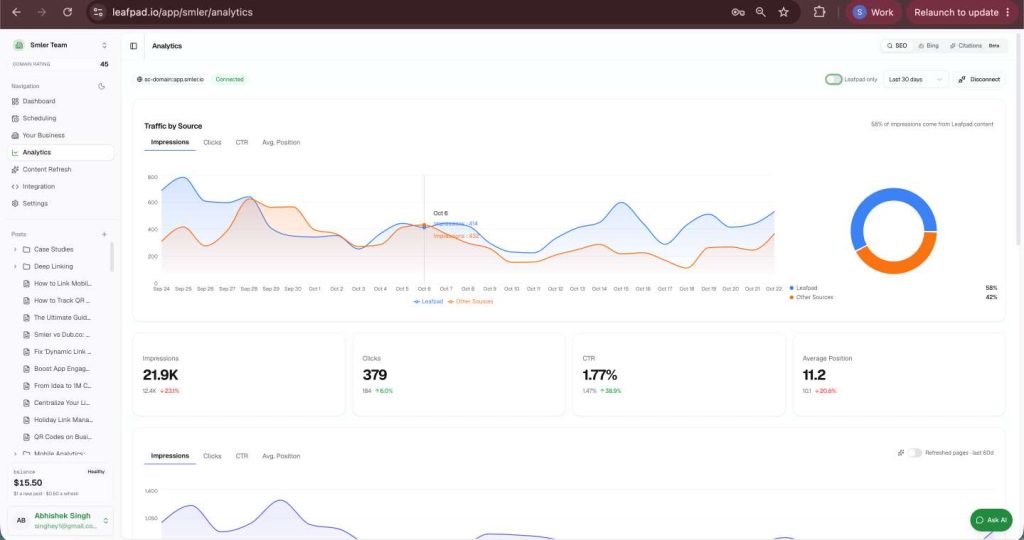
Bootstrapped without external venture funding, Leafpad proves that sustainable traffic does not require an endless publishing cycle. It starts with having the discipline to diagnose, repair, and reclaim the digital assets you have already published.