For nearly a decade, a thick, ideological wall has separated mainstream consumer audio from the niche world of high-fidelity audiophilia. On one side stood convenience: true wireless stereo (TWS) earbuds prioritising active noise cancellation (ANC), pocketable cases, touch controls, and a heavily stylised, bass-boosted sound signature designed to mask environmental noise. On the other side stood purity: wired In-Ear Monitors (IEMs), multi-driver arrays, external Digital-to-Analog Converters (DACs), and flat, uncoloured frequency responses designed to reproduce music exactly as the mixing engineer intended.

Every time a manufacturer claimed to bridge this gap, audiophiles scoffed. Bluetooth compression, poor internal amplification, and acoustic limitations forced by cramming batteries and microphones into a tiny shell usually meant that “audiophile TWS” was an oxymoron.
Enter the Status Audio Pro X GoldenSound Edition.

This earbud is not just another corporate product release; it is a direct collaboration between Status Audio—a brand built on delivering high-performance audio hardware without traditional luxury markups—and Cameron Oatley, known globally in the audio community as GoldenSound. As one of the most technically rigorous, measurement-focused reviewers and audio engineers in the industry, GoldenSound has built a reputation on exposing snake oil and demanding acoustic perfection.
When an uncompromising hardware manufacturer pairs up with a fiercely critical audio purist, the expectations are astronomically high. This special edition does not merely swap out colour schemes; it targets the foundational flaw of wireless audio: the tuning curve.
Over weeks of intense testing across high-resolution streaming platforms, various source devices, commuting environments, and critical listening sessions, this review uncovers whether the Pro X GoldenSound Edition achieves the impossible, or if it is simply another highly polished marketing campaign.
The GoldenSound Philosophy: Challenging the Harman Curve
To understand why this earbud sounds the way it does, one must understand the acoustic philosophy behind its creation.
The Problem with Mainstream TWS Tuning
Most modern consumer headphones and earbuds are tuned to some variation of the Harman Target Curve. Developed by Dr Sean Olive and his team at Harman International, this curve is a scientifically backed frequency response profile designed to mimic how a pair of high-quality, flat-measuring speakers sounds inside a treated listening room. It features a prominent bass boost to compensate for the loss of physical, chest-thumping low-end that speakers provide, along with an elevated upper-mids section to maintain vocal clarity.
The GoldenSound Solution
Instead of chasing a generic curve designed for mass-market appeal, GoldenSound hardcoded a bespoke, proprietary reference tuning profile directly into the digital signal processor (DSP) of the Pro X hardware.
The goal was simple yet incredibly difficult to execute: achieve the technical performance, tonal accuracy, and instrument separation of a high-end, multi-thousand-dollar wired IEM while retaining the modern conveniences of active noise cancellation, ambient transparency, and wireless freedom. It is a tuning that prioritises transparency, realistic timbre, and micro-detail over artificial energy.
Unboxing, Design, and Ergonomics
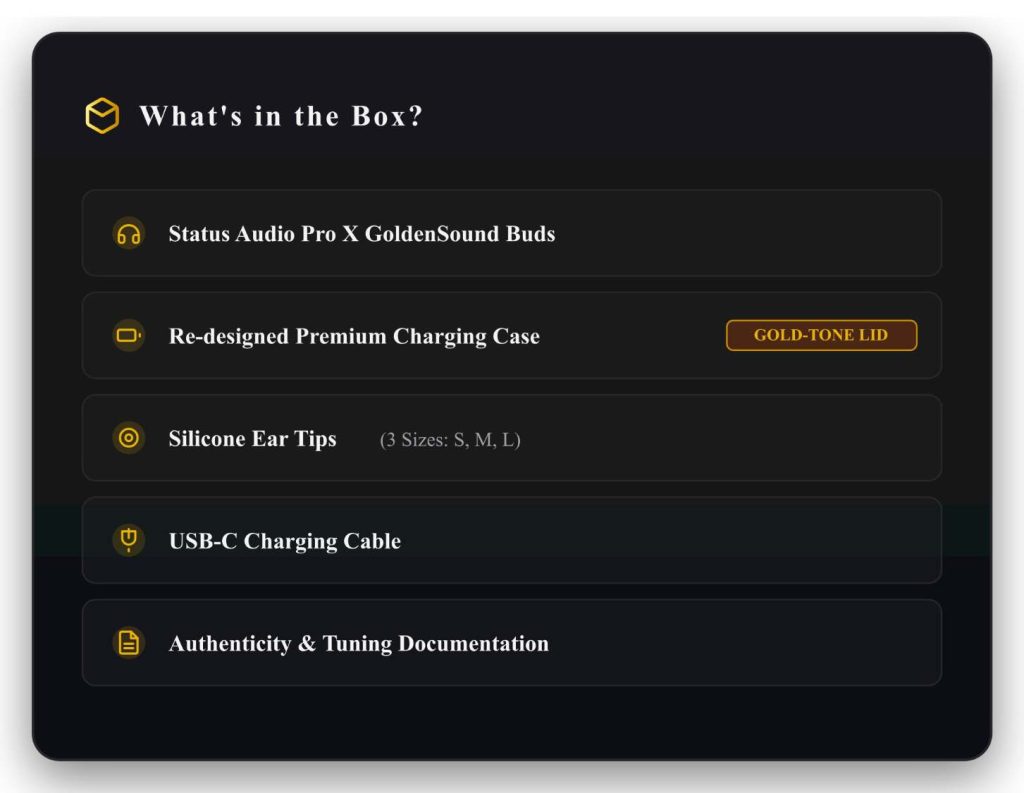
The Re-engineered Charging Case
One of the most immediate points of praise for the GoldenSound Edition is an upgrade that isn’t even acoustic: the charging case.
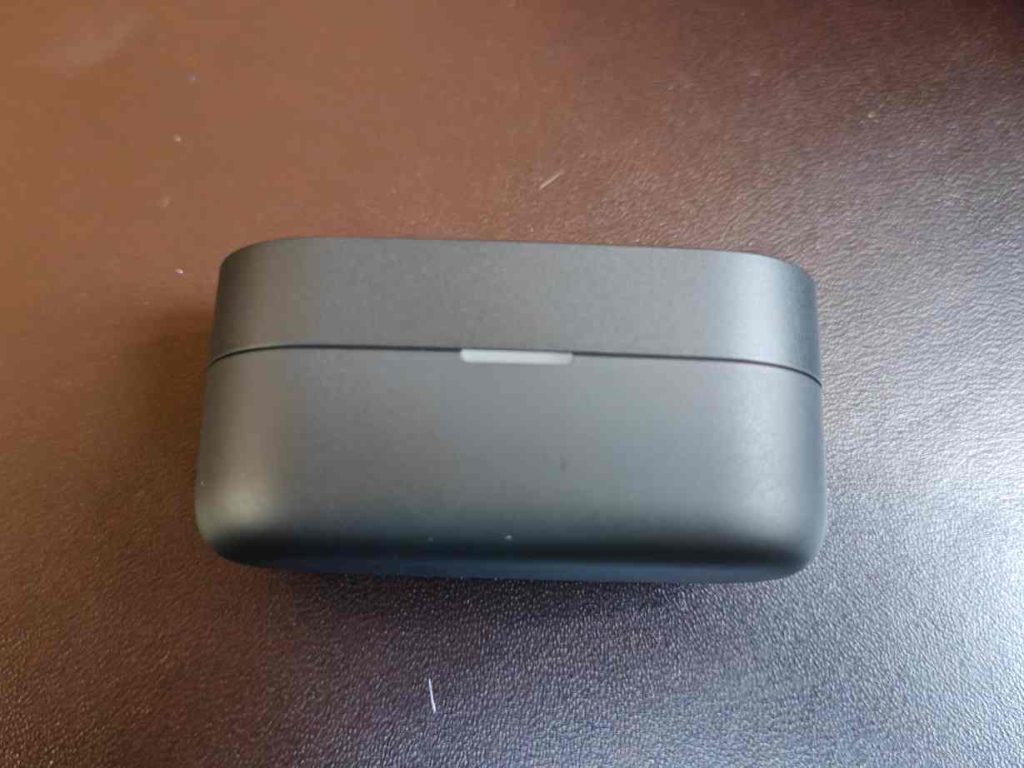
Owners of the original Status Pro and the subsequent Between 3ANC models consistently voiced a singular complaint: the charging case was an absolute monolith. It was blocky, heavy, and created an unsightly, uncomfortable bulge in any standard pants pocket. Status Audio listened.
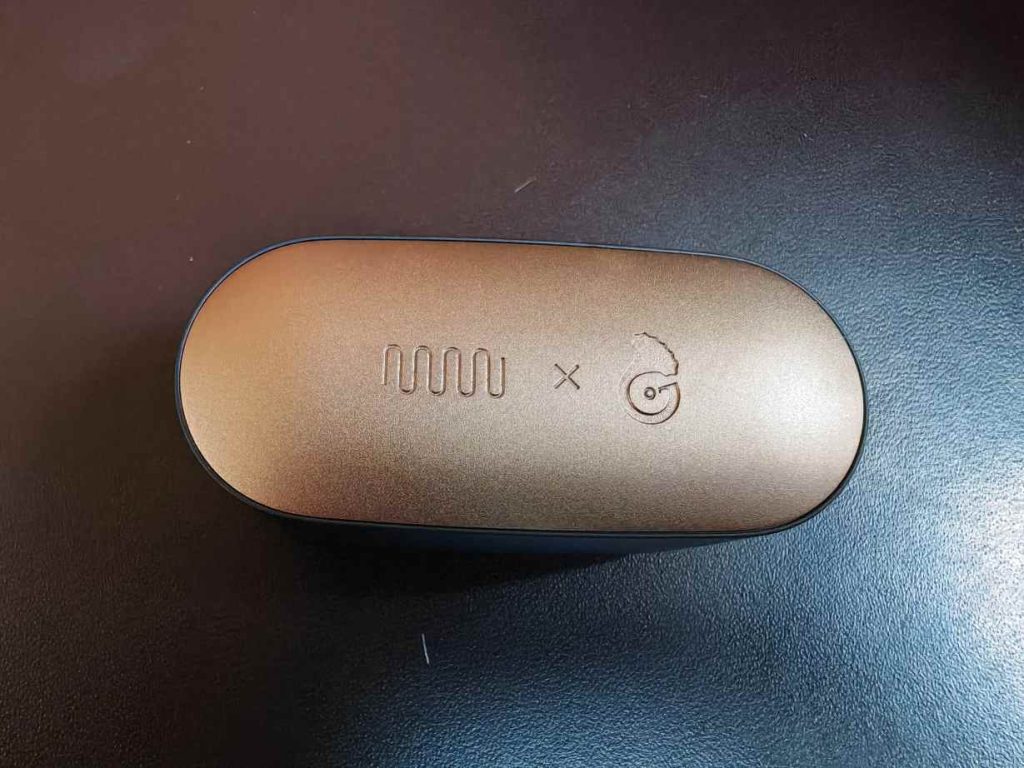
The GoldenSound Edition introduces a completely re-engineered case that is 21% smaller in total footprint compared to its predecessors. It features rounded contours, a highly pocketable profile, and an upgraded aesthetic. The top lid is finished in a matte, premium champagne-gold tone that sports the subtle GoldenSound branding, while the main body uses a soft-touch, rubberised black plastic that resists fingerprints and scratches beautifully. The magnetic hinge feels snappy, firm, and lacks the cheap wobble found on lesser TWS cases.
Earbud Form Factor and Fit Mechanics
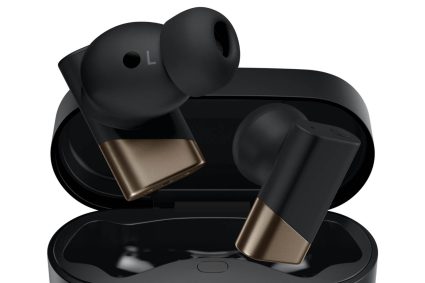
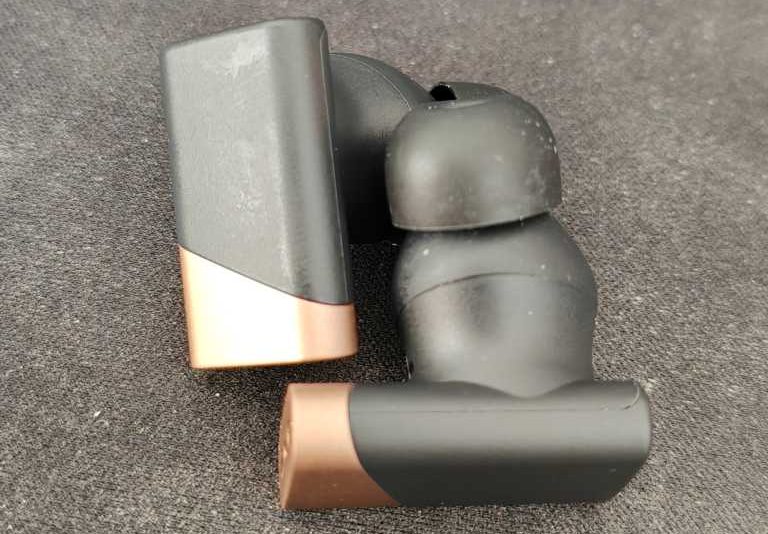
The earbuds themselves retain the iconic, bold “monolith” design language that Status Audio pioneered. Moving away from the ubiquitous “round bulb with a stick” aesthetic popularised by Apple, the Pro X looks like a piece of high-tech minimalist architecture. It features a rectangular outer stem that houses the external microphones, batteries, and touch interfaces.
Because the earbuds house a sophisticated triple-driver acoustic chamber, the inner shells are undeniably larger than a standard pair of AirPods or Sony WF-1000XM5s. To combat the weight and potential instability during movement, Status employs a dual-stabilisation system:
-
Silicone Ear Tips: Standard isolation tips that seal the ear canal.
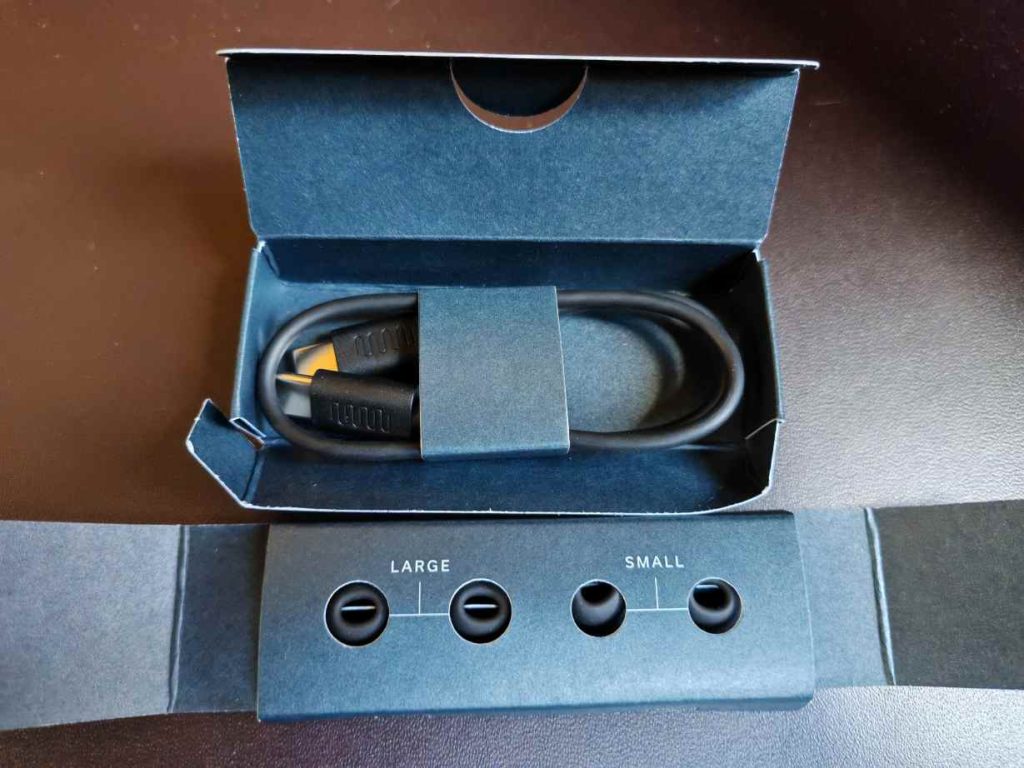
By mixing and matching the three included sizes of tips, finding an airtight, secure seal is remarkably easy. Once locked in, the weight distribution shifts evenly across the ear bowl rather than pulling down exclusively on the ear canal. You can comfortably wear these during multi-hour writing sessions or moderate gym workouts without experiencing hot spots or feeling like a sudden head movement will send them flying onto the pavement.
The Acoustic Engine: Triple-Driver Hybrid Architecture
To appreciate why the GoldenSound tuning profile works so effectively, we must dissect the internal hardware. Most true wireless earbuds use a single dynamic driver to handle the entire frequency spectrum. While cost-effective and easy to tune, a single driver often struggles to reproduce deep sub-bass frequencies at the same time it is trying to resolve high-frequency treble detail, leading to intermodulation distortion.
The Pro X GoldenSound Edition utilises a highly sophisticated Triple-Driver Hybrid Array inside each earbud:
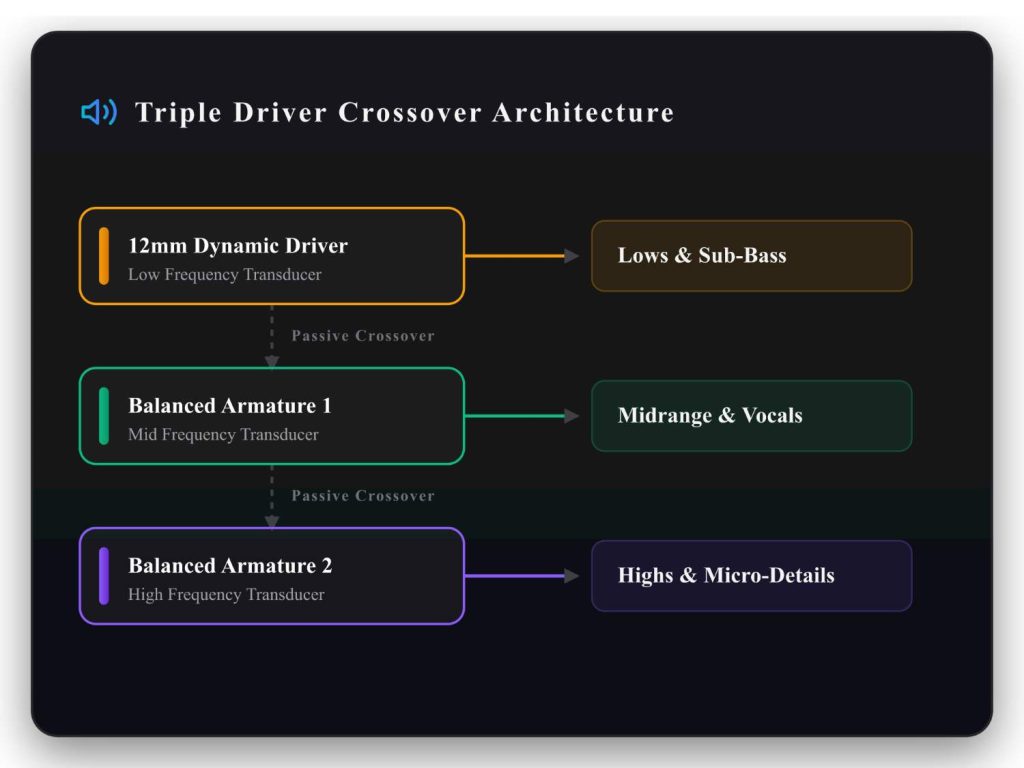
The 12mm Dynamic Driver
Dedicated exclusively to the low-end of the spectrum, this massive driver handles everything from sub-bass rumble up through the mid-bass transition. Because it doesn’t have to worry about reproducing vocals or treble, it can be optimized entirely for air movement, texture, and structural impact.
Dual Knowles Balanced Armatures
Balanced armatures (BAs) are ultra-lightweight, microscopic drivers commonly used in high-end medical hearing aids and professional stage monitors. They excel at lightning-fast transient response and extreme clarity because they have incredibly low moving mass. Status utilises two customised Knowles BAs—one dedicated to capturing the nuances of the midrange (vocals, electric guitar bodies, pianos) and the other dedicated entirely to rendering upper treble and air frequencies.
The Passive Crossover Network
Splitting the audio signal so that the right frequencies go to the right drivers requires a highly precise crossover network. In the GoldenSound Edition, this hardware configuration acts as a blank canvas. GoldenSound’s custom DSP map dictates exactly where these drivers hand off the acoustic baton to one another, ensuring a seamless, coherent soundstage that feels like it’s coming from a single, unified source rather than three separate drivers fighting for dominance.

Comprehensive Sound Quality Breakdown
Evaluating the sound of the GoldenSound Edition requires shedding mass-market consumer biases. If you approach these earbuds expecting the overwhelming, skull-rattling bass boom of a Beats or JBL earbud, you will initially find them sterile. However, if you give your brain a few hours to adjust to a true high-fidelity presentation, you will quickly realise how much musical information you have been missing for years.
Bass: Surgical Precision and Texture
The bass response here is an absolute masterclass in restraint and execution. GoldenSound has effectively flattened the typical mid-bass hump (around $150text{ Hz}$), meaning there is absolutely zero acoustic bleed into the lower midrange.
When a track calls for sub-bass power—such as Hans Zimmer’s “Why So Serious?” from The Dark Knight soundtrack—the $12text{ mm}$ dynamic driver wakes up with terrifying authority. It drops down into the lowest registers ($20text{ Hz}$ to $40text{ Hz}$) with a physical, rumbling texture that you can feel in your jawline, yet it remains perfectly controlled.
In electronic tracks like Daft Punk’s “Lose Yourself to Dance,” the kick drum has a tight, instantaneous impact. You hear the distinct thud of the pedal striking the skin, followed by a rapid decay. It is a highly athletic bass: fast, deeply extended, and present only when the source material demands it.
Midrange: Unrivalled Timbral Accuracy
The midrange is where most TWS earbuds stumble, either burying vocals beneath a wall of bass or making them sound thin and metallic due to poor driver integration. The GoldenSound Edition handles this region with stunning realism.
Listening to Rebecca Pidgeon’s iconic audiophile test track, “Spanish Harlem,” her solo vocal sits dead centre with a lifelike, intimate presence. There is no artificial “shoutiness” or nasal quality in the upper-mids. Acoustic instruments, such as the grand piano in Queen’s “Bohemian Rhapsody” or the acoustic guitars in Fleetwood Mac’s “The Chain,” possess a natural woody timbre and accurate weight. The lower-mids are clean and uncoloured, allowing male baritones and female sopranos to coexist in a beautifully balanced sonic space.
Treble: Crisp, Detailed, and Fatigue-Free
High frequencies are incredibly difficult to master in a true wireless format. To create the illusion of high resolution, many brands artificially boost the region. This results in an initial “wow” factor, but quickly leads to piercing sibilance (the harsh S, T, and C sounds in vocals) and severe ear fatigue.
GoldenSound has meticulously ironed out these peaks. The treble response is extended, airy, and exceptionally resolving, yet it remains incredibly smooth. In Miles Davis’s “So What,” the cymbal hits are crisp and distinct; you can hear the brush striking the metal, the shimmering ringout, and the natural decay into black background silence. It reveals immense micro-detail—such as a singer taking a breath or a guitarist’s fingers sliding across a fretboard—without ever crossing the line into harshness or “spiciness.”
Soundstage, Imaging, and Spatial Accuracy
Because these are sealed, closed-back in-ear monitors, they cannot match the vast, holographic soundstage of a pair of open-back studio headphones. However, within the realm of TWS earbuds, the spatial performance is stellar.
The soundstage is moderately wide but possesses exceptional height and depth. Instead of the music feeling like a flat, two-dimensional line running through the centre of your head, the GoldenSound tuning creates a defined, three-dimensional bubble.
Instrument separation and imaging are surgically precise. In complex arrangements like Polyphia’s “Playing God,” you can pinpoint exactly where each layered guitar riff is positioned across the virtual stage. The drums are anchored firmly in the back, the main melody sits front and centre, and secondary percussion elements dance clearly in the far left and right channels without ever overlapping or blending.
Deep-Dive Track Analysis: The Audiophile Playlist Test
To truly stress-test the claims made by Status Audio and GoldenSound, we put the Pro X through an exhaustive series of stress tests across high-resolution reference tracks spanning multiple genres.
Classical / Orchestral: Mahler – Symphony No. 2 “Resurrection” (London Symphony Orchestra)
Orchestral pieces are notoriously brutal on single-driver TWS systems because they force drivers to handle deep timpani strikes at the same time delicate violins are playing in the top registers.
-
The Pro X Performance: The instrument placement across the orchestra is vivid and uncrowded. During the explosive climaxes, the dynamic driver handles the massive brass and drum swells without swamping the delicate woodwinds handled by the Knowles balanced armatures. The sense of hall decay—the reverberating sound off the concert hall walls—is clearly audible, adding to the realism.
Jazz / Acoustic: Bill Evans Trio – My Foolish Heart (Live at the Village Vanguard)
Live jazz recordings test an earbud’s ability to render ambient acoustic space, micro-dynamics, and delicate brush work.
-
The Pro X Performance: The quiet background noise of glasses clinking and audience rustling at the Village Vanguard feels distinctly localised around the stage. Paul Motian’s drum brush strokes over the snare have a textured, tactile rasp rather than a smeared white-noise hiss. Scott LaFaro’s double bass sounds deep, resinous, and naturally acoustic—lacking the artificial boomy thickening that ruins this track on standard consumer earbuds.
Progressive Metal / Complex Polyrythms: Tool – Chocolate Chip Trip
Featuring complex synthesiser panning and an intricate, highly dynamic drum solo by Danny Carey, this track tests speed, transient response, and spatial imaging.
-
The Pro X Performance: The modular synth sequences circle your head with pinpoint rotational accuracy. When Danny Carey’s drum kit enters, the separation between the rack toms, floor toms, ride cymbals, and kick drum is breathtaking. The fast attack of the balanced armatures allows every stick hit to retain its individual transient snap, even during lightning-fast roll fills across the stereo field.
App Integration and Technical Performance
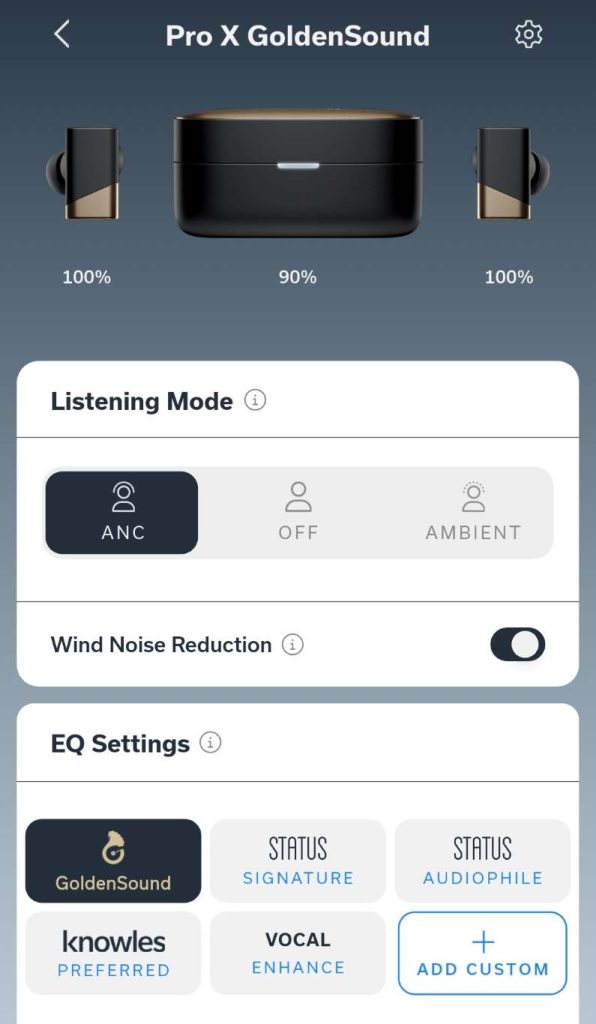
The Status Audio companion app serves as the command centre for the GoldenSound Edition, providing access to essential features while maintaining a clean, no-nonsense interface.
The Locked GoldenSound Profile
When you first connect the earbuds, the GoldenSound Reference Profile is selected by default. It is vital to note that this profile is entirely locked. You cannot enter it and tweak individual sliders, nor can you adjust its baseline parameters. GoldenSound designed this as an absolute, uncompromising reference target.
However, Status Audio has not locked users out of customisation entirely. If you want a different sound flavour for specific activities, you can easily toggle between other built-in profiles:
-
Status Signature: The original, highly energetic, hard-punching V-shaped tuning that made the standard Pro line famous.
-
Knowles Preferred: A tuning curve optimised around the specific frequency strengths of the Knowles balanced armatures, emphasising upper-range detail and clarity.
-
8-Band Custom EQ: A fully manual equaliser allowing you to build, save, and name your own frequency response curves from scratch.
Hybrid Controls: The Best of Both Worlds
One of the most brilliant design choices on the Pro X hardware is its hybrid control scheme, which perfectly solves a universal TWS frustration: accidental touches.
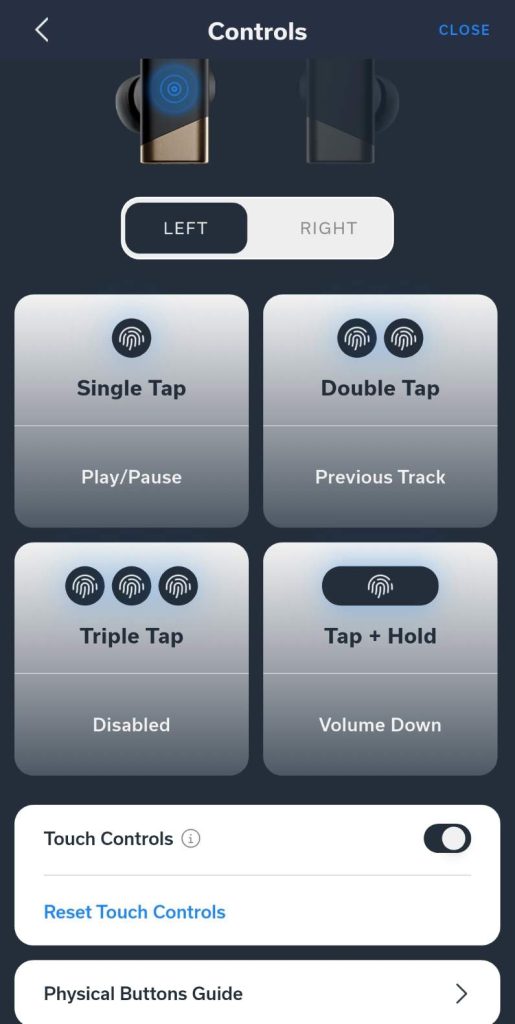
By placing the critical ANC and ambient mode toggles on a physical, tactile button at the top of the stem, you can confidently grasp the earbuds to adjust their fit or press them deeper into your ear canal without accidentally pausing your music, skipping a track, or summoning your voice assistant. It is an incredibly intuitive system that other manufacturers should immediately clone.
Active Noise Cancellation and Real-World Usability
Active Noise Cancellation (ANC) Performance
The Pro X GoldenSound Edition features a hybrid active noise cancellation system rated to suppress up to 52dB of external noise. In practical, real-world testing, it stands as a highly capable performer, though it doesn’t quite dethrone the absolute class-leaders like the Bose QuietComfort Ultra or Sony WF-1000XM5.
-
Low-Frequency Suppression (Excellent): The earbuds excel at obliterating low-frequency drones. Engine hums on aeroplanes, the deep rumble of subway cars, and the ambient roar of a busy office HVAC system are flattened down to a faint, distant whisper.
-
Mid-to-High Frequency Suppression (Good): Like most ANC systems, sudden, sharp, high-frequency sounds—such as a baby crying, a coworker laughing loudly, or a mechanical keyboard clacking nearby—will still bleed through slightly, though their sharp edges are significantly softened.
Transparency (Ambient) Mode
The transparency mode is highly functional but leans slightly toward a utilitarian presentation rather than a perfectly natural one. It pipes in outside environmental sounds clearly, allowing you to easily carry on a conversation with a barista or remain aware of traffic while running. However, it does introduce a very subtle, low-level background hiss when activated, and your own voice can sound slightly occlusion-heavy (boomy) compared to the class-leading transparency of Apple’s AirPods Pro.
Connectivity and Codec Support
Equipped with a modern Bluetooth architecture, the GoldenSound Edition offers rock-solid connectivity.
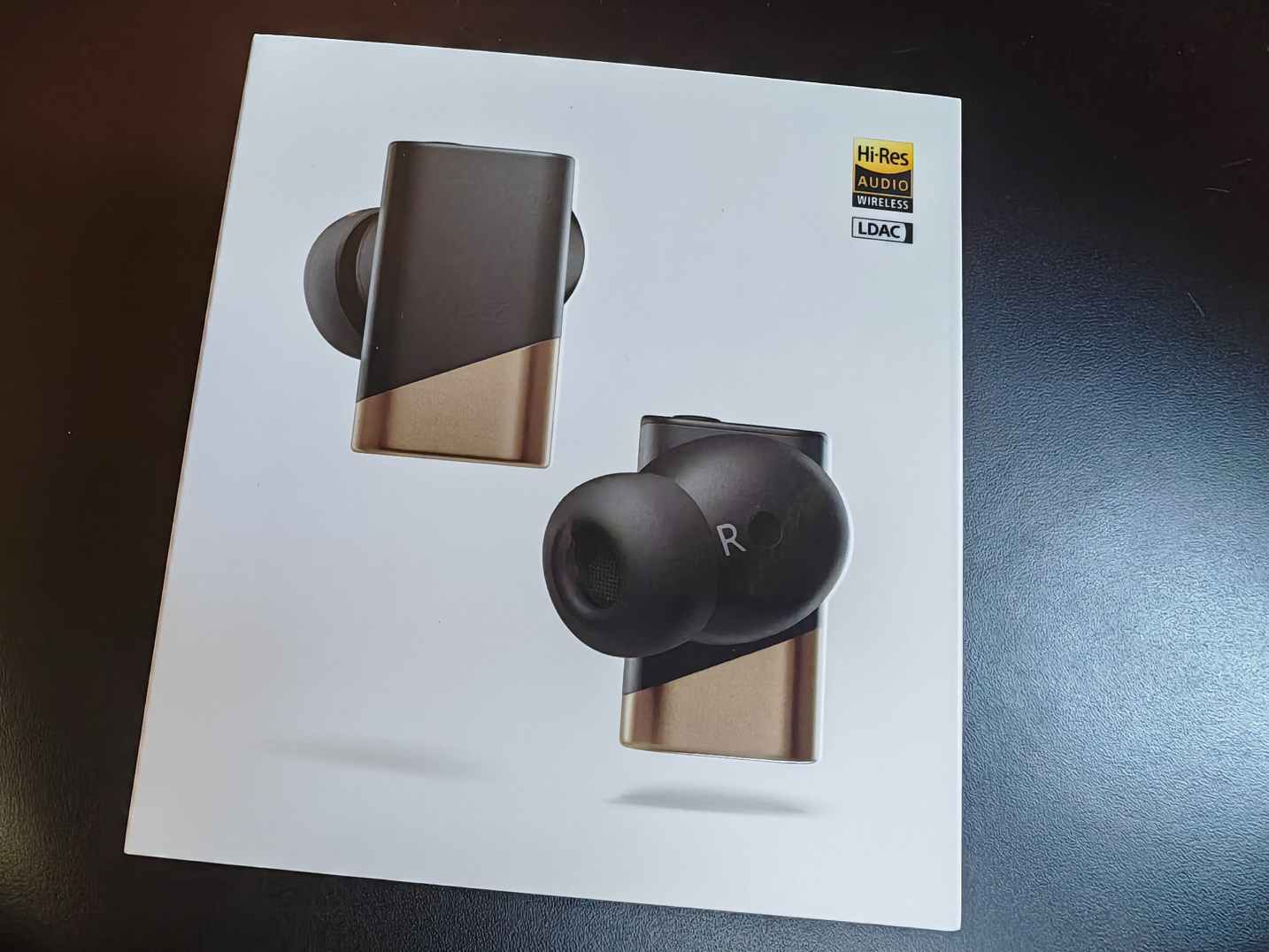
For Android users and audiophiles streaming from high-resolution digital audio players (DAPs), the inclusion of LDAC is a massive win. Operating at up to $990text{ kbps}$, LDAC allows for three times the data transmission of standard Bluetooth, which is absolutely vital for preserving the micro-details and wide soundstage that the GoldenSound tuning delivers.
For iOS users, it falls back to a highly optimised AAC implementation. The earbuds also feature Bluetooth Multipoint, allowing you to seamlessly connect to your laptop for a Zoom call and automatically switch over to your smartphone when a call comes in, without needing to dive into your settings menu.
Call Quality and Microphone Arrays
The earbuds feature an advanced beamforming microphone array designed to isolate your voice from environmental clutter. In quiet or moderately noisy environments (like a home office or a quiet street), call quality is stellar. Your voice sounds full-bodied, clear, and lacks the robotic, compressed “underwater” sound typical of many TWS systems.
In extremely hostile acoustic environments—such as a howling, wind-swept train platform—the background noise suppression algorithms work aggressively to keep your voice audible. While this can occasionally cause minor clipping on the first syllable of your words, it successfully prioritises voice intelligibility over environmental chaos.
Battery Life and Power Management
Despite driving a power-hungry triple-driver array, processing heavy ANC algorithms, and decoding high-bandwidth LDAC streams, the battery performance of the GoldenSound Edition remains highly competitive.
The charging case holds an additional 2.5 full charges, meaning that even under heavy audiophile usage, you will easily clear 20 to 25 hours of total playback before needing to hunt down a USB-C cable or place the case onto a Qi wireless charging pad.
Pricing, Value, and Regional Availability
The Status Audio Pro X GoldenSound Edition carries a small, justified price premium over the standard Pro X models to reflect its custom acoustic engineering, refined materials, and redesigned case.
Global Market Pricing
-
United States: $279 USD (MSRP)
-
United Kingdom: £249 GBP
Value Proposition Analysis
At $279 / £249, the GoldenSound Edition steps directly into the ring against mainstream powerhouses like the Apple AirPods Pro 2, Sony WF-1000XM5, and Bose QuietComfort Ultra.
However, evaluating its price strictly against consumer electronics misses the point. To get a comparable level of technical resolution, driver speed, and frequency accuracy from a traditional wired audio setup, an audiophile would typically need to purchase:
-
A high-quality multi-driver hybrid wired IEM ($200 – $350)
-
A portable Bluetooth DAC/Amp like the Qudelix-5K or IFI Go Blu ($110 – $200)
-
Upgraded balanced cables and custom tips ($30 – $60)
When viewed through that lens, paying under $300 / £250 for a fully integrated, self-powered, ANC-capable triple-driver package with a reference tuning curve hardcoded into DSP is an astounding value proposition for sound purists.
Comprehensive Head-to-Head Comparison
To understand exactly where the Status Audio Pro X GoldenSound Edition sits in the broader marketplace, it helps to compare it directly against its closest premium true wireless competitors and a traditional audiophile wired alternative.
| Feature / Metric | Status Audio Pro X (GoldenSound) | Sony WF-1000XM5 | Sennheiser Momentum TW 4 | Wired Audiophile Alternative (Moondrop Blessing 3 + Qudelix-5K) |
| Price (USD / GBP) | $279 / ~£249 | $299 / £259 | $299 / £259 | ~$430 / ~£370 (Combined) |
| Driver Configuration | Triple-Driver Hybrid (1DD + 2BA) | Single 8.4mm Dynamic Driver | Single 7mm TrueResponse DD | Multi-Driver Hybrid (2DD + 4BA) + Ext. Amp |
| Primary Sound Focus | Audiophile Reference Transparency | Consumer V-Shape / Warm Bass | Balanced / Rich Lower-Mids | Ultra-Analytic / Perfect Neutrality |
| High-Res Codecs | LDAC, LC3 / LE Audio | LDAC, LC3 | aptX Lossless, LE Audio | None (Wired Bit-Perfect Lossless) |
| ANC Performance | Very Good (52dB suppression) | Elite / Industry-Leading | Excellent | None (Passive Isolation Only) |
| Case Pocketability | Great (21% smaller upgrade) | Excellent / Ultra-Small | Moderate / Fabric-Wrapped | N/A (Bulky Cable + External Pack) |
| Everyday Convenience | Multipoint, Hybrid Controls | Multipoint, Deep App Suite | Multipoint, Elaborate App | Poor (Requires cables, manual power) |
Areas for Improvement: The Honest Critique
No product is flawless, and an authentic review requires highlighting the areas where a device falls short of perfection. While the Status Audio Pro X GoldenSound Edition is an incredible acoustic achievement, buyers should be aware of a few minor concessions:
-
Wind Shear Sensitivity: When walking outside on a brisk, windy day with ANC or Transparency mode active, the physical design of the rectangular stems creates minor wind turbulence across the forward-facing microphone ports. While the companion app features a wind-reduction mode, it only partially mitigates the resulting whistling sound. If you do a lot of outdoor running in windy climates, you may find yourself turning the microphones off entirely.
-
The GoldenSound Curve Immutability: For true purists, the inability to use the GoldenSound profile as a baseline template to build upon is slightly frustrating. If you love 95% of the GoldenSound tuning but wish you could add a microscopic 1.5dB bump at $40text{ Hz}$ just for gym sessions, you cannot do it within that preset. You must switch over to the manual 8-band EQ and try to replicate his complex target curve by ear or measurement rig from scratch.
-
Eartip Sensitivity: Because the GoldenSound profile relies on incredibly precise acoustic tuning and canal resonance calculations, achieving an absolute airtight seal is non-negotiable. If you choose an ear tip that is slightly too small, you will lose the entirety of that gorgeously extended sub-bass, causing the earbuds to sound brittle and overly bright. Take the time to experiment with the various tips to ensure the tuning performs exactly as engineered.
Buy This If:
-
You are an audiophile who loves the sound of high-end wired IEMs but desperately wants the convenience of a cable-free, ANC-equipped system for commuting, travel, and office work.
-
You prioritise vocal realism, acoustic instrument timbre, tight, unbloated sub-bass texture, and precise instrument imaging over mass-market, muddy V-shaped sound profiles.
-
You want a unique, highly functional conversation piece with an incredibly smart hybrid physical/touch control system and a truly pocketable charging case.
Skip This If:
-
You are a dedicated “basshead” who wants your music to sound like you are standing directly in front of a nightclub subwoofer array at all times.
-
You require the absolute pinnacle of class-leading ANC performance to completely silence high-frequency office chatter or extreme industrial noise.
-
You have exceptionally tiny ears and historically struggle with any earbud that utilises a robust physical profile.
Status Audio and GoldenSound set out to create a tool that respects the art of music production without forcing users into the ergonomic shackles of cables and external DAC stacks. They didn’t just hit their target—they reset the standard for what audiophile true wireless performance can be.
Final Verdict: Who Should Buy the GoldenSound Edition?
TNC Score
4.5/5.0

The Status Audio Pro X GoldenSound Edition is a landmark product in the personal audio landscape. It represents a beautifully executed proof of concept: that true wireless audio does not inherently have to mean compromising on tonal accuracy, timbral realism, and transient speed.
By matching Status Audio’s highly capable, muscle-bound triple-driver hybrid hardware with the uncompromising, scientifically rigorous tuning eye of GoldenSound, this collaboration has yielded one of the best-sounding true wireless earbuds ever manufactured. It effectively dismantles the ideological wall between mainstream convenience and high-fidelity purity.
More stories