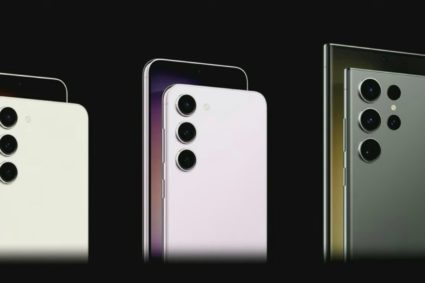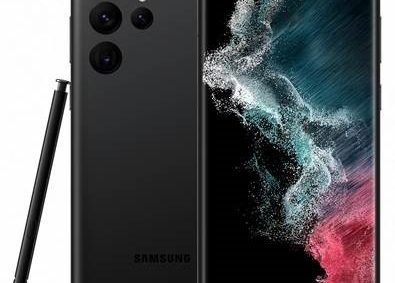
Samsung Unpacked 2026: Fold 8,Fold 8 Ultra, Flip 8 & Watch 9, Watch Ultra 2

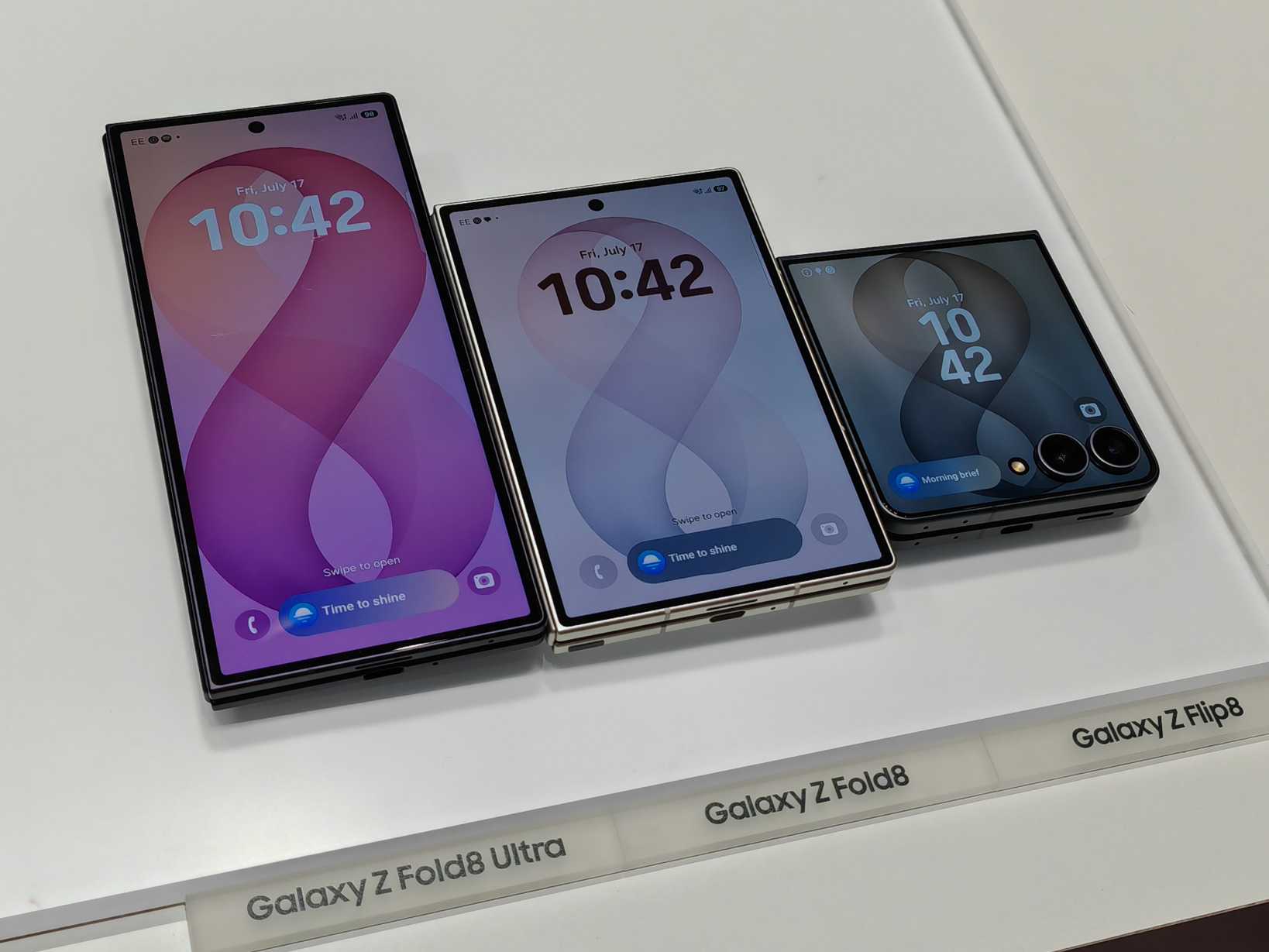
The mobile landscape stands at a critical technological turning point. For several product generations, changes within the foldable phone market and the wearable space have followed a predictable trajectory—incremental hinge adjustments, modest display brightness bumps, and steady software updates. However, the ecosystem updates presented for the Samsung Summer 2026 Unpacked event mark a complete structural and strategic overhaul of Samsung‘s flagship product lines.
This year, the strategy shifts toward an expansive, dual-tier product architecture for large-format productivity foldables, an internal processing refinement for the clamshell line, and a historic architectural shift in smartwatches that changes a decade of internal silicon traditions.
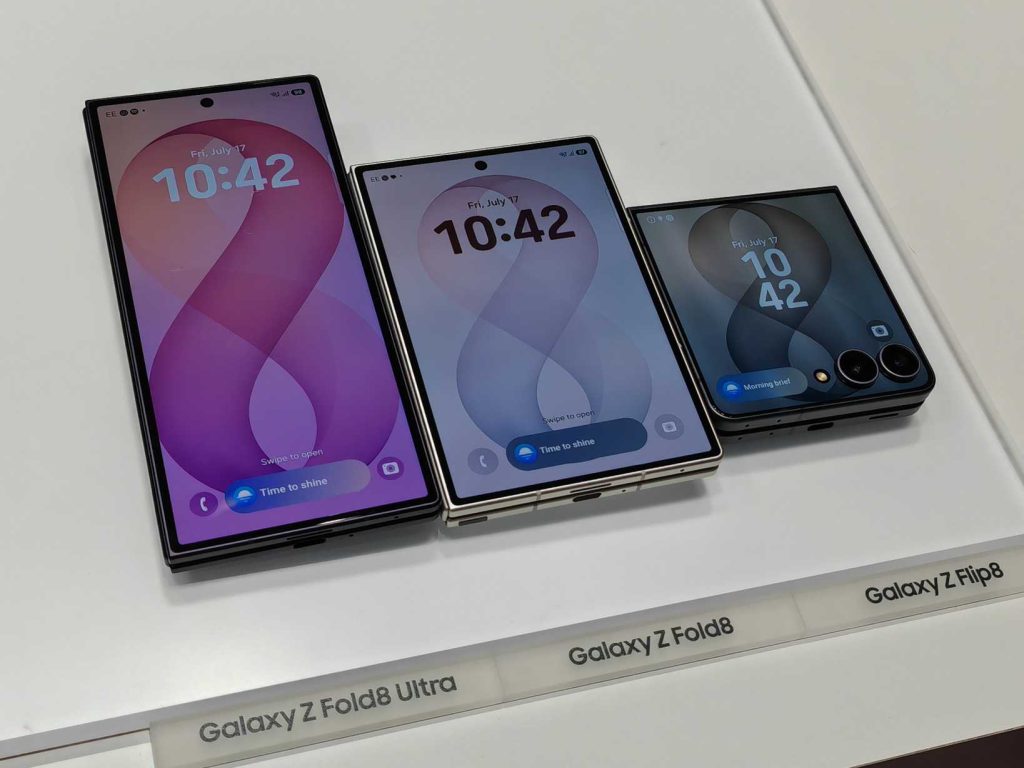
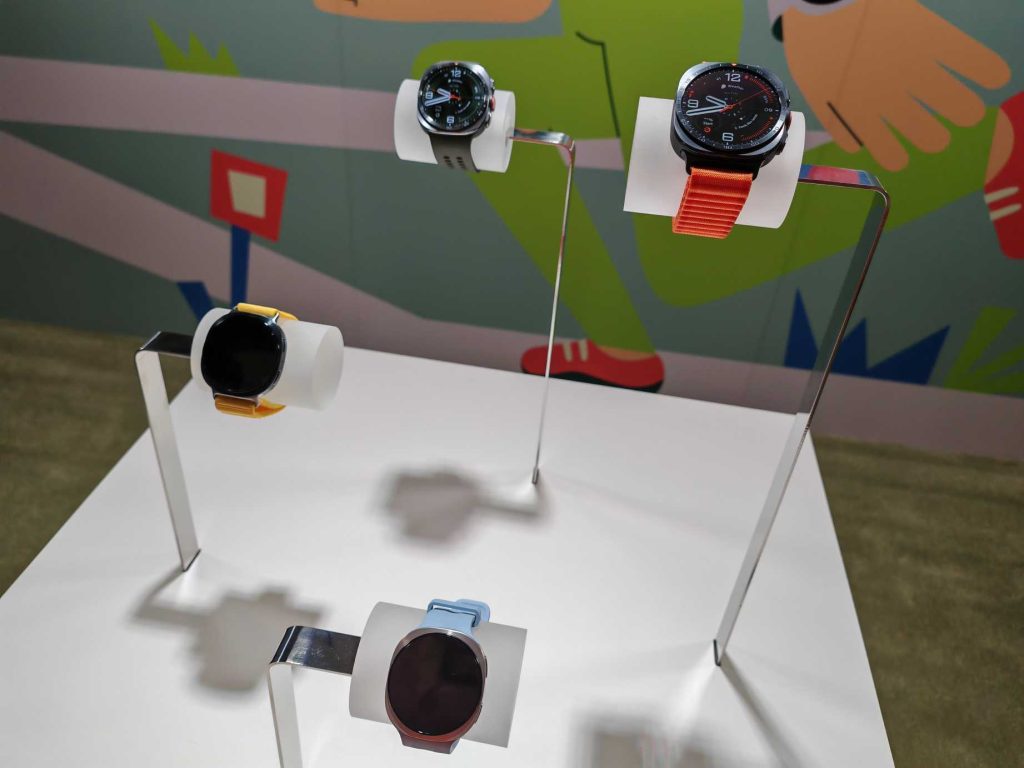
The Dual-Tier Large Foldable Strategy — Z Fold 8 vs Z Fold 8 Ultra
For the past seven generations, Samsung’s book-style folding flagships tried to serve every consumer demographic simultaneously. A singular chassis had to function as a compact one-handed smartphone, an expansive pocket tablet, a professional-grade camera platform, and a thin, lightweight engineering showcase. Balancing these conflicting design mandates often required compromise—resulting in a tall, narrow outer display that felt tight for everyday typing, and a visible screen crease that lagged behind sleeker form factors.
Samsung addresses this design puzzle by dividing its premier folding line into two distinct devices: the Galaxy Z Fold 8 and the Galaxy Z Fold 8 Ultra.
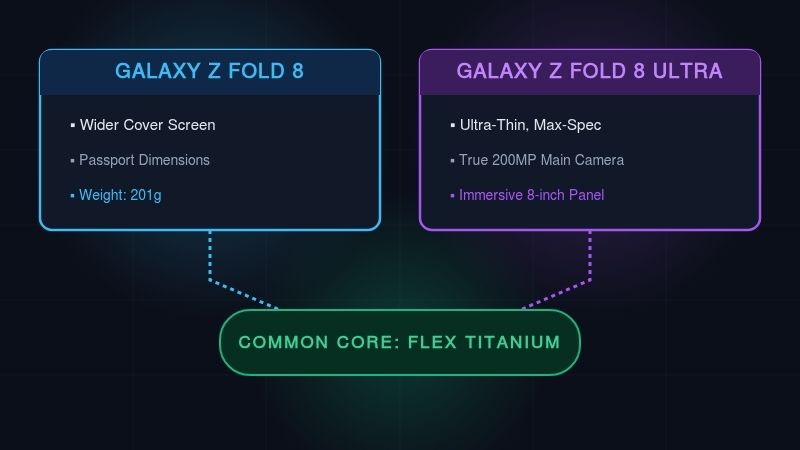
The Galaxy Z Fold 8: Shaking Up the Form Factor
The base Galaxy Z Fold 8 represents a complete structural rethinking of what a mainstream foldable should feel like in the hand. Rather than acting as a stripped-back budget variant, it provides a highly pocketable, ergonomically optimised form factor designed to fix the long-standing complaints about closed-device usability.
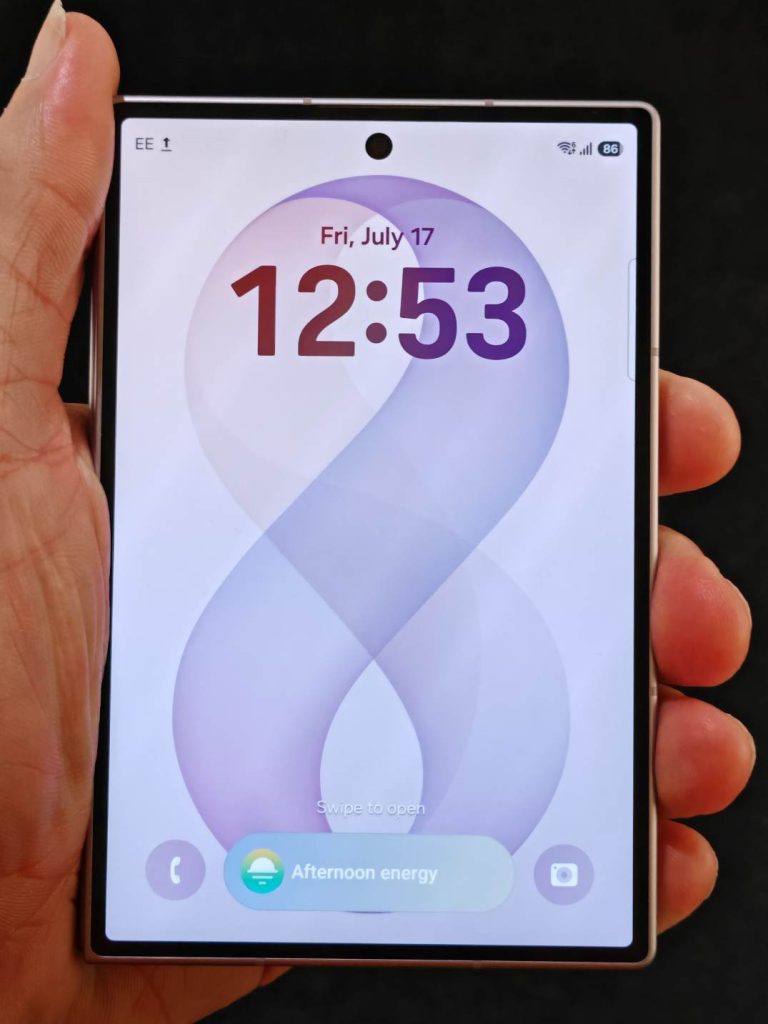
Dimensions, Ergonomics, and The “Passport” Shift
-
The Outer Screen: The Fold 8 introduces a shorter, noticeably wider cover display. The 5.5-inch panel shifts to traditional phone aspect ratios, ensuring that composition, swift messaging, and one-handed interactions feel natural.
-
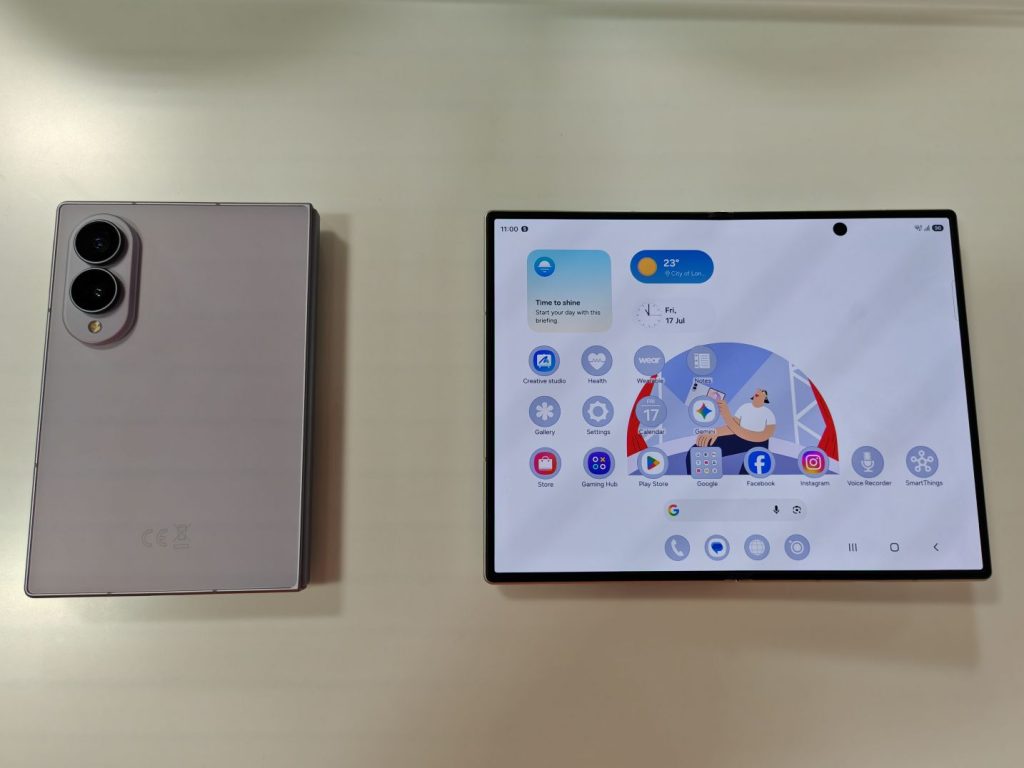
The Inner Display: Opening the device reveals a 7.6-inch Dynamic AMOLED 2X folding panel built with a 4:3 aspect ratio. This layout provides an expansive square-adjacent digital space optimised for running side-by-side apps and document editing.
-
The 201g Threshold: One of the most important metrics of the Fold 8 is its weight. Shaving mass down to 201 grams brings the foldable into the weight class of standard high-end slab smartphones, eliminating the wrist fatigue typical of older folding form factors.
-
Chassis Profile: Unfolded, the body measures just 4.5mm thick, closing flush with a dual-rail teardrop hinge mechanism that eliminates the visible gap when closed.
Camera Configuration and Battery Metrics
-
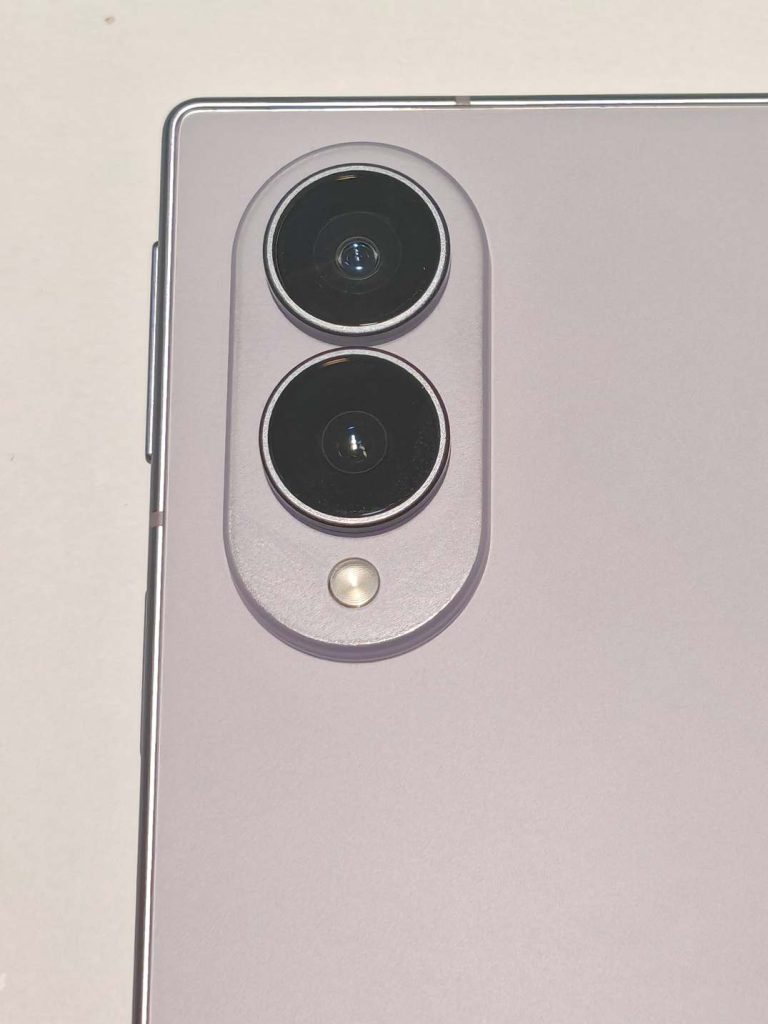
Streamlined Dual Optics: To achieve its lightweight goals, the standard Fold 8 switches to a dual-rear-camera cluster. It features a 50MP primary wide sensor with Optical Image Stabilisation (OIS) alongside a matching 50MP ultrawide lens. Dual 10MP front-facing cameras manage selfies on both the cover and main displays.
-
Power Management: The internal battery relies on a 4,800 mAh dual-cell setup that supports up to 45W wired fast charging, providing great all-day reliability for standard workflows.
-
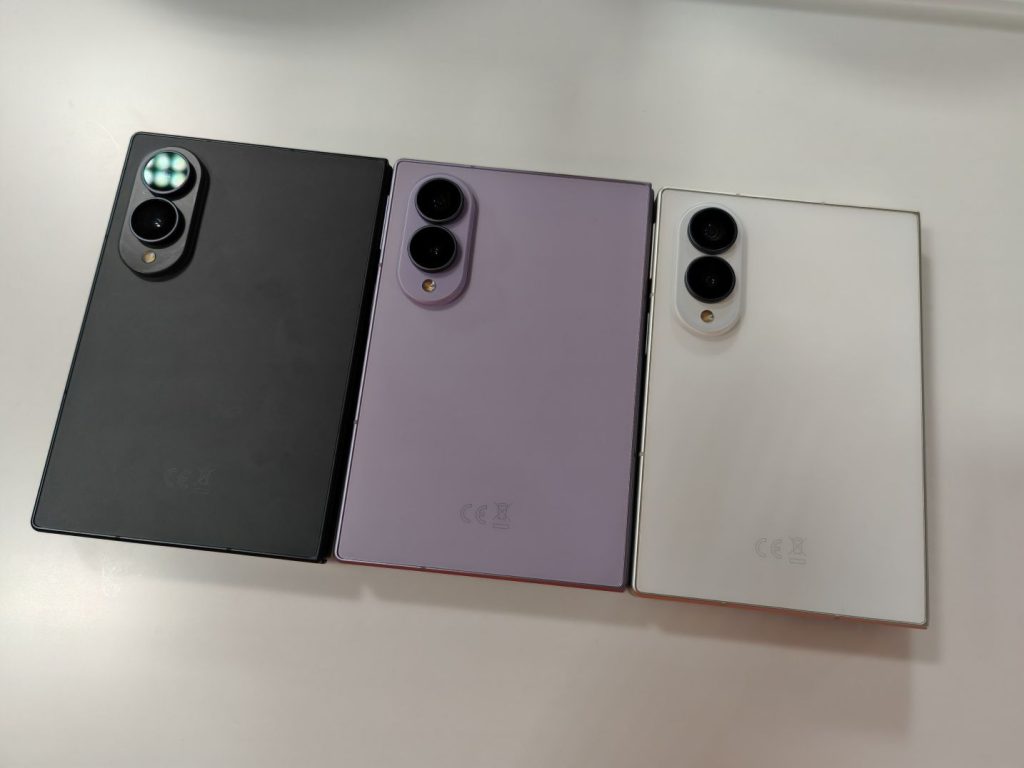
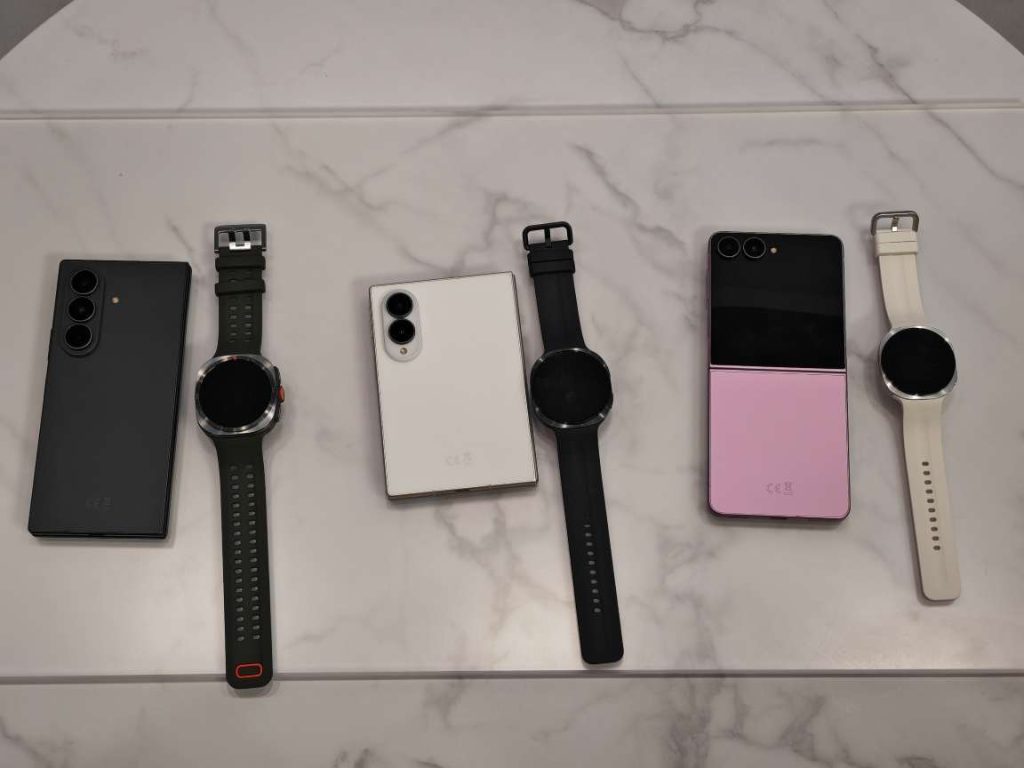
UK Pricing: The base Galaxy Z Fold 8 enters the market at £1,699 (12/256GB/512GB and 16/1TB). Colours: Graphite, Lavender, Cream and the Online Exclusive colour not shown: Pistachio
The Galaxy Z Fold 8 Ultra: The Uncompromising Titan
While the base Fold 8 targets everyday comfort, the Galaxy Z Fold 8 Ultra focuses purely on advanced performance. This model caters to power users who refuse to compromise on camera hardware, display scale, or internal memory tiers.
Maximum Workspace: The 8-Inch Canvas
-
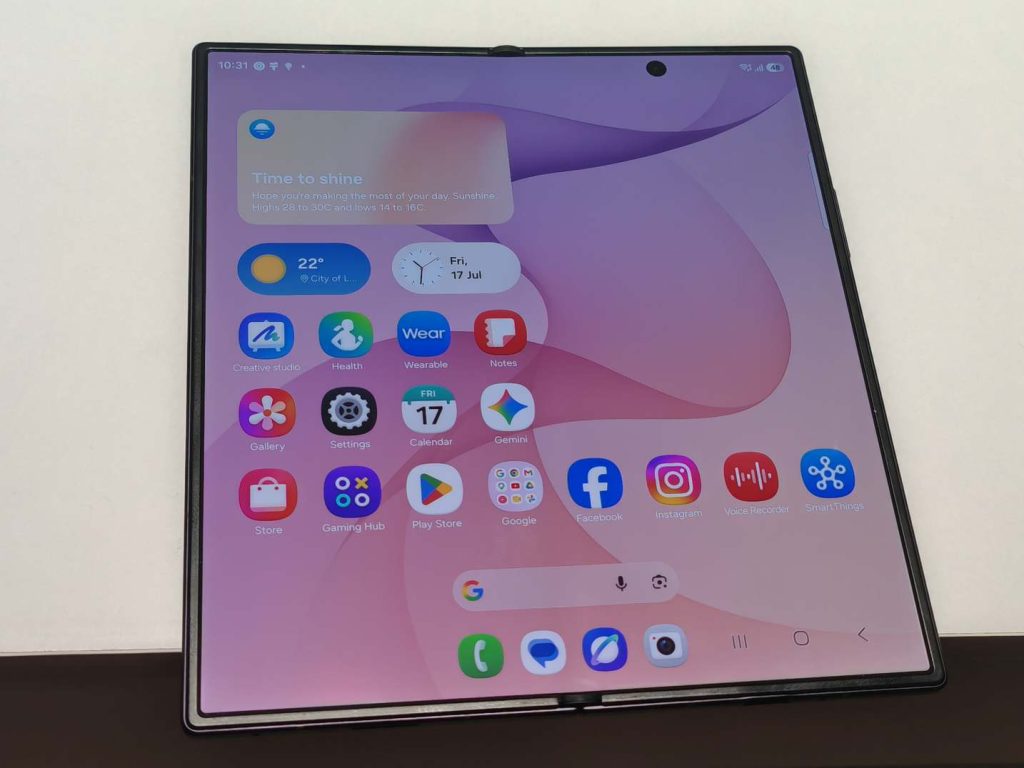
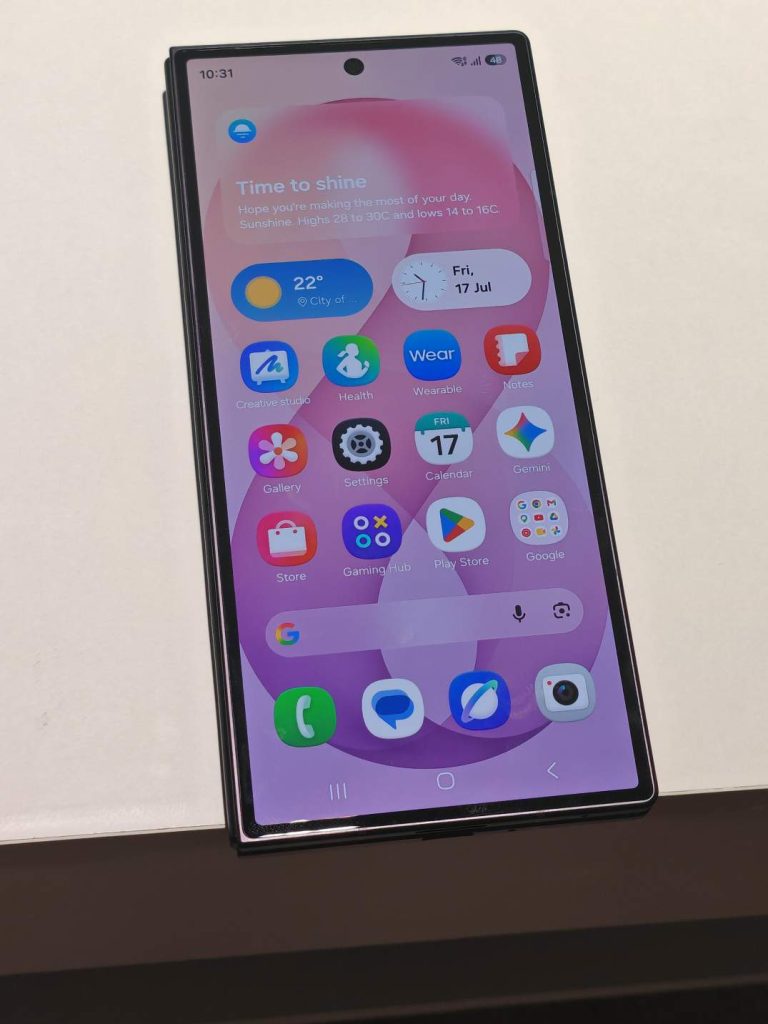
The Screen: The Z Fold 8 Ultra folds open to reveal a massive 8.0-inch Dynamic AMOLED 2X display with a 3:2 aspect ratio. This panel is built for serious multitasking, allowing for clean three-way app splits while minimising the letterboxing on widescreen video content.
-
The External Panel: Closed, the phone uses a 6.5-inch cover screen that keeps a taller, premium flagship look. Both displays use LTPO tech, adjusting refresh rates fluidly between 1Hz and 120Hz to protect battery health.
-
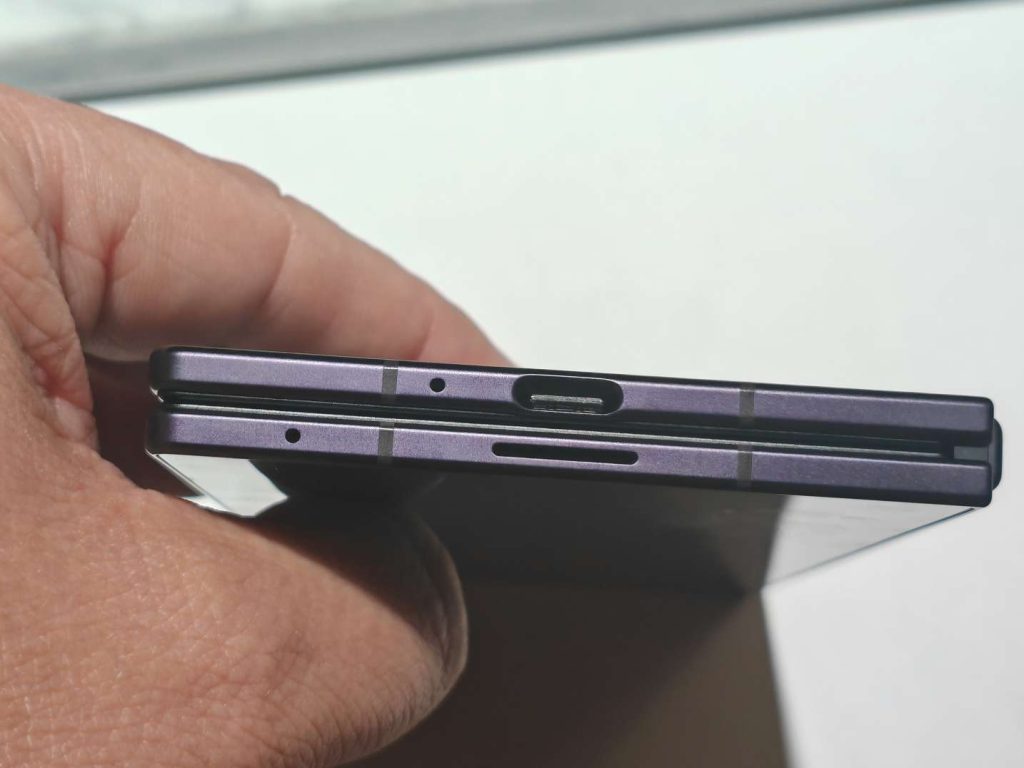
Advanced Thinness: Despite the large display area, the device drops to a razor-thin 4.1mm when unfolded, balancing its footprint with a well-distributed centre of gravity.
Pro-Grade 200MP Optics
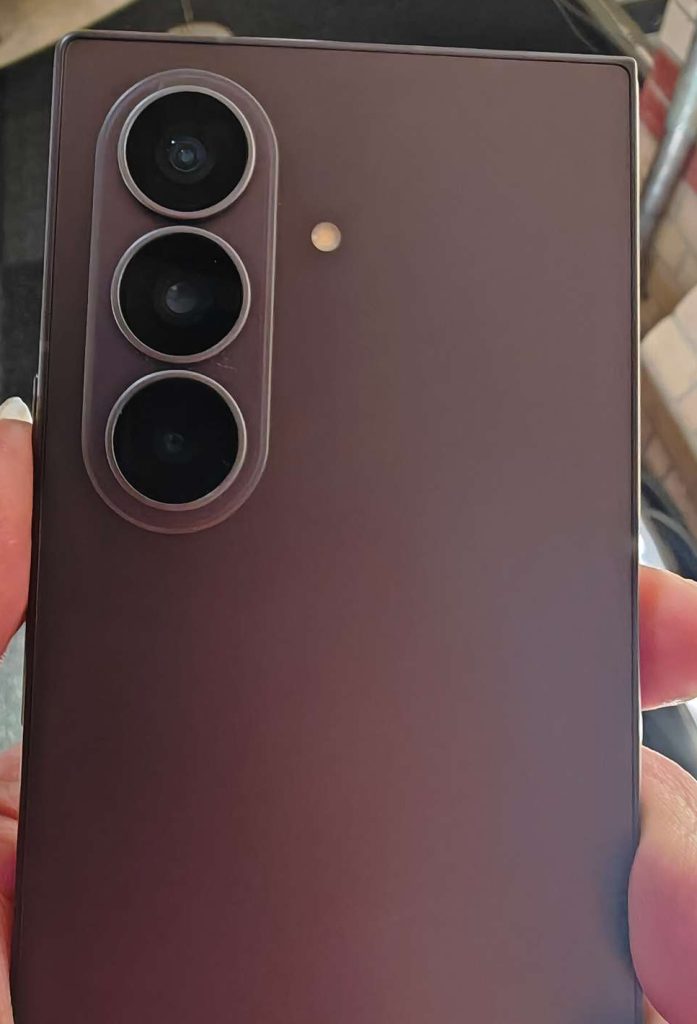
Foldable devices often trade off camera size due to thin bodies. The Fold 8 Ultra bypasses this limitation with an advanced optical layout:
-
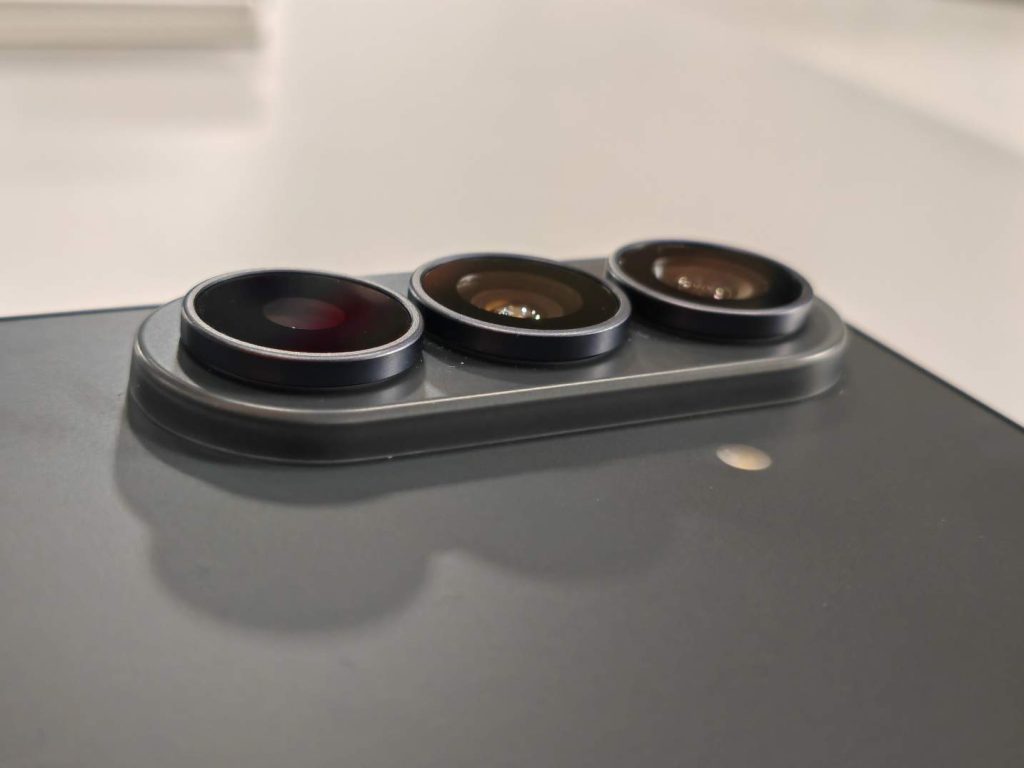
200MP Main Sensor: Utilising a customised ISOCELL camera with an f/1.7 aperture and OIS, the Ultra achieves sharp detail retention via pixel binning, bringing its low-light performance in line with premium slab flagships.
-
50MP Ultrawide Lens: Offers a wide 120-degree field of view with integrated macro autofocus.
-
10MP Telephoto Lens: Features dedicated OIS and 3x optical magnification for crisp portrait and zoom photography.
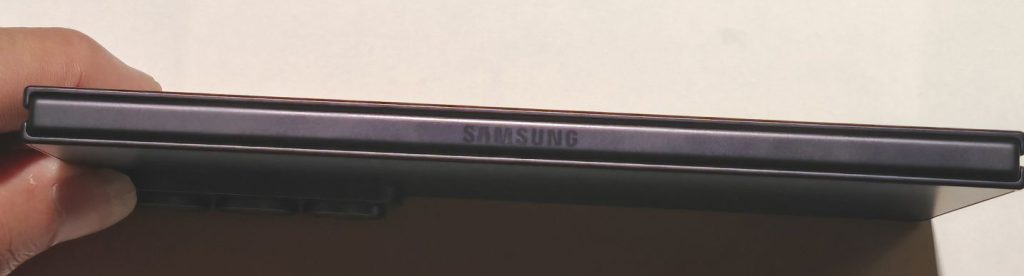
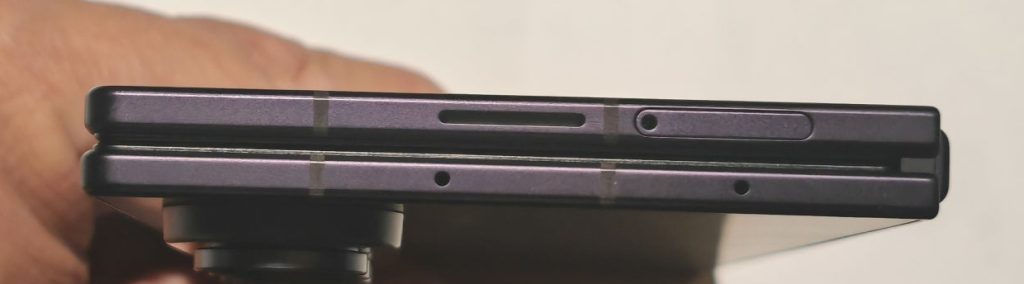
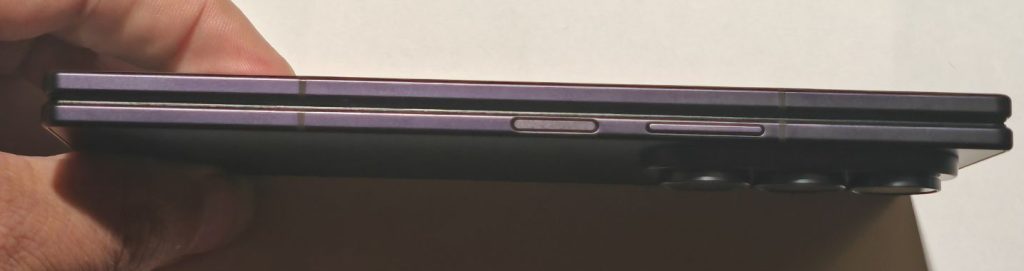
Battery and UK Market Cost
-
Power Solution: The system is powered by a high-density 5,000 mAh battery that easily handles long days of intense data processing. It supports high-speed 45W wired charging alongside Qi2 wireless charging integration.
-
UK Pricing: The premium Galaxy Z Fold 8 Ultra starts at £1,899 (12/256GB) for its base configuration (12/256GB/512GB and 16/1TB). With the Galaxy Z Fold 8 Ultra, colours are Violet Shadow, Cream, Graphite (shown above), and Violet Green (online exclusive colour)
Shared Core: Flex Titanium and Snapdragon 8 Elite Gen 5
Both the Fold 8 and its Ultra counterpart are built on two shared foundational technologies:
Flex Titanium Display Technology
The big durability story across the 2026 line is Flex Titanium. Older flexible screens used soft plastic polymer backing beneath the thin glass, which could stretch over time along the main axis. Flex Titanium replaces the plastic layer with an ultra-thin titanium alloy film, combined with a rigid titanium support plate beneath the display.
This alloy film is exceptionally stiff yet thin, reinforcing the OLED module, minimising air gaps, and pulling the display flat when opened to deliver a nearly invisible screen crease.
Snapdragon 8 Elite Gen 5 “for Galaxy” Silicon
Both foldables are powered by custom Snapdragon 8 Elite Gen 5 “for Galaxy” processors. Built on an ultra-precise 3nm process node, the chip features a customised prime core running at 4.47GHz.
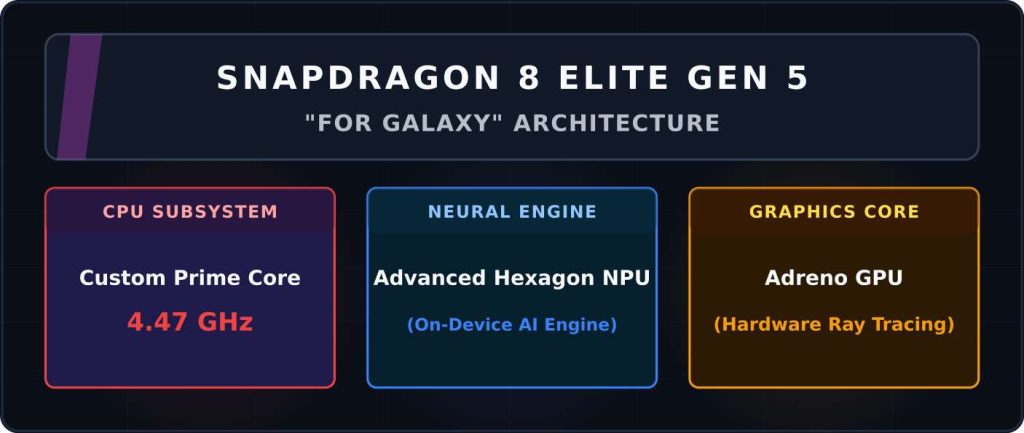
The system uses a large internal dual vapour chamber cooling system to prevent thermal throttling. Memory configurations start with 12GB of LPDDR5X RAM on the standard Fold 8, scaling up to 16GB of LPDDR5X RAM on the Ultra, alongside storage variants ranging from 256GB to 1TB UFS 4.0. The upgraded NPU allows for faster, on-device Galaxy AI functions like local audio translation and image object removal.
The Galaxy Z Flip 8 — Clamshell Perfection
While the Fold line goes through a major structural split, the new Galaxy Z Flip 8 focuses its engineering on processing efficiency, internal thermal control, and charging upgrades.
Exterior Refinement and Dimensions
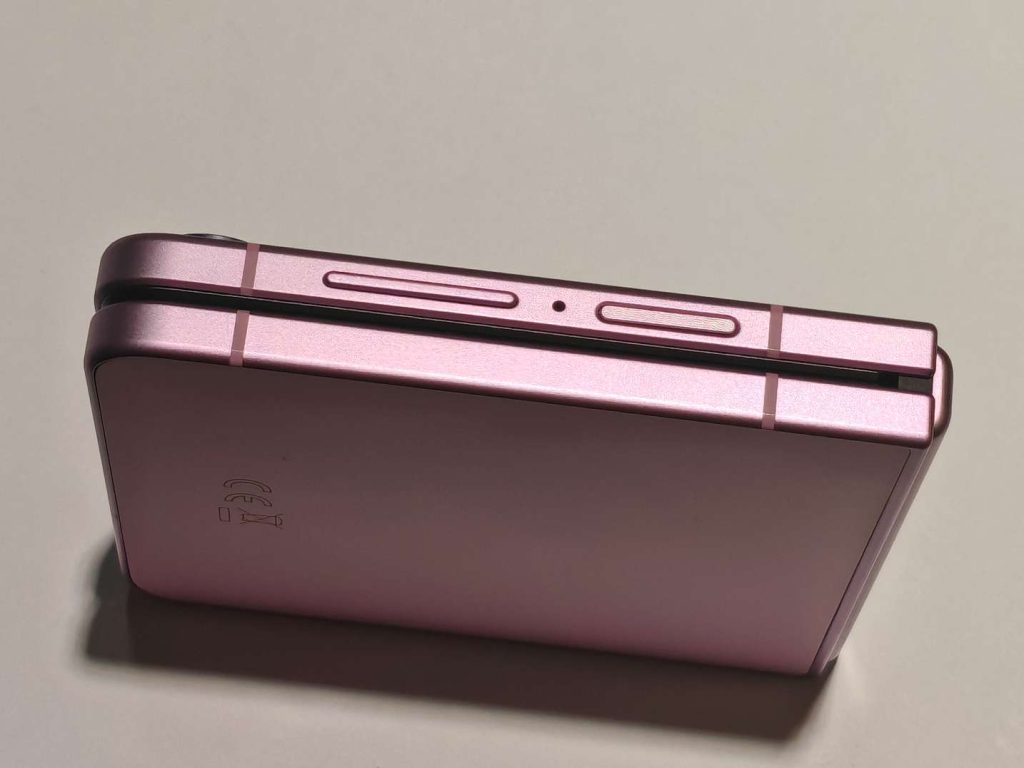
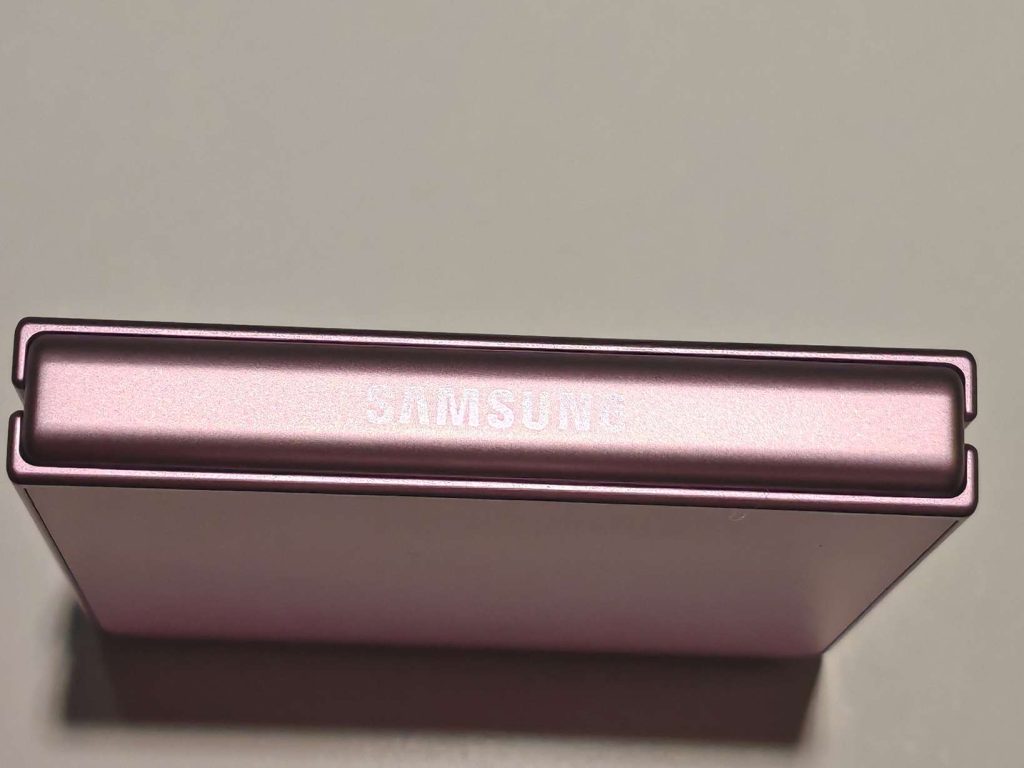
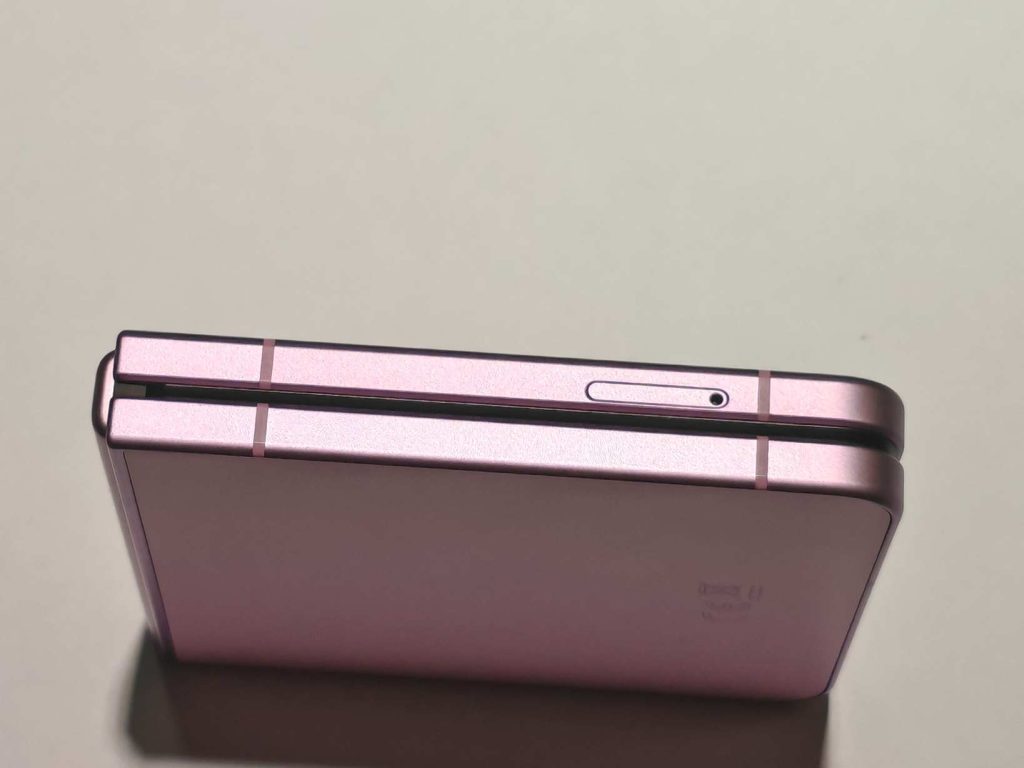
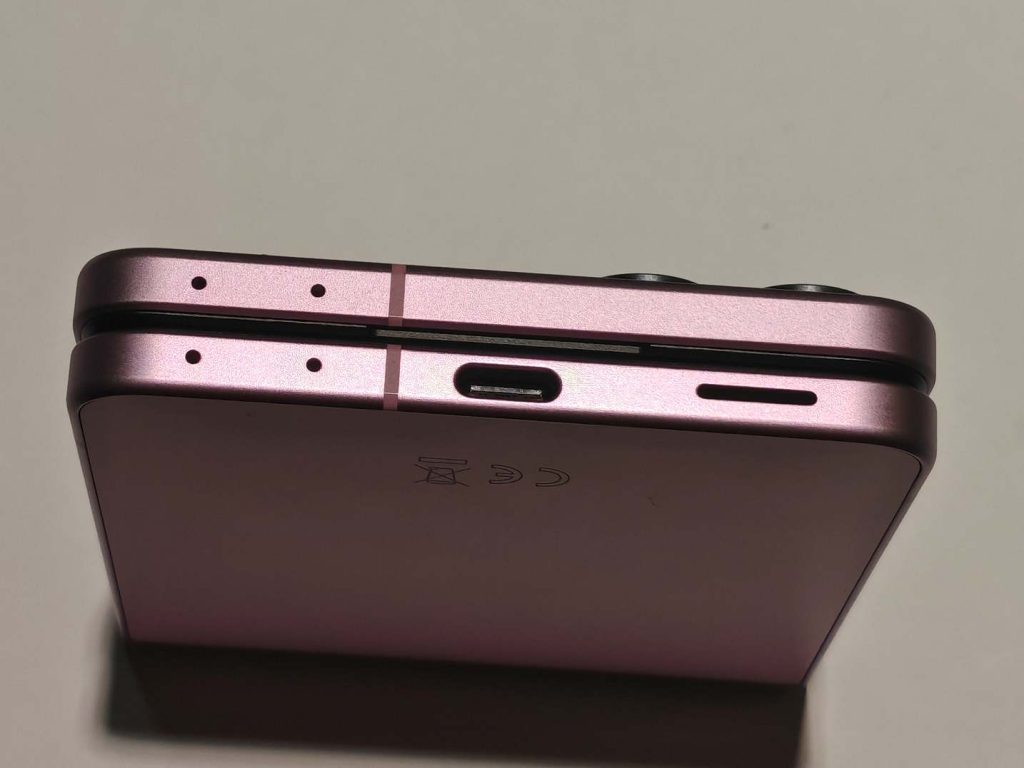
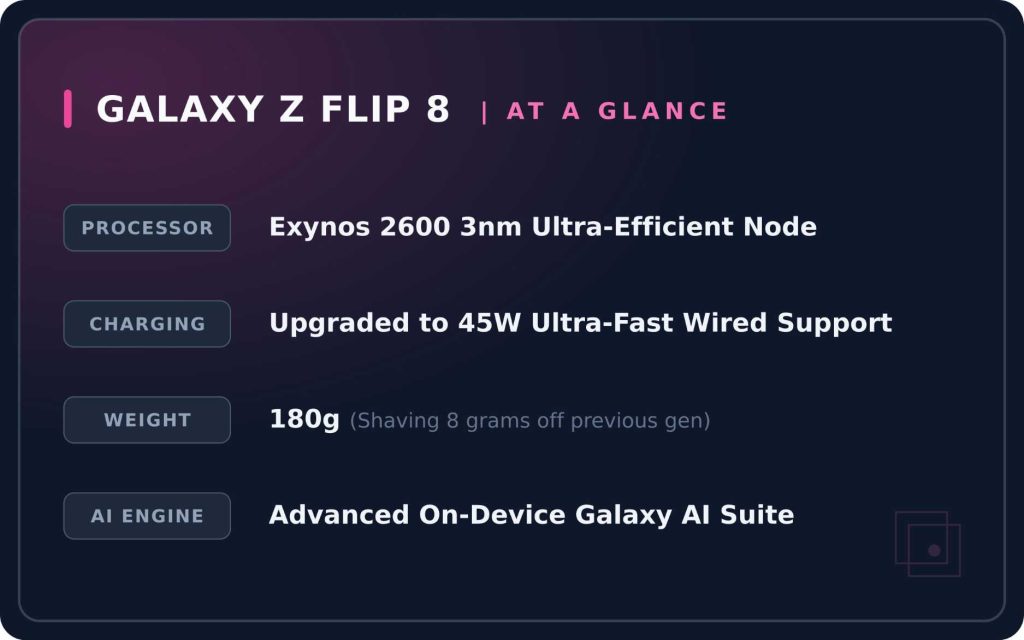
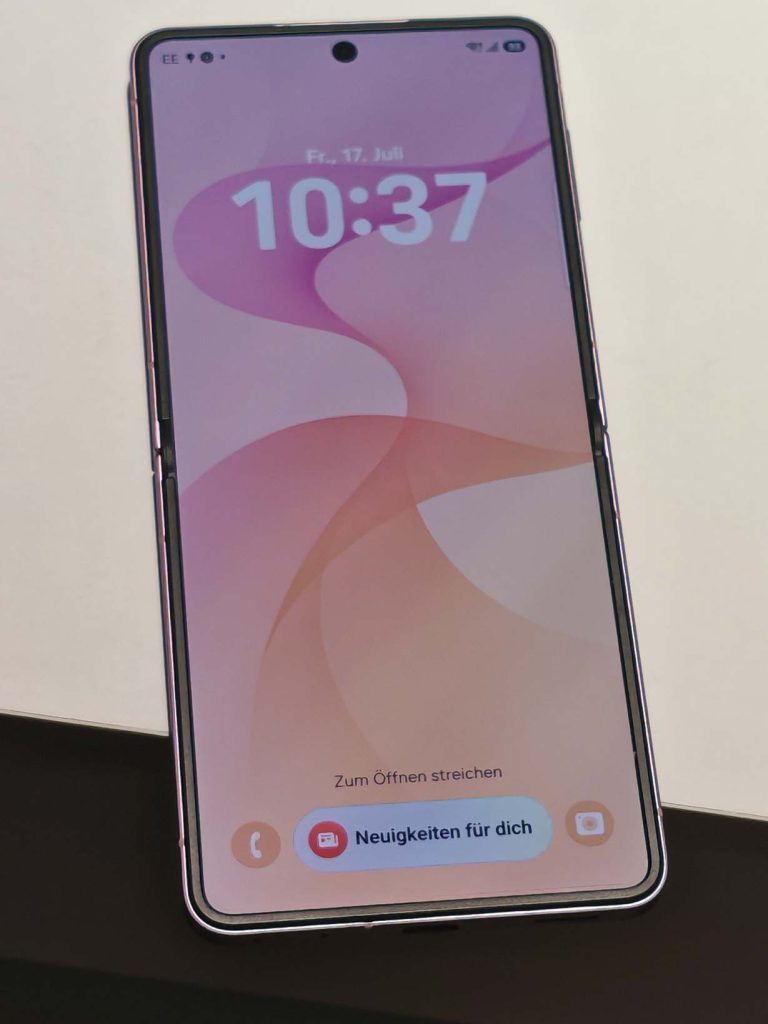
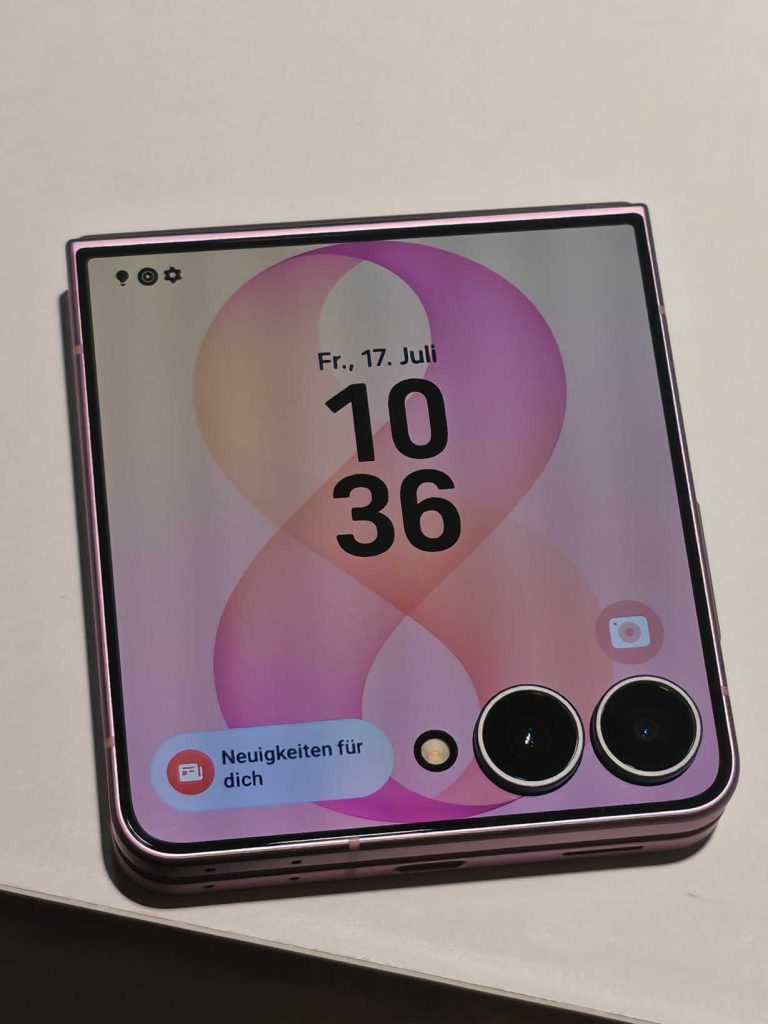
Visually, the Flip 8 keeps the familiar, compact square-folding design of the prior model, but incorporates subtle physical improvements. Refined materials let it shave 8 grams off the body weight, bringing it down to a light 180 grams. The dual-rail folder hinge has been reinforced internally to improve resistance against dust and micro-debris.
-
Main Internal Panel: Features a highly responsive 6.9-inch Dynamic AMOLED 2X panel with an adaptive 120Hz refresh rate.
-
External Window: A spacious 4.1-inch Super AMOLED screen lets users respond to notifications, manage media, and view widgets without opening the main phone.
The 3nm Exynos 2600 Silicon Architecture
The heart of the Galaxy Z Flip 8 is the custom-built Exynos 2600 chipset.
-
Thermal Control: Forged on an efficient 3nm process node, this 10-core processor is tuned to address the heat problems common to compact clamshells. The chip runs significantly cooler under continuous loads like video streaming or gaming.
-
Local AI Engine: The processor’s built-in NPU lets the Flip 8 process real-time text translations, smart automated responses, and creative image adjustments directly on the phone, speeding up execution and protecting user privacy.
Optics and Power Delivery
-
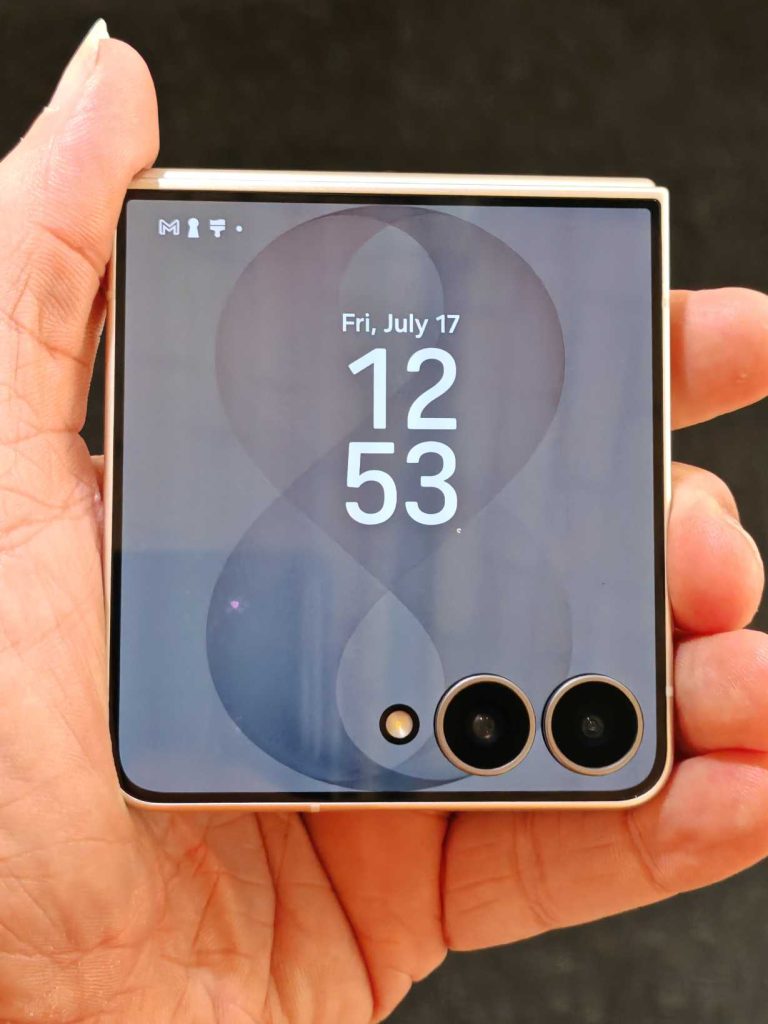
Camera Layout: The Flip 8 sports a 50MP primary camera with OIS, alongside a 12MP ultrawide lens and an internal 10MP selfie shooter.
-
Charging Performance: A welcome upgrade is the introduction of 45W fast wired charging support. Users can quickly top up the 4,300 mAh battery cell during the day. The phone ships with 12GB of LPDDR5X RAM and is backed by a long-term software commitment of 7 major Android OS updates.
-
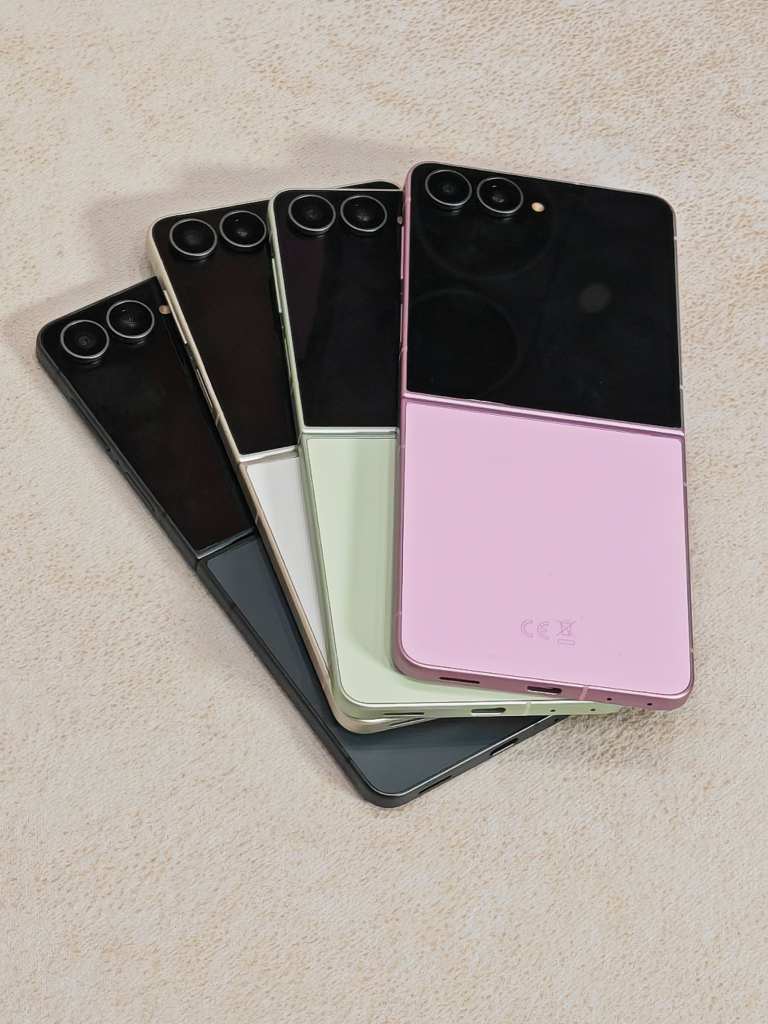
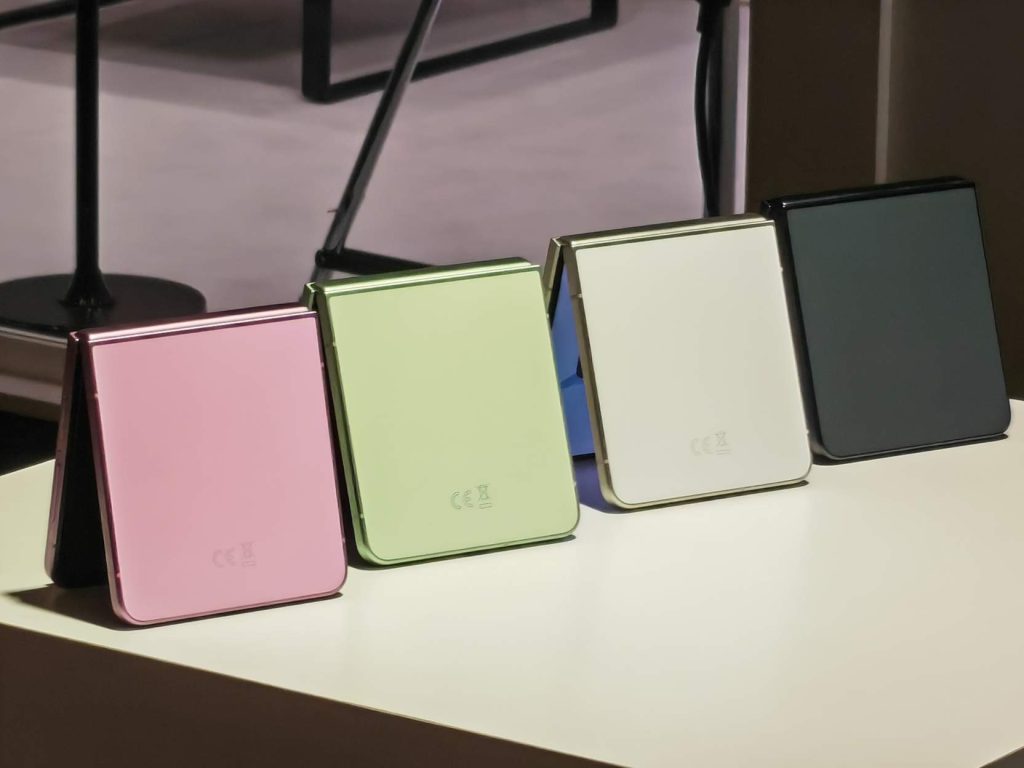
UK Pricing: The Galaxy Z Flip 8 starts at £1149 for the 12/256GB storage tier; there is also a 12GB/512GB no 1TB version. Colours: Red, Mint (Online Exclusive), Cream and Graphite
The Wearable Revolution — Ditching the Exynos Legacy
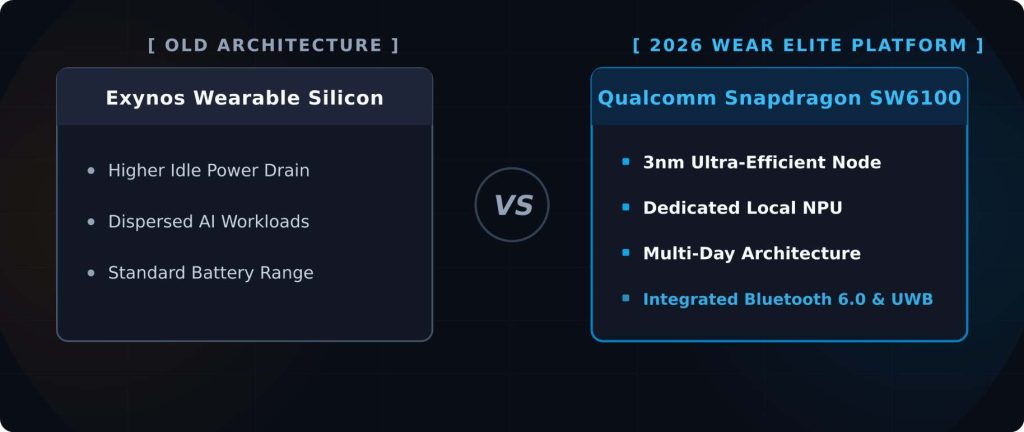
While the foldables present a clear evolution in industrial design, the biggest platform pivot in the 2026 lineup occurs on the wrist. Samsung has retired its long-standing in-house Exynos wearable platform for its premium smartwatches, standardising both devices around Qualcomm’s 3nm Snapdragon Wear Elite (SW6100) architecture.
Why the Qualcomm Chip Transition Matters
Moving to the Snapdragon Wear Elite architecture addresses three key vectors: battery life, performance under load, and background health tracking.
-
3nm Precision: The Wear Elite chip uses small, highly efficient transistors. By shrinking the architecture down to a 3nm node, Qualcomm cuts passive energy draw, keeping idle power usage exceptionally low when the watch is sitting face-up or hidden under a sleeve.
-
Integrated Wearable NPU: The SW6100 includes a dedicated hardware engine for machine learning tasks. This lets the Galaxy Watch 9 and Watch Ultra 2 compute continuous biometric data—like sleep apnea alerts, heart rate variance, and recovery scores—directly on the watch without constantly waking your phone’s processor.
-
Next-Gen Radios: The chip features Bluetooth 6.0 for solid connectivity and low audio latency, alongside built-in Ultra-Wideband (UWB) radios for fine-grained device tracking and smart home proximity controls.
The Galaxy Watch 9: Clean, Balanced, Everyday Wear
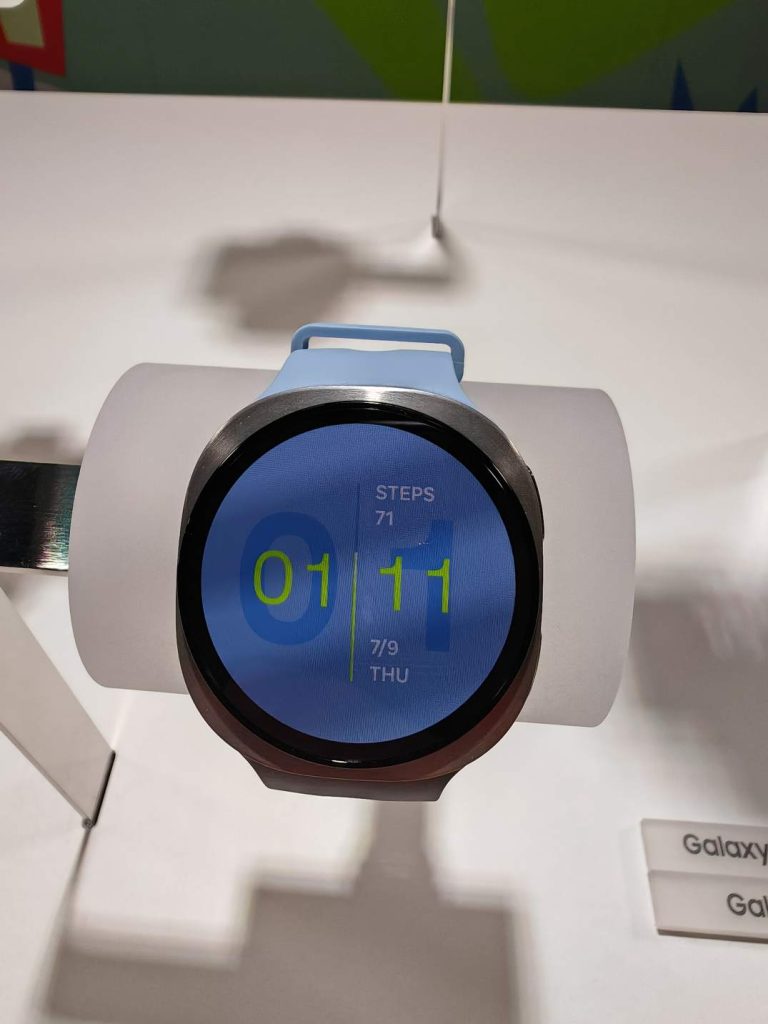
The Galaxy Watch 9 serves as the mainstream standard for the modern smartwatch market. It keeps its distinctive “squircle” look—a clean circular AMOLED screen set into a gently squared aluminium body—while upgrading the key components inside.
Outdoor Display Performance
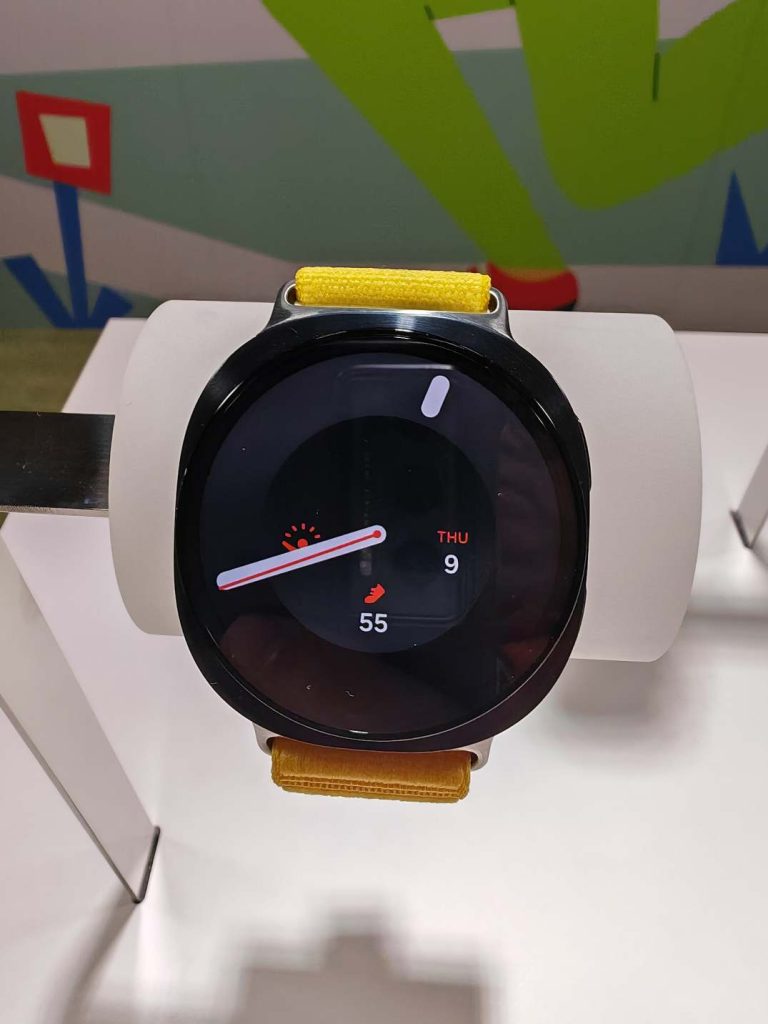
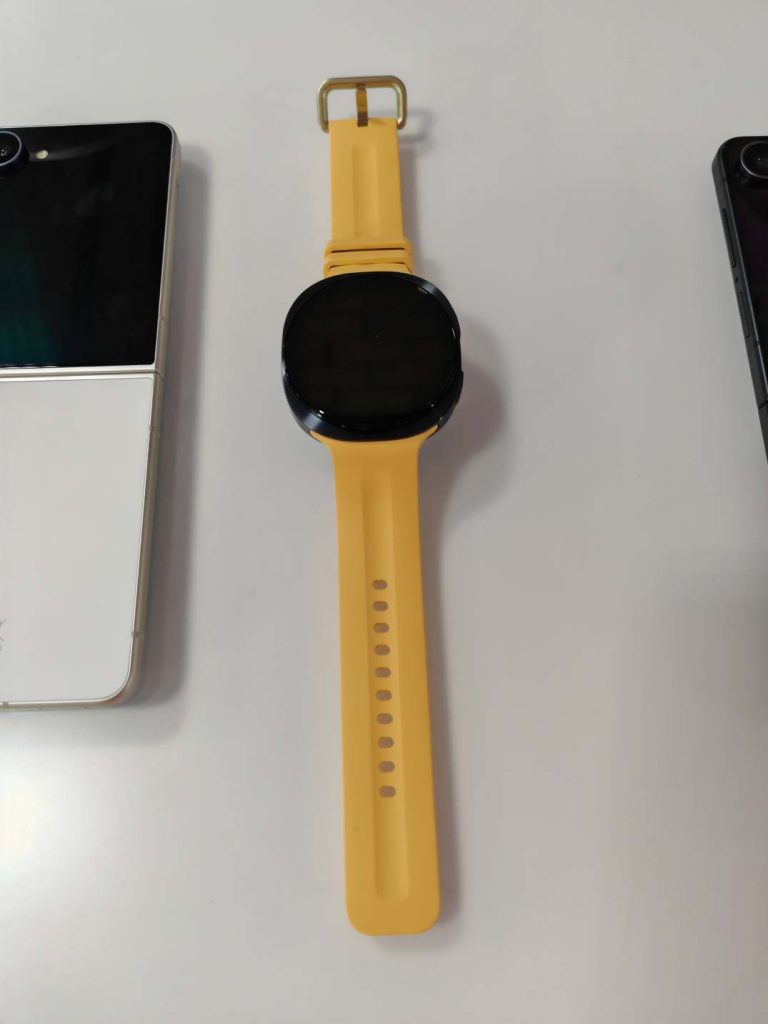
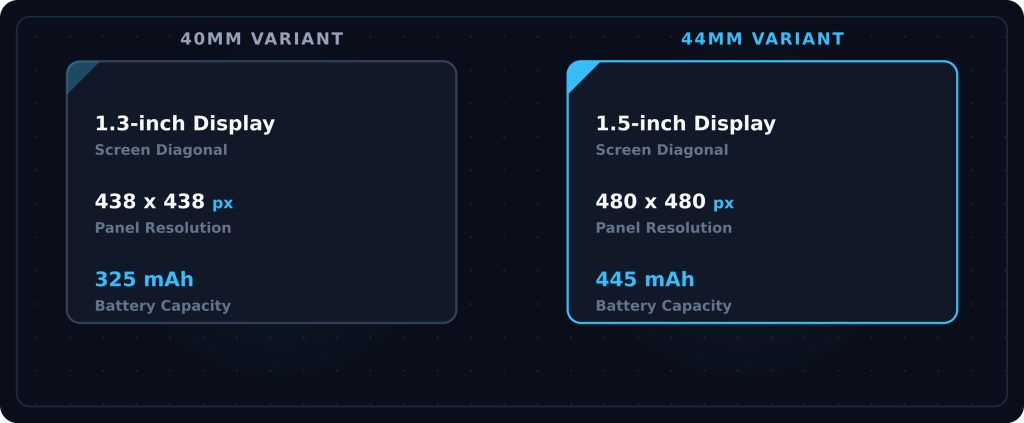
The Watch 9 is built in two primary casing sizes to suit different wrists:
-
40mm Casing: Houses a 1.3-inch screen with a sharp 438×438 resolution.
-
44mm Casing: Steps up to a 1.5-inch screen with a 480×480 layout.
Both models protect their screens with high-grade sapphire crystal glass to prevent everyday scuffs and scratches. Outdoor visibility gets a major boost, with the display capable of reaching an impressive 4,000 nits of peak brightness, making text and exercise metrics easy to read under direct afternoon light.
Battery Realities and Software Suite
The physical batteries track close to past iterations—offering 325 mAh on the 40mm and 445 mAh on the 44mm variant. However, real-world runtime increases noticeably.
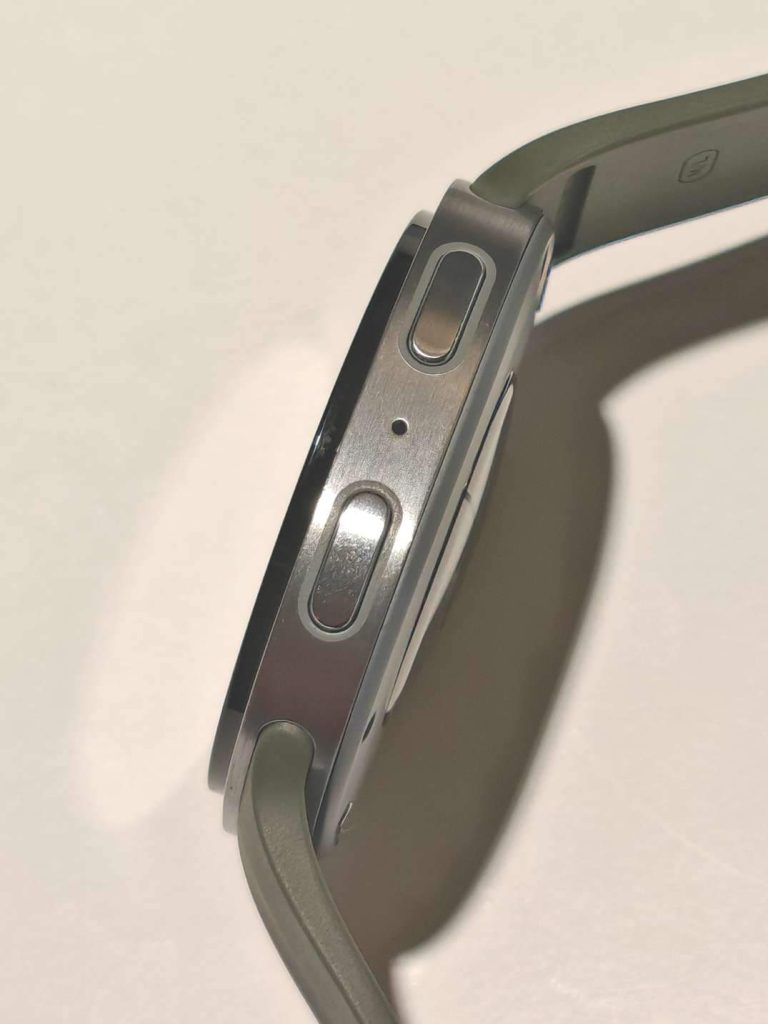
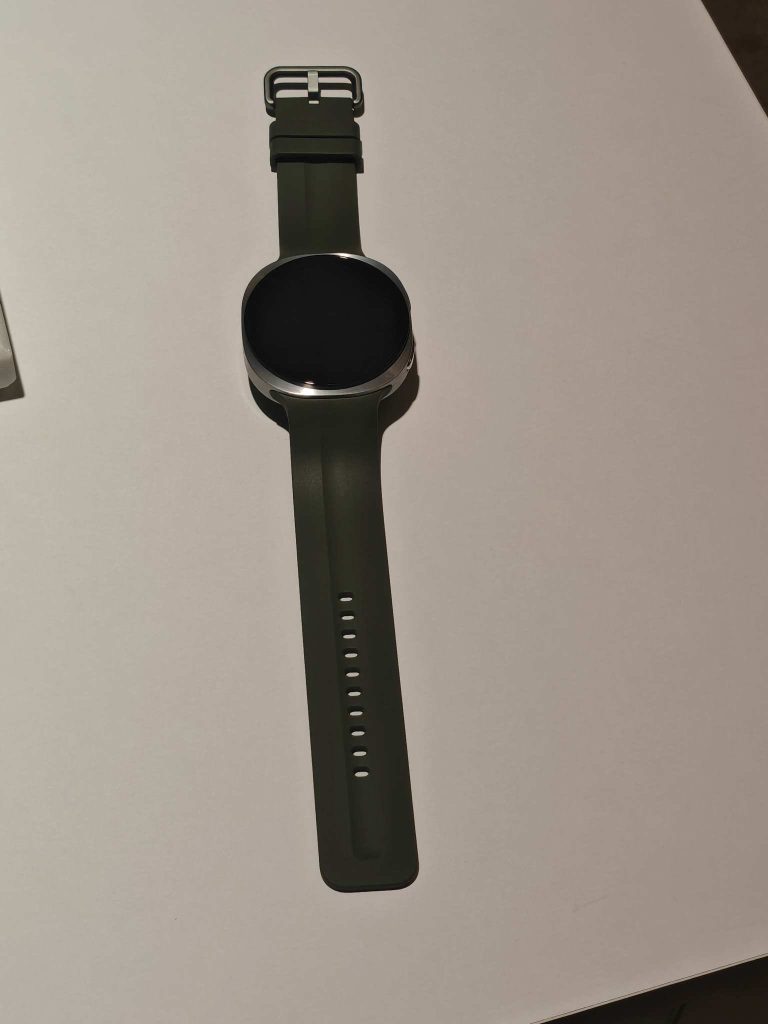
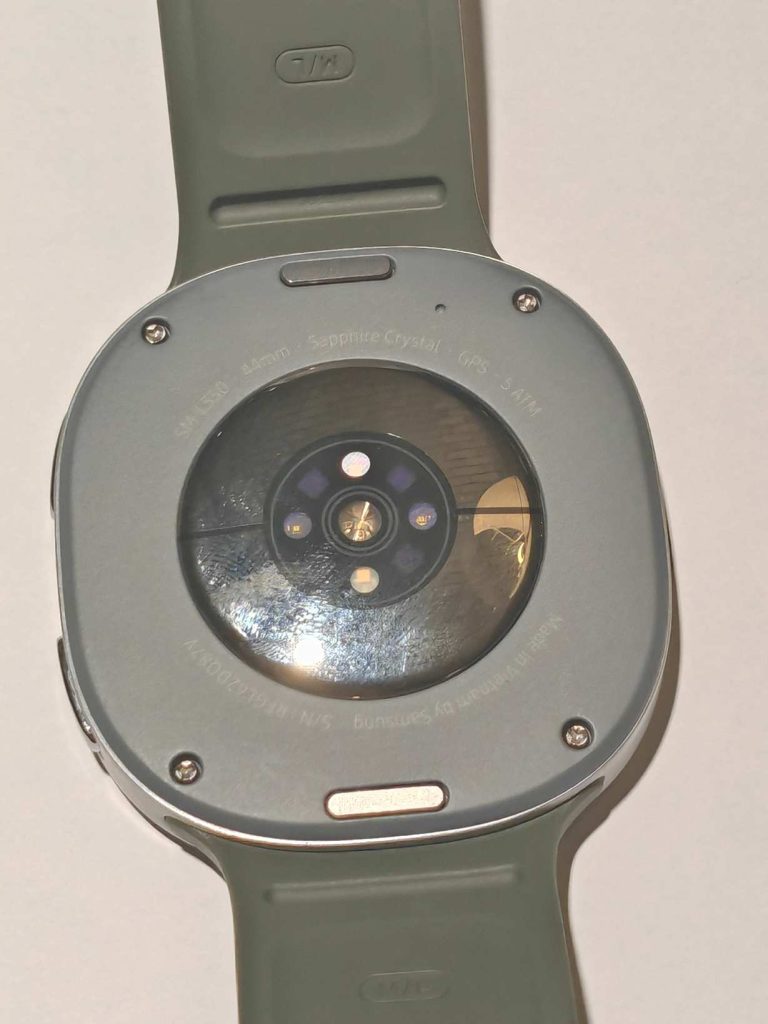
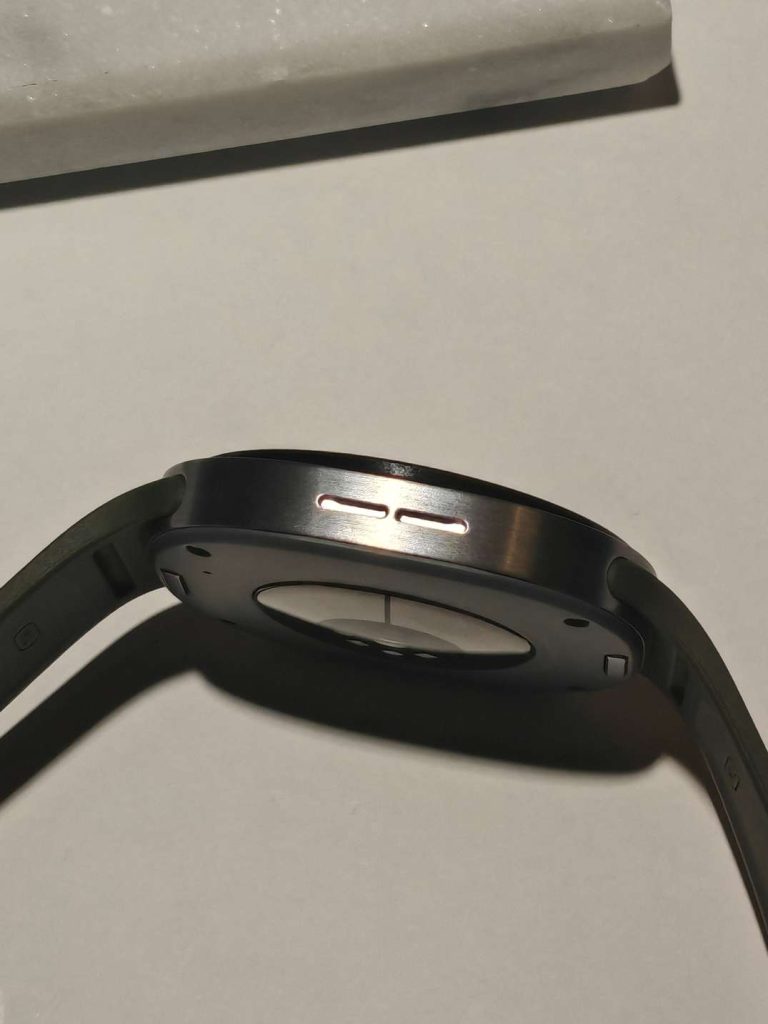
Thanks to the efficient 3nm Snapdragon Wear Elite chip, the Watch 9 easily clears 30 hours of continuous active use with the Always-On Display turned on. Running Wear OS 7 under Samsung’s customised One UI 9 Watch software layer, UI navigation remains fast and smooth. Colour configurations include Cream, Silver, and a deep Graphite.
-
UK Pricing: The Galaxy Watch 9 starts at £349 for the base 40mm Bluetooth edition and £379 for the 44mm version of the Galaxy Watch 9
The Galaxy Watch Ultra 2: The Indestructible Outdoor Companion
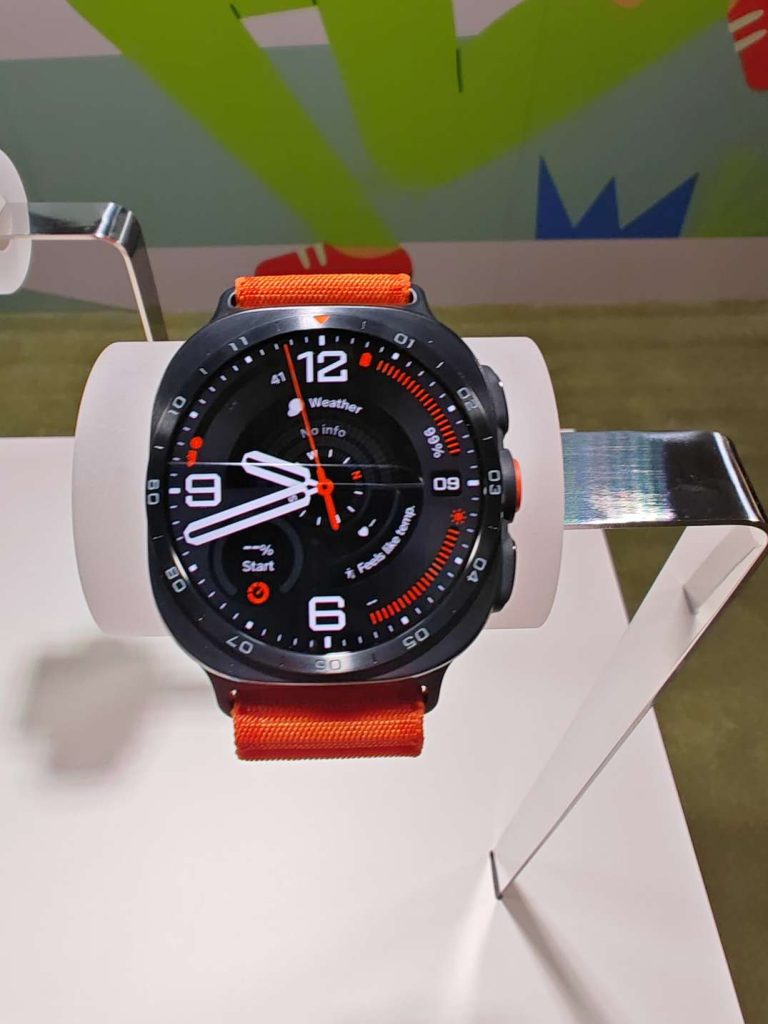
If the Watch 9 targets the standard gym-goer or daily commuter, the Galaxy Watch Ultra 2 is designed for backcountry hiking, open-ocean sports, and extreme endurance challenges.
The Huge 800 mAh Capacity Cell
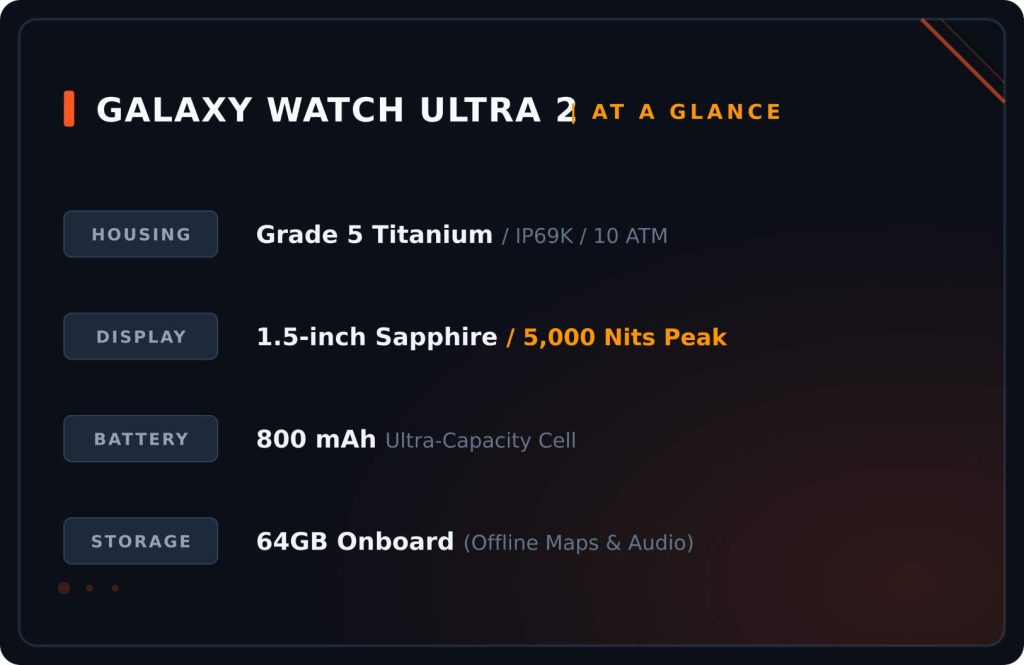
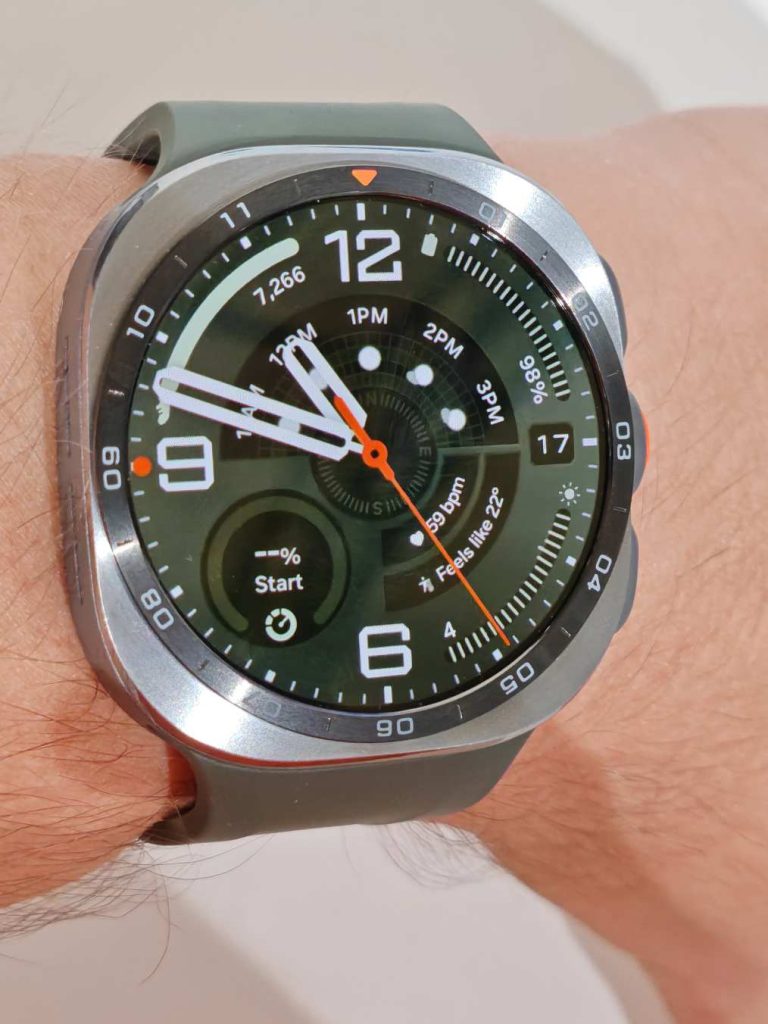
The standout feature of the Ultra 2 is its upgraded internal power reserve. Samsung has managed to fit a large 800 mAh battery into the rugged 47mm chassis. This marks a major step up from the 590mAh cell used in the original Watch Ultra.
When combined with the efficient architecture of the Snapdragon Wear Elite chip, the watch delivers excellent longevity for a full-featured Wear OS device:
-
Standard Operations: Offers 3 to 4 days of typical active use on a single charge.
-
Max Power Saving: Extends tracking utility for up to a week, making it a reliable choice for long wilderness treks off-grid.
Visible Brightness and a Slimmer Titanium Frame
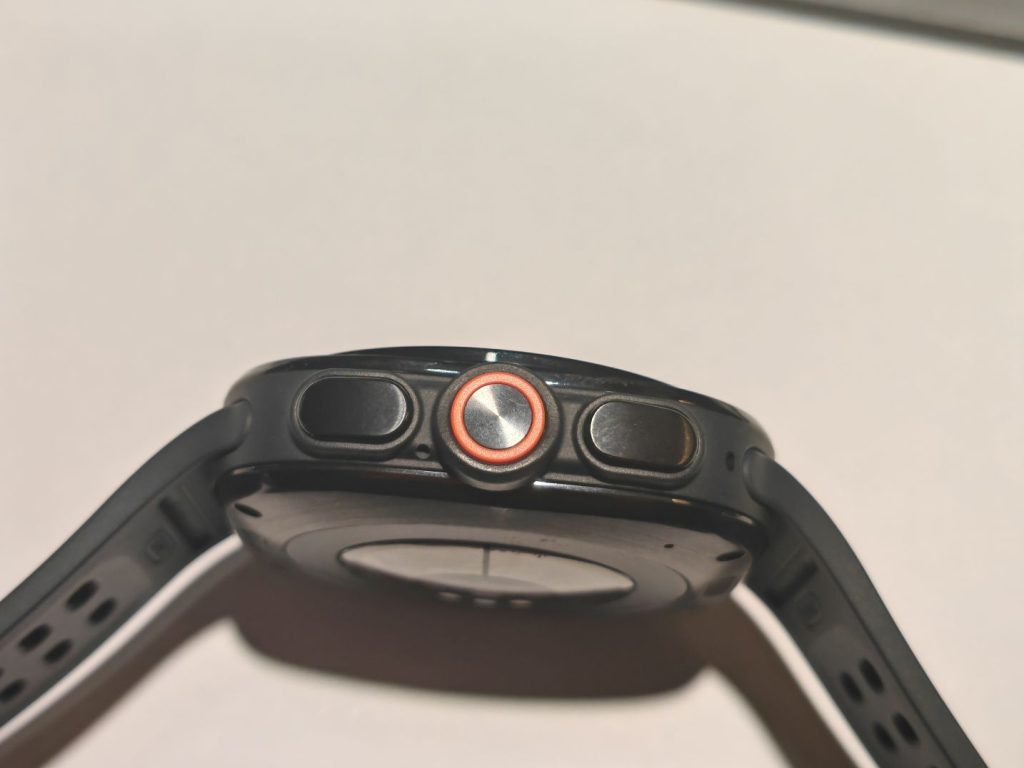
The 1.5-inch sapphire screen boosts visibility even further, reaching a massive 5,000-nit peak brightness for perfect legibility in snowy or desert environments. When twilight approaches, the built-in ambient sensors automatically switch the watch face over to an unlit red Night Mode to protect your eyes’ natural dark adaptation.
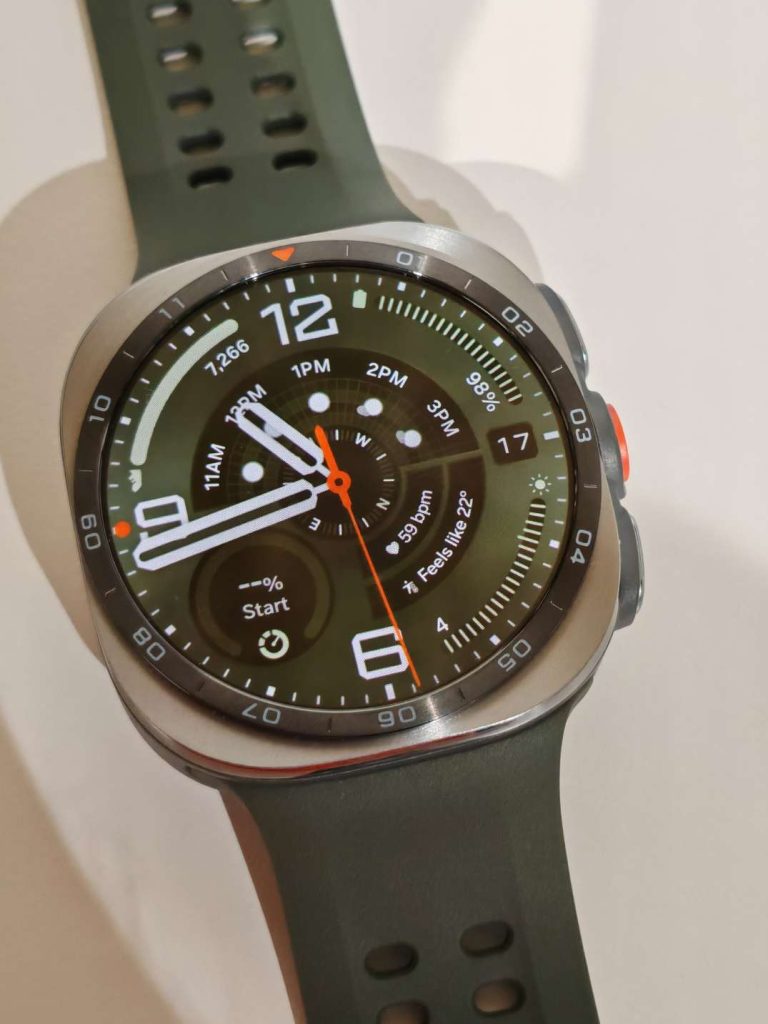
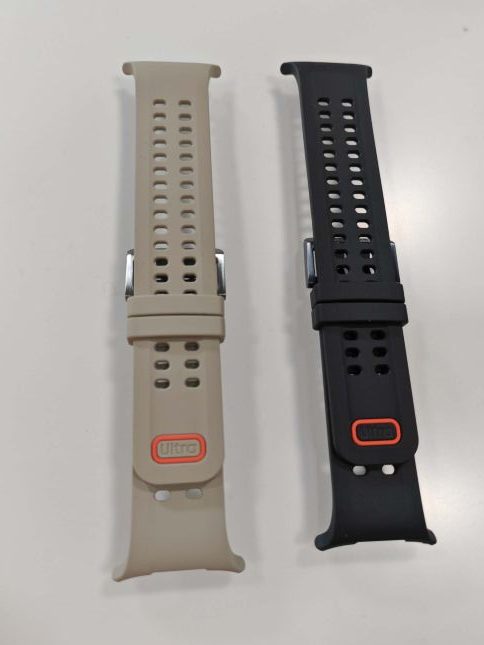
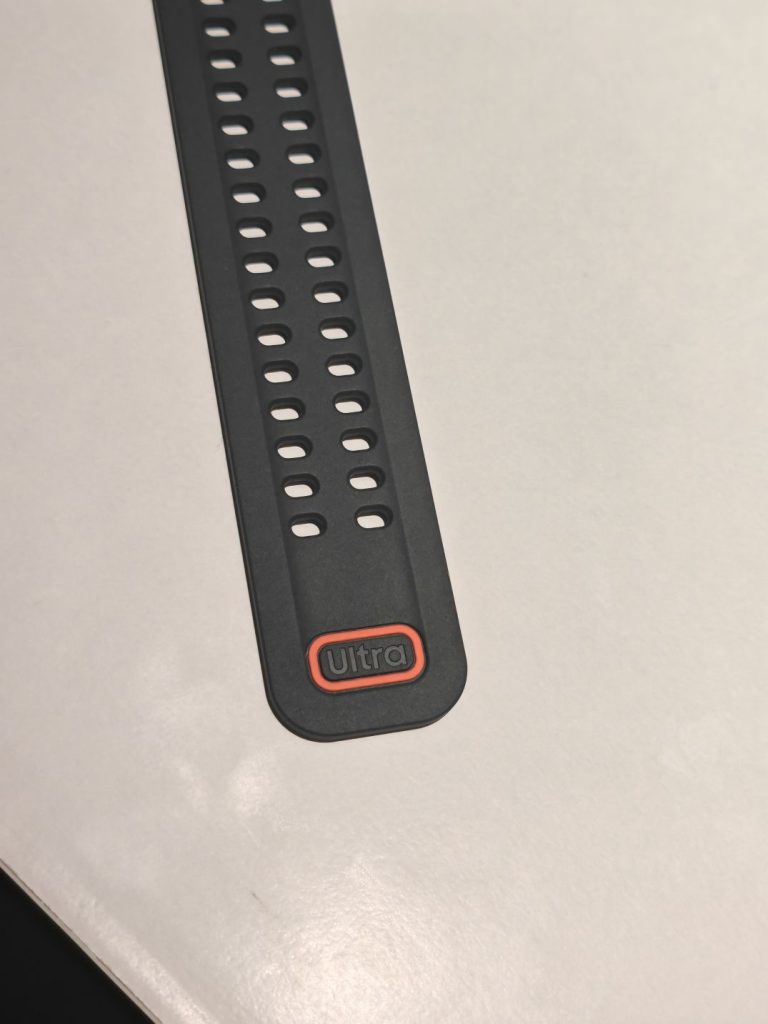
The watch body is built using Grade 5 Aerospace Titanium to protect against impact shock.
-
Durability Certifications: Includes an IP69K ingress rating to protect against high-pressure dust and hot water spray, along with a 10 ATM (100-meter) water rating suitable for deep swimming and marine sports.
-
Ergonomic Profiling: Despite expanding the physical battery capacity, clever component layering allows the watch body to be 12% thinner than the first-generation Watch Ultra, sitting more naturally against your wrist.
-
Storage Space: Onboard storage moves up to a standard 64GB, providing plenty of room for standalone map caching, music playlists, and tracking apps without requiring a live data connection.
-
UK Pricing: The rugged Galaxy Watch Ultra 2 launches at £649.
Technical Specifications
Mobile Device Portfolio
| Engineering Category | Galaxy Z Flip 8 | Galaxy Z Fold 8 | Galaxy Z Fold 8 Ultra |
| Main Internal Panel | 6.7-inch Dynamic AMOLED 2X, 120Hz LTPO Refresh Rate | 7.6-inch Dynamic AMOLED 2X, 120Hz LTPO, Flex Titanium | 8.0-inch Dynamic LTPO AMOLED 2X, 120Hz, Flex Titanium |
| Cover External Panel | 4.1-inch Super AMOLED Flex Window | 5.5-inch Shorter, Wider Passport Aspect Ratio | 6.5-inch Traditional Flagship Tall Proportions |
| Processor Platform | Samsung Exynos 2600 (3nm High-Efficiency Node) | Snapdragon 8 Elite Gen 5 “for Galaxy” (3nm) | Snapdragon 8 Elite Gen 5 “for Galaxy” (Overclocked Edition) |
| Memory (RAM) | 12GB LPDDR5X | 12GB LPDDR5X | 12GB / 16GB LPDDR5X |
| Storage Options | 256GB / 512GB (UFS 4.0) | 256GB / 512GB / 1TB (UFS 4.0) | 256GB / 512GB / 1TB (UFS 4.0) |
| Rear Camera Modules | 50MP Wide (OIS) + 12MP Ultrawide | 50MP Wide (OIS) + 50MP Ultrawide | 200MP Wide (OIS) + 50MP Ultrawide + 10MP 3x Zoom (OIS) |
| Selfie Lenses | 10MP Hole-Punch Camera | Dual 10MP Sensors (One Cover / One Internal) | Dual 10MP Sensors (One Cover / One Internal) |
| Battery capacity | ~4,300 mAh Capacity | 4,800 mAh Dual-Cell System | 5,000 mAh High-Density Pack |
| Wired Power Ingest | 45W Ultra-Fast Charging | 45W Ultra-Fast Charging | 45W Ultra-Fast Charging |
| Chassis Profile | 180g weight, flush-closing folder design | 4.5mm opened profile, 201g target mass | 4.1mm opened profile, 215g target mass |
| Ingress Rating | IP48 Dust/Water Resistant | IP48 Dust/Water Resistant | IP48 Dust/Water Resistant |
| UK Launch Pricing | From £1149 | From £1,699 | From £1,899 |
Smartwatch Portfolio
| Hardware Category | Galaxy Watch 9 (40mm / 44mm) | Galaxy Watch Ultra 2 (47mm) |
| Display Panel | 1.3-inch (40mm) / 1.5-inch (44mm) Sapphire Crystal | 1.52-inch Deep Sapphire Crystal with Ambient Auto-Night Mode |
| Peak Luminance | 3,000 to 4,000 Nits Range | 5,000 Nits Maximum Output |
| Processor Platform | Qualcomm Snapdragon Wear Elite (SW6100, 3nm) | Qualcomm Snapdragon Wear Elite (SW6100, 3nm) |
| System Memory (RAM) | 2GB Dedicated System Cache | 2GB Dedicated System Cache |
| Onboard Flash Space | 32GB High-Speed Flash | 64GB High-Speed Flash |
| Power Capacity | 325 mAh (40mm) / 445 mAh (44mm) | 800 mAh Ultra-Capacity Fuel Cell |
| Wireless Support | Bluetooth 6.0, Wi-Fi, NFC, UWB Tracking | Bluetooth 6.0, Wi-Fi, NFC, Dual-Band GPS, 5G Cellular, UWB |
| Material Base | Armor Aluminum / Engineering Polymer | Grade 5 Structural Titanium Frame |
| Durability Standard | 5 ATM Water Rating / IP68 Dust Seals | 10 ATM Water Rating / IP69K Pressure Jet Shielding |
| UK Launch Pricing | From £349 | From £649 (Silver/Grey) |
The Macro Play: Durability, Form Factors, and Chip Partnerships
Samsung’s 2026 approach shows a mature player making deliberate structural corrections to address shifting market demands.
In the foldable space, overseas phone makers have steadily won praise for ultra-thin profiles and minimal screen creases. Rather than simply chasing thinness at the cost of stability, Samsung developed Flex Titanium to deliver a flat screen area while maintaining rigid structural strength.
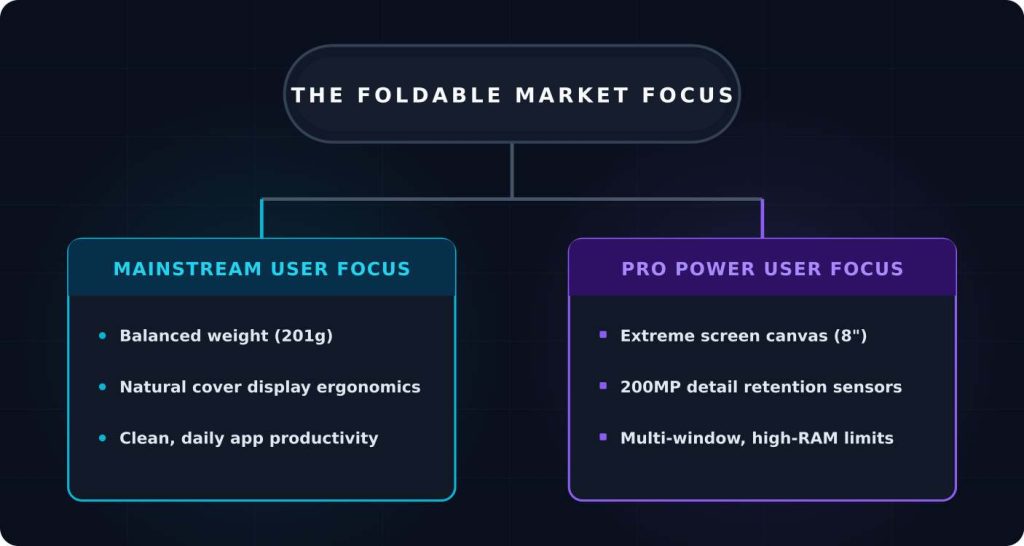
Splitting the Fold line lets them target two different premium buyers at once. The wider standard Fold 8 appeals directly to consumers who want a regular-feeling phone that opens up for reading, while the Ultra model serves users focused entirely on high-megapixel cameras and large screen workspaces.
The wearable shift is equally strategic. Moving away from Exynos to build around the Snapdragon Wear Elite platform shows that Samsung is prioritising user experience over internal vertical integration. It gives consumers exactly what they’ve been demanding from a full smart ecosystem watch: excellent multi-day runtimes and local, low-latency health tracking. All new Z Fold series and the new Watch 9 and Watch Ultra 2 are now available to preorder from Samsung UK and other mobile operators in the UK.